American history is not just preserved in museums and textbooks; it is embedded in the walls of the buildings where that history was made. From the taverns where the Revolution was plotted to the halls of the White House, the men and women who built the nation seem uniquely reluctant to leave it. The American ghost story is deeply political.
This guide explores the paranormal legacy of America’s founders, its presidents, and the defining conflicts that shaped the country. These are not merely ghost stories—they are historical echoes, moments where the sheer weight of a life refuses to fade.
The Revolutionary Era: Founders and Phantoms
The seeds of the American Revolution were planted in Boston, and the ghosts of that era remain anchored to the city. Samuel Adams, the fiery organizer of the rebellion, is still said to act as the sentinel of the Green Dragon Tavern.
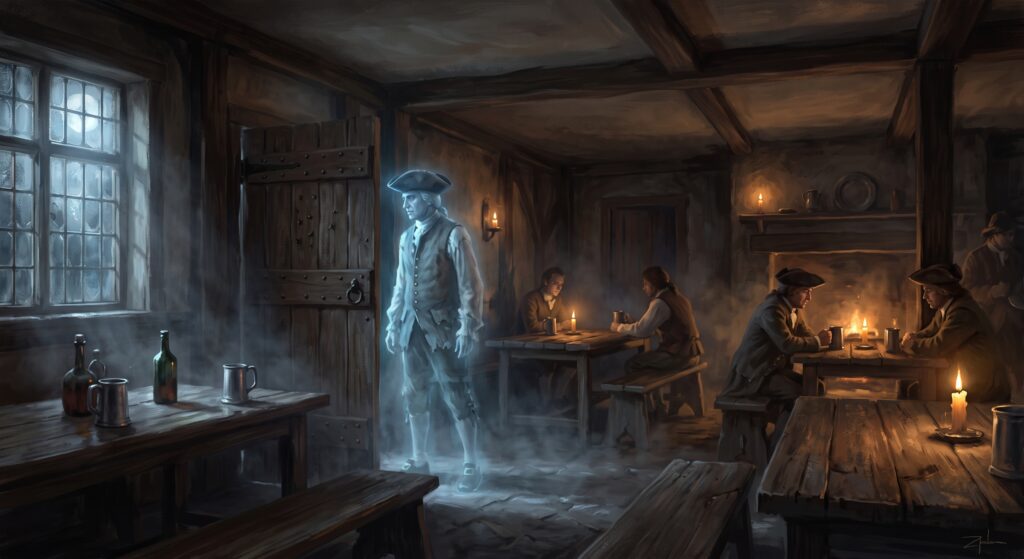
Nearby, the Granary Burying Ground holds the uncertain grave of John Hancock, where visitors report a distinct, freezing presence. The eccentric patriot James Otis Jr., who famously wished to be struck by lightning, got the death he asked for and is said to linger near his former haunts.
The battlefields of the Revolution carry their own weight. The ghosts of Minute Man National Historical Park and the final victory at Yorktown are still witnessed by reenactors and tourists alike. The colonial era’s darker moments also survive; in Massachusetts, the legacy of the witch trials is bound up in the Corwin Curse of Salem, while Virginia’s Colonial Williamsburg hides the ghosts of pirate executioners and tragedy at the Randolph Mansion.
The Haunted White House: Early Presidents
The White House is widely considered the most haunted house in America. Its earliest residents established a pattern of returning to the rooms where they governed. Abigail Adams is still seen hanging laundry in the East Room, maintaining the diligence she showed in life. Thomas Jefferson, though he never lived in the current building, is heard playing faint melodies on his violin in the Yellow Oval Room. James Monroe’s spirit is described as confused and trapped within the Gothic cage of his legacy.
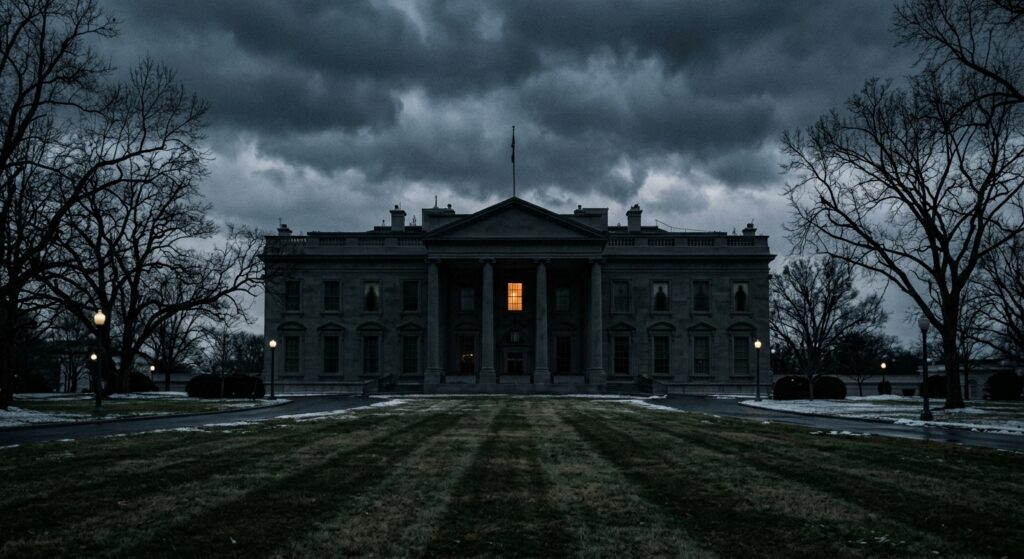
John Quincy Adams, who collapsed on the floor of the Capitol building, is still heard shouting his unyielding “No!” in the halls of Congress. Andrew Jackson’s furious spirit maintains an eternal grudge, while Martin Van Buren is remembered more fondly as a genial dining room ghost. The tragic William Henry Harrison, who died after just one month in office, is said to haunt the White House attic, while John Tyler’s romantic specter still proposes in the Blue Room.
First Ladies left their mark as well. Dolley Madison remains the ghost who stopped the shovels when gardeners tried to dig up her beloved rose garden. Frances Cleveland’s spirit is known as the Bride of the Blue Room.
The Civil War and the Lincoln Legacy
The trauma of the Civil War fractured the nation and left a massive paranormal imprint. The bloodied waters of Antietam and Shiloh still echo with the sounds of battle. Field hospitals, like those at Cashtown, Pennsylvania, remain focal points for residual hauntings.
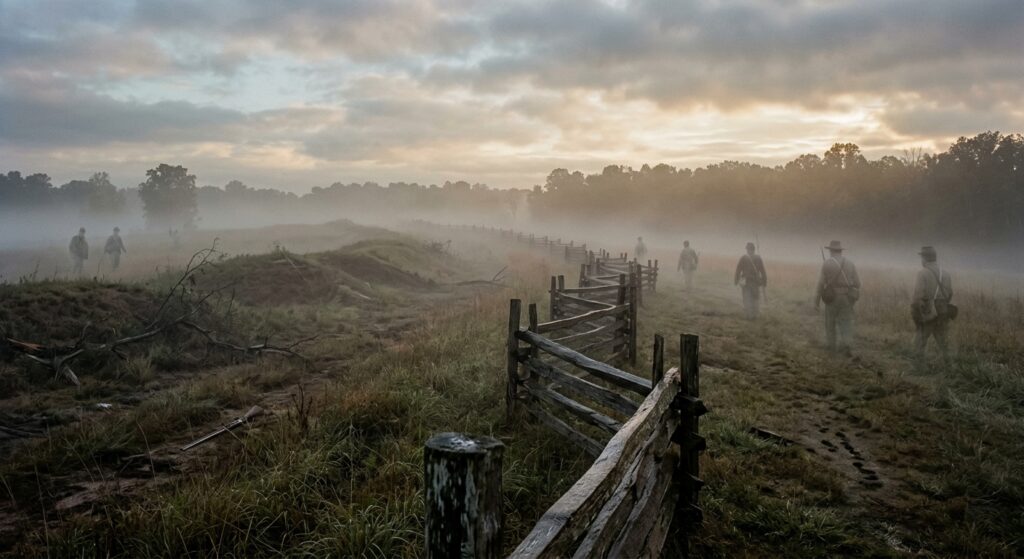
At the center of this trauma is Abraham Lincoln, the resident who never left. Lincoln’s ghost is the most frequently sighted spirit in the White House, famously appearing to Winston Churchill and Queen Wilhelmina. His death was preceded by strange visions, including dreams of sailing to an indefinite shore.
The tragedy extended to other presidents of the era. Zachary Taylor’s sudden passing left a lingering presence in the Executive Mansion. Jane Pierce’s overwhelming grief over the death of her son still lingers at the Willard Hotel. The weight of the era even affected later leaders; the Johnson years were marked by echoes of sad things.
The Gilded Age and the Frontier
As the nation expanded and industrialized, the hauntings changed character. Ulysses S. Grant is known for his cigar-scented ghost and undying routine. James A. Garfield’s assassination was preceded by strange séances and prophecies, and his widow Lucretia remains a ghostly housekeeper tending to their Ohio home.
The violence of the Western frontier generated its own legends. The brutal history of Adams, Tennessee and the Bell Witch remains one of the most documented hauntings in American history. The restless ground of the Alamo holds the spirits of its defenders. Theodore Roosevelt’s larger-than-life persona survives as a Rough Rider ghost at the Menger Hotel in Texas. Further north, the catastrophic defeat at the Little Bighorn left behind the restless spirits of Custer’s doomed command.
These stories remind us that history is not abstract. It was made by people who loved, fought, grieved, and died—and who, in some cases, refused to let the story end.
[…] For the full story of America’s paranormal political history, see our guide to the Ghosts of the Founding Fathers and the Haunted White House. […]
[…] For the full story of America’s paranormal political history, see our guide to the Ghosts of the Founding Fathers and the Haunted White House. […]
[…] For more on this topic, see our complete guide to the Ghosts of the Founding Fathers and the Haunted White House. […]