How oral tradition and eyewitness reports keep Montana’s most consequential battlefield unsettled
A Battle Remembered From Both Sides
On June 25, 1876, Lieutenant Colonel George Custer led roughly 210 men of the 7th U.S. Cavalry against a vast encampment of Lakota, Northern Cheyenne, and Arapaho people along the Little Bighorn River in Montana Territory. Leaders including Crazy Horse, Sitting Bull, and Gall organized a defense that overwhelmed Custer’s divided command within hours.
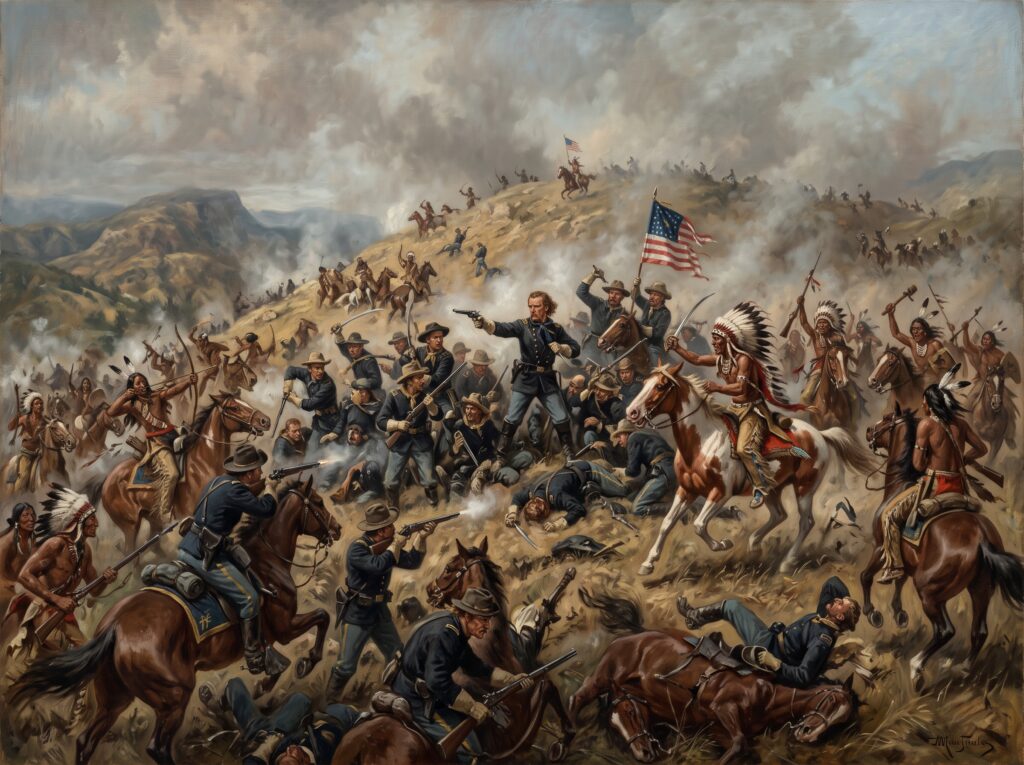
Custer and every soldier who fought with him near what is now called Last Stand Hill died in the fighting. The battle marked one of the most complete Native victories in the long conflict between the United States government and the Plains nations. These nations were resisting the loss of their land and way of life. That victory did not reverse the broader outcome of westward expansion, but it remains a defining moment in Lakota, Cheyenne, and Arapaho history.
The site now sits within the Crow Reservation in southeastern Montana. Today it operates as Little Bighorn Battlefield National Monument, honoring both the soldiers who died there and the Native nations who defended their homeland. A separate Indian Memorial, dedicated in 2003, recognizes the battle’s other side, a story that took more than a century to receive formal recognition on the grounds itself.
The monument’s name itself changed in 1991, from Custer Battlefield National Monument to its current title. Congress approved that shift after decades of advocacy from Native communities who wanted the site to reflect more than one perspective. That renaming matters here, because the ghost stories tied to this battlefield reflect the same duality. Some figures reported on these grounds belong to a specific military narrative, while others belong to a much older, ongoing relationship between the Crow Nation and this land.
The Folklore and the Legends
The Ghost Herder of the Stone House
A stone house built in 1894 for the cemetery caretaker sits near the battlefield’s visitor area. The Crow community, whose reservation surrounds the site, holds a tradition about a caretaker known as the “Ghost Herder.” This figure allows spirits to roam the battlefield freely at night, then gently guides them back to rest before sunrise.
This tradition reflects a broader Crow understanding of the land as a place still connected to the dead, not simply a location built over a historic event. Visitors and staff generally treat this story as a genuine piece of living cultural belief, distinct from the more sensational soldier ghost tales that dominate most battlefield folklore. The Stone House itself has generated its own separate reports over the decades, including sightings of partial figures inside. The Ghost Herder tradition predates and stands apart from those later additions.
The Apparition of Lieutenant Hodgson
In 1983, a visitor named Christine Hope reported a detailed sighting inside the Stone House. She described a man with a long handlebar mustache sitting quietly, later identified through research as resembling Lieutenant Benjamin Hodgson.
Hodgson died during the fighting at what is now called Reno Hill, a defensive position roughly four miles from Last Stand Hill. Soldiers reportedly buried him hastily in a poncho and a blanket amid the chaos of the ongoing battle, without the more formal burial given to those recovered later. That incomplete send-off may explain why his figure, more than almost any other associated with the battle, keeps reappearing in reports tied to this specific building. Other Stone House witnesses describe a partial figure with no head or legs. Some connect this fragmentary sighting to the broader trauma of the battlefield rather than to any single named soldier.
Shadows at the Bookstore and Visitor Center
Staff working in the battlefield’s bookstore report cold taps on the shoulder when no one else stands nearby. Lights inside the building have reportedly switched on after closing, with no one there to flip a switch.
One frequently repeated account describes a soldier-like figure walking directly through a locked door into the museum’s basement level, disappearing before staff can react. These reports cluster around closing time and early morning hours, when the building sits empty and quiet, conditions that tend to heighten anyone’s sense of an unseen presence nearby.
The Ominous Mirage
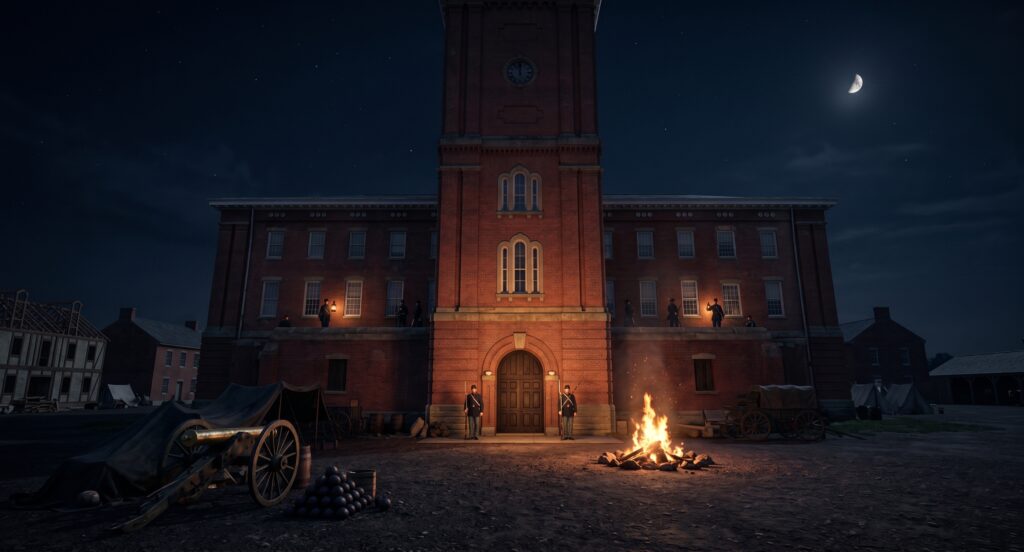
Elizabeth Custer, the colonel’s widow, later described an eerie memory from the day the 7th Cavalry departed Fort Abraham Lincoln. As the column rode away, she recalled seeing what looked like a mirage, the regiment appearing to split and rise into the sky above the actual marching column.
She interpreted the vision, looking back after her husband’s death, as an omen of the disaster to come. Atmospheric mirages of this kind are a documented optical phenomenon, caused by temperature layers bending light across open plains. That explanation does little to diminish how unsettling the memory must have felt in hindsight, years after the fact.
Visitor Information and Decorum
Little Bighorn Battlefield National Monument operates on seasonal hours, generally between 8 a.m. and 6 p.m., with shorter hours in winter. The grounds close well before dark, and the monument strictly prohibits after-hours access to any part of the site.
Custer National Cemetery, where roughly 5,000 veterans from multiple American conflicts rest, deserves the same quiet respect visitors would show any active military cemetery. The battlefield also remains sacred ground for Crow, Lakota, Cheyenne, and Arapaho communities. Visitors should stay on marked paths, avoid removing anything from the grounds, and check current hours on the National Park Service website before planning a visit.
An entrance fee applies per vehicle. The visitor center also operates on reduced hours during renovation projects at times, so confirming access in advance saves a long drive from being pointless.
References & Further Reading
Friends of the Little Bighorn Battlefield
Little Bighorn Battlefield National Monument (NPS)