The oldest ghost in the house still solving a 1800 housekeeping problem
Picture the grandest ceremonial space in America. Now picture wet bedsheets strung across it on a clothesline. That image is not a joke. It is the actual origin of the White House’s oldest reported ghost, and it reveals how rough the early republic really was.
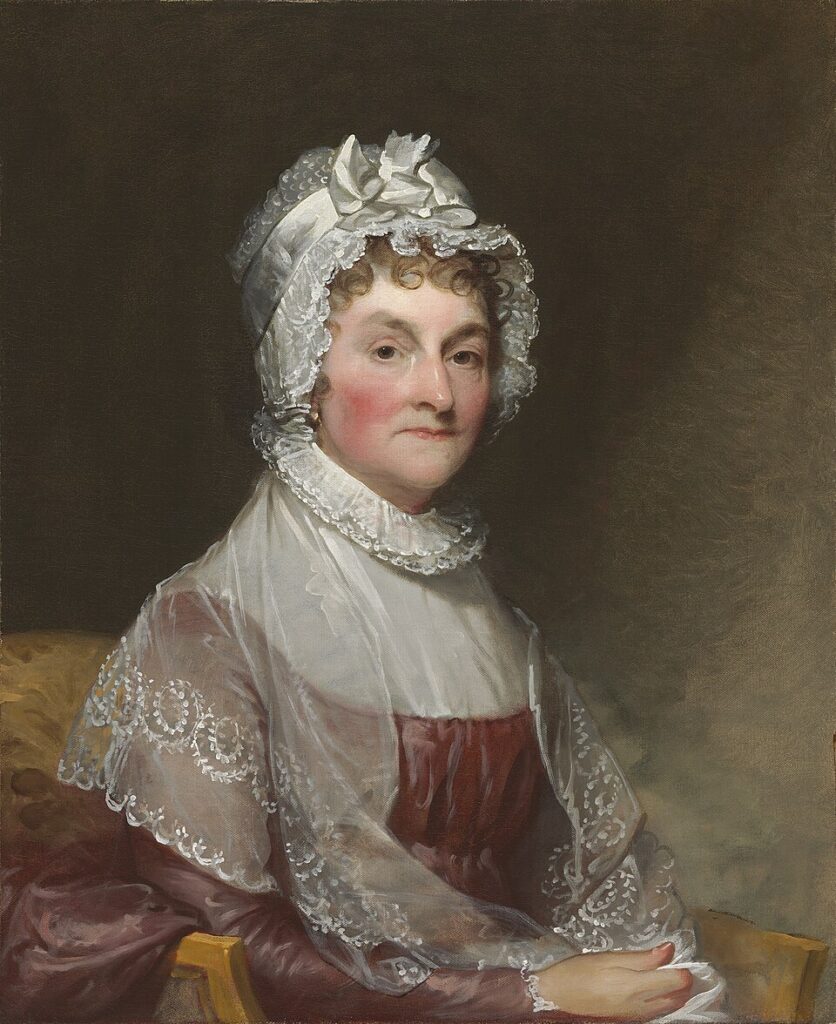
Abigail Adams haunts the East Room not with menace but with chores. To understand why, you have to picture the mansion she actually moved into.
A struggling hamlet in a swamp
The Adamses arrived in 1800 to find a half-finished house in a muddy, half-built capital. Pennsylvania Avenue turned to quagmire when it rained. The heating barely worked, and most rooms stayed cold and damp. Abigail still hosted receptions and held the new government together socially, all while facing one stubborn domestic problem: where to dry the family wash.
She solved it with characteristic practicality. The East Room, the warmest and driest space in the drafty mansion, became her laundry room. The most elegant room in the building earned its first real use as a place to hang clothes.
Arms outstretched, the scent of soap
Sightings clustered during the Taft administration around 1911, more than a century after her death. Staff reported an apparition in a cap and lace shawl hurrying toward the East Room, arms extended as if carrying a heavy load. Witnesses often noted an accompanying smell, sometimes of damp laundry and soap, sometimes of lavender.
Later reports placed her on the second-floor hall and balcony. A few accounts tie her appearances to moments of crisis, including helicopter incidents in 1974 and 1994, echoing the idea that the house’s spirits stir when something goes wrong.
Stuck in an eternal work loop
Every other ghost in this series is tethered to power, grief, or romance. Abigail is tethered to work. Her loop is not a tragedy replaying. It is competence replaying, the quiet labor that kept a fragile government functioning when the building itself could barely stand.
That makes her the most democratic ghost in the house. She does not guard a legacy or mourn a child. She finishes the laundry, because somebody always had to, and in the early White House that somebody was the first lady.
The woman behind the apparition
Abigail Adams deserves better than to be remembered only as a phantom with a basket. She was one of the sharpest political minds of the founding era, a prolific letter writer whose correspondence with her husband John forms a priceless record of the Revolution. She famously urged him to “remember the ladies” as the new nation drafted its laws, an early call for women’s standing that historians still quote.
She ran the family farm and finances for years while John served the cause abroad and in Philadelphia. She was, by any measure, a capable executive in her own right. So when her ghost appears mid-task, briskly managing a domestic crisis, the image is not random. It distills exactly who she was: a competent woman who handled what needed handling, even when the building around her was falling short.
The oldest tenant
Abigail holds a unique title in the lore. As the wife of the second president and the first to occupy the mansion, she is the oldest ghost still reportedly seen there. Every other spirit in this series arrived after her. She got there first, in 1800, when the place was barely habitable.
That seniority adds a layer to the haunting. She does not just tend laundry; she tends the house at its very beginning, before it was grand, before it was famous, when it was a cold and unfinished shell in a muddy field. Some accounts even link her appearances to moments of national stress, placing her alongside Lincoln as a spirit who stirs when the country struggles. Whether or not you believe a word of it, the legend keeps the founding generation present in the building they first had to make livable. The grandeur came later. Abigail was there for the hard part, and the story lets her stay.
A founding-era voice that still carries
There is a deeper reason Abigail’s quiet haunting resonates. She represents the very first hours of the institution, the moment the government physically moved into the house it still occupies. When her apparition crosses the East Room, it links the modern White House directly back to 1800, to a half-built mansion in a muddy field where the American experiment was barely underway.
Her words from that time survive and sharpen the picture. She wrote candidly about the cold, unfinished rooms; the lack of bells to summon servants; and the sheer inconvenience of the place, all while hosting the dignitaries a young capital required. She made a barely functional house work through competence and good humor. The ghost merely continues that labor, which is why it feels less like a scare and more like a tribute.
Seen this way, Abigail anchors the entire series. Before the grand state dinners, before the famous ghosts, before the house became a symbol, someone had to make it livable. The legend gives that founding labor a face and lets it endure. Every later resident, spectral or living, inherited a house that Abigail Adams first wrestled into working order.
It is worth pausing on how rarely the founding era gets a sympathetic ghost. Most early figures in American lore are stern portraits or marble statues. Abigail is neither. She is caught mid-errand, arms full, hurrying to solve a problem, which is a far warmer and more human image than any official portrait offers. The haunting humanizes the founding generation in a way textbooks seldom manage.
More than two centuries on, the first first lady to live here is still, in the lore, the one keeping the house in order. That is a fitting legacy for a woman who helped hold a young government together by sheer practical will. The grand rooms came later; Abigail was there when it was cold, unfinished, and barely livable.
More in This Series: White House Hauntings
- The Cabinet of the Dead: Inside the Most Haunted House in America
- The Resident Who Never Left: The Strange Persistence of Lincoln’s Ghost
- Old Hickory’s Eternal Grudge: The Auditory Haunting of Andrew Jackson
- The Ghost Who Stopped the Shovels: Dolley Madison’s Floral Legacy
- Faint Melodies in the Yellow Oval Room: Thomas Jefferson’s Spectral Violin
- One Month in Office, Eternity in the Attic: The Harrison Haunting
- Proposals in the Blue Room: The Romantic Specter of John Tyler
- Echoes of Sad Things: The Haunted Weight of the Johnson Years
- Death in the Executive Mansion: The Lingering Presence of Zachary Taylor
- The Bride of the Blue Room: The Eternal Youth of Frances Cleveland
References & Further Reading
National Constitution Center: The White House’s best ghost stories
Grunge: Creepy Tales of White House Ghosts
Haunted Places: White House Ghosts
White House Historical Association: White House Ghost Stories
For more on this topic, see our complete guide to the Ghosts of the Founding Fathers and the Haunted White House.

[…] Laundry in the East Room: The Eternal Diligence of Abigail Adams […]
[…] established a pattern of returning to the rooms where they governed. Abigail Adams is still seen hanging laundry in the East Room, maintaining the diligence she showed in life. Thomas Jefferson, though he never lived in the […]