How a murdered president became the most reported phantom in American history
A naked Winston Churchill stepped out of his bath, cigar in hand, and found Abraham Lincoln leaning on the fireplace. Most people would scream. Churchill tapped his ash and said, “Good evening, Mr. President. You seem to have me at a disadvantage.” Lincoln smiled and vanished. Churchill never slept in that room again.
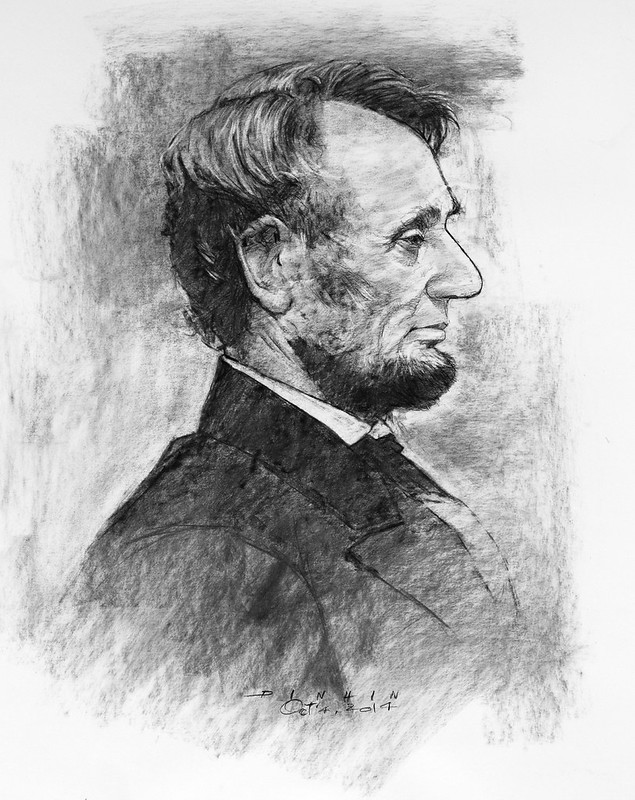
That story gets told a lot. What gets told less often is why Lincoln, of all the dead who passed through this house, became its permanent fixture. The answer says something uncomfortable about the country he tried to hold together.
A face carved by grief
By 1864, sleeplessness and sorrow had etched deep lines into Lincoln’s face. His eleven-year-old son Willie had died upstairs in 1862, likely from typhoid carried by the city’s filthy water supply. Mary Todd Lincoln turned to séances in the Red Room to reach the boy. The president carried that loss into every cabinet meeting.
He also carried a sense of his own mortality. Lincoln told associates of a dream in which he wandered the White House and found a coffin in the East Room. A soldier guarding it told him the president had been killed. Days later, he was. That eerie foresight cemented his reputation as a man tuned to his mortality.
The witnesses keep coming
First Lady Grace Coolidge gave the first detailed visual account in the 1920s. She saw Lincoln at a Yellow Oval Room window, gazing toward the Potomac as if studying a distant battle. The sightings multiplied during World War II, the period that gave us both Churchill and Queen Wilhelmina of the Netherlands.
Wilhelmina answered a midnight knock and found a top-hatted figure in the hall. The popular version says she fainted. A 1996 Dutch newspaper account tells it differently: she saw the man vanish, returned to bed unable to sleep, and only recognized him the next morning. Even the foundational stories carry competing versions, which is itself a clue about how legend forms.
Eleanor Roosevelt felt him watching her while she worked late. Mary Eben, a secretary, reported seeing him sit on a bed and pull on his boots. The Reagans’ dog Rex barked at the Lincoln Bedroom door and refused to cross it. The last clear sighting came in the early 1980s, when operations foreman Tony Savoy saw Lincoln seated at the top of a staircase.
The angle most accounts miss
Here is the detail that reframes everything. The Lincoln Bedroom, the epicenter of these encounters, is not where Lincoln slept. He used it as his office and cabinet room, and he signed the Emancipation Proclamation there. The strongest paranormal reports cluster around the room where he worked, not where he rested.
Read that way, the haunting stops being about a weary man wanting his bed. It becomes about unfinished labor. Lincoln sought reelection in 1864 believing his work was incomplete. His assassination interrupted Reconstruction before it began. Some would argue that work remains unfinished today, which may be why a war-weary nation keeps seeing him return to the desk.
The crisis pattern
Look closely at when Lincoln supposedly appears, and a rhythm emerges. The reports spike during national emergencies. Grace Coolidge’s sighting came during a relatively calm stretch, but the remarkable wave arrived under Franklin Roosevelt across both the Great Depression and the Second World War. Writers noticed the timing and built a theory around it: Lincoln shows himself when the country is in danger.
Truman extended the pattern. He believed Lincoln felt protective of the house and even credited the ghost, half seriously, with helping save the building during the major renovation of the late 1940s. Dwight Eisenhower told his press secretary he sensed Lincoln in the halls. Jacqueline Kennedy felt his presence a full century after the Lincolns themselves lived there. Each of these residents governed through real strain, and each reported the same quiet company.
Skeptics offer a grounded counterpoint, and it deserves space. They do not accuse anyone of lying. They argue instead that an old, dim, endlessly storied building primes the mind to interpret ordinary sounds and shadows as something more, especially during sleepless, high-pressure nights. The footsteps could be a settling floor. The cold spot could be a draft in an old, drafty house. The theory and the skepticism can coexist, and the legend survives both.
More than one Lincoln
Abraham is not the only Lincoln said to have walked these halls. Willie, his beloved eleven-year-old, died in the house in 1862, and staff in the Grant administration reported seeing the boy’s ghost in the 1870s. Reports surfaced again as late as the 1960s. Mary Todd Lincoln, shattered by the loss, held séances in the Red Room to reach him, part of a wider spiritualist movement that swept a grieving, war-torn nation.
That family dimension matters. The Lincoln haunting is not just a single melancholy president pacing alone. It is a household marked by repeated loss, replaying inside the rooms where that loss happened. The father returns to the work he could not finish. The son returns to a home he barely got to grow up in. Together they make the White House feel less like a haunted mansion and more like a family that never got to leave.
Why this ghost outlasts the rest
Hundreds of people have lived and worked in the White House, and many of them died. Only a handful generated lasting ghost stories, and only Lincoln became a permanent national figure. That imbalance is worth explaining, because it reveals what these legends are really doing.
Lincoln carries the heaviest symbolic load in American memory. He preserved the Union, moved to end slavery, and was murdered for it days after the war’s end. The country has never fully stopped processing that loss. People who study the phenomenon suggest his ghost endures precisely because his story feels unfinished, a wound each generation reopens. Seeing Lincoln in the halls lets the living believe, for a moment, that the work was not abandoned, only interrupted.
There is comfort built into the legend too. Reagan wondered aloud whether the house wanted Lincoln there. Nancy Reagan, in her memoirs, mused that if he truly walked the halls, she wished she had glimpsed him before leaving. These are not frightened reactions. They read more like a wish to share the building with its greatest occupant. Whether the ghost is real or a trick of an old house and a tired mind, the country keeps inviting him back, because a nation that misses Lincoln finds a strange solace in the idea that he never entirely left.
Stand in the second-floor hallway some evening, and the legend feels almost reasonable. This is a house that lost a president and a child within three years, then spent a century being told it never fully let either of them go. Real or imagined, the Lincoln who lingers here is indicative of a country reluctant to close a chapter it never wanted to begin.
More in This Series: White House Hauntings
- The Cabinet of the Dead: Inside the Most Haunted House in America
- Old Hickory’s Eternal Grudge: The Auditory Haunting of Andrew Jackson
- Laundry in the East Room: The Eternal Diligence of Abigail Adams
- The Ghost Who Stopped the Shovels: Dolley Madison’s Floral Legacy
- Faint Melodies in the Yellow Oval Room: Thomas Jefferson’s Spectral Violin
- One Month in Office, Eternity in the Attic: The Harrison Haunting
- Proposals in the Blue Room: The Romantic Specter of John Tyler
- Echoes of Sad Things: The Haunted Weight of the Johnson Years
- Death in the Executive Mansion: The Lingering Presence of Zachary Taylor
- The Bride of the Blue Room: The Eternal Youth of Frances Cleveland
References & Further Reading
Boundary Stones (WETA): The Legends of Lincoln’s Ghost
Snopes: Is the White House Haunted by Abraham Lincoln’s Ghost?
Mental Floss: 12 People Who Have Supposedly Seen or Felt Lincoln’s Ghost
White House Historical Association: White House Ghost Stories
For the full story of America’s paranormal political history, see our guide to the Ghosts of the Founding Fathers and the Haunted White House.

[…] The Resident Who Never Left: The Strange Persistence of Lincoln’s Ghost […]
[…] The Resident Who Never Left: The Strange Persistence of Lincoln’s Ghost […]
[…] the center of this trauma is Abraham Lincoln, the resident who never left. Lincoln’s ghost is the most frequently sighted spirit in the White House, famously appearing […]
[…] The Resident Who Never Left: The Strange Persistence of Lincoln’s Ghost […]
[…] The Resident Who Never Left: The Strange Persistence of Lincoln’s Ghost […]