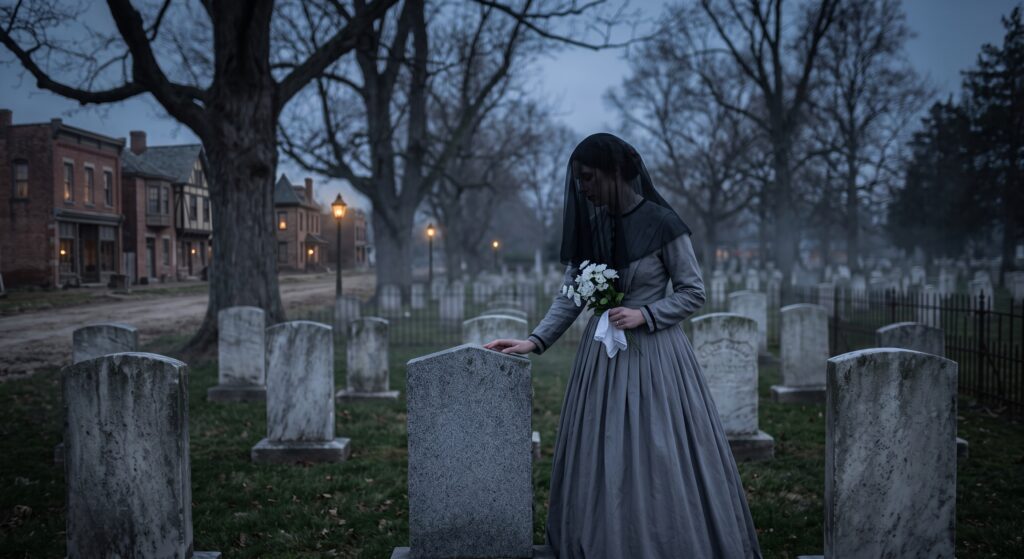
Why the seventh president haunts by sound instead of sight
Mary Todd Lincoln believed the dead could speak. So when she reported hearing Andrew Jackson stomping and swearing through the White House corridors, she meant it literally. Decades later, Harry Truman lay awake listening to the floors pop and imagined “old Andy” arguing in the study. Two very different residents, yet the same invisible tantrum.
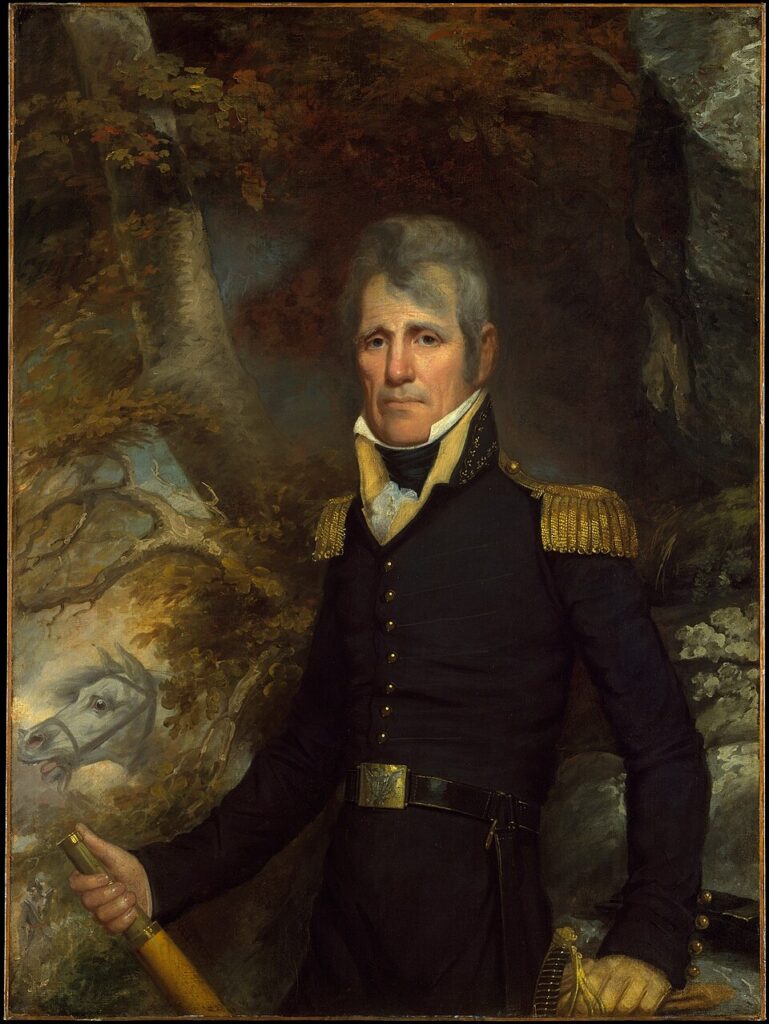
Most White House ghosts show themselves. Jackson refuses. He is heard, never seen, and that distinction tells you almost everything about the man.
A temperament forged in conflict
Jackson never forgot a slight and never forgave an enemy. He lost the 1824 election in what he called a “corrupt bargain” when the House handed the presidency to John Quincy Adams. He survived the first assassination attempt on a sitting president in 1835, then reportedly beat his would-be killer with a cane. This was not a man built for serenity.
He treated the presidency like a battlefield. He picked fights, settled scores, and ran the executive branch on raw will. A personality that intense, the legend suggests, does not simply switch off at death.
The Rose Room echoes
Jackson’s activity centers on the Rose Room, now the Queens’ Bedroom, which still holds his original bed. Witnesses across generations describe stomping, hearty laughter, and bursts of cursing rather than any apparition. The sound carries the personality even when the figure stays hidden.
One White House Historical Association account notes that Jackson kept his political antipathy long after his 1824 defeat and that both Mary Todd Lincoln and Truman sensed it. The grudge outlasted the grudge-holder.
The angle most accounts miss
Think about what a sound-only haunting actually preserves. A visual ghost preserves a body, a face, a posture. An auditory ghost preserves behavior. Jackson’s legend kept the one thing that defined him, his volatile temper, and discarded the rest.
In that sense, his haunting is the purest character study of the house. You do not need to see Old Hickory to know him, though. You only need to hear him lose it.
The wounds he carried
To understand the rage, look at his life. Jackson grew up poor on the Carolina frontier and lost his entire immediate family young, partly to the Revolutionary War. He carried a British officer’s saber scar on his face and hand for the rest of his life, earned as a boy who refused to shine the man’s boots. He fought duels. He carried bullets in his body. Pain and grievance were with him long before he reached Washington.
His presidency reflected that hardness. He waged political war on the national bank, expanded executive power, and pursued policies toward Native nations whose human cost was immense, most notoriously the forced removals that led to the Trail of Tears. A full portrait of Jackson cannot leave that out. The same unyielding will that the ghost story celebrates as colorful temper also drove some of the darkest federal actions of the era.
Two listeners, a century apart
What gives the Jackson haunting its staying power is the quality of its witnesses. These are not anonymous tourists. Mary Todd Lincoln, a committed spiritualist, reported the stomping and swearing during the Civil War years. Harry Truman, a plain-spoken Missouri pragmatist with no taste for the occult, described the same kind of restless noise nearly a century later.
Truman’s famous 1945 letter captured it perfectly. He wrote of sitting in the old house working on speeches while the floors popped and the drapes moved, imagining old Andy arguing with Teddy Roosevelt over Franklin. The line is almost affectionate. Truman did not seem frightened so much as resigned, as if Jackson’s eternal bad mood were just another feature of the residence, like a creaky stair. When a skeptic and a believer, separated by eighty years, describe the same invisible temper in the same room, the legend earns a second look.
The myth and the man
It would be dishonest to leave Jackson as a charming, blustery ghost without naming the fuller record. The temper that the legend treats as colorful was, in office, an instrument of real and often brutal policy. His administration drove the Indian Removal Act and the forced displacement that became the Trail of Tears, resulting in thousands of deaths. Reckoning with Jackson means holding the folk character and the historical figure in view at once.
That tension actually sharpens the haunting rather than spoiling it. A spirit defined by unyielding will is unsettling precisely because that will, in life, crushed those who stood in its path. The stomping in the Rose Room is amusing until you remember what the man’s refusal to yield actually cost. The ghost story and the history are not in conflict with each other. The first is a folk shorthand for the second.
This is also why the auditory form feels so apt. A visual ghost invites sympathy; we see a face and soften. A disembodied tantrum provides you nothing to pity, only force. Jackson haunts as pure imposed will, which may be the most honest possible afterlife for a president who governed exactly that way.
One last thought before the references. Jackson is the rare president whose private character and public record point the same direction. There was no gentle inner man hidden behind the public fighter. The fury was the whole person, in life and, as the legend insists, in death. That consistency is what makes the Rose Room story feel less like a tall tale and more like an accurate, if eerie, character sketch that simply refuses to fade.
For all the noise, there is something almost reassuring in a ghost this consistent. Jackson was precisely what he appeared to be, loud, combative, and unyielding, and the haunting preserves that without flattery or apology. The Rose Room simply keeps playing the man the records describe, temper and all.
More in This Series: White House Hauntings
- The Cabinet of the Dead: Inside the Most Haunted House in America
- The Resident Who Never Left: The Strange Persistence of Lincoln’s Ghost
- Laundry in the East Room: The Eternal Diligence of Abigail Adams
- The Ghost Who Stopped the Shovels: Dolley Madison’s Floral Legacy
- Faint Melodies in the Yellow Oval Room: Thomas Jefferson’s Spectral Violin
- One Month in Office, Eternity in the Attic: The Harrison Haunting
- Proposals in the Blue Room: The Romantic Specter of John Tyler
- Echoes of Sad Things: The Haunted Weight of the Johnson Years
- Death in the Executive Mansion: The Lingering Presence of Zachary Taylor
- The Bride of the Blue Room: The Eternal Youth of Frances Cleveland
References & Further Reading
House Digest: Ghost Stories From the White House
White House Historical Association: Things That Go Bump in the Blue Room
US Ghost Adventures: Haunted Tales from the White House
Benjamin Harrison Presidential Site: The White House of Horrors
For more on this topic, see our complete guide to the Ghosts of the Founding Fathers and the Haunted White House.