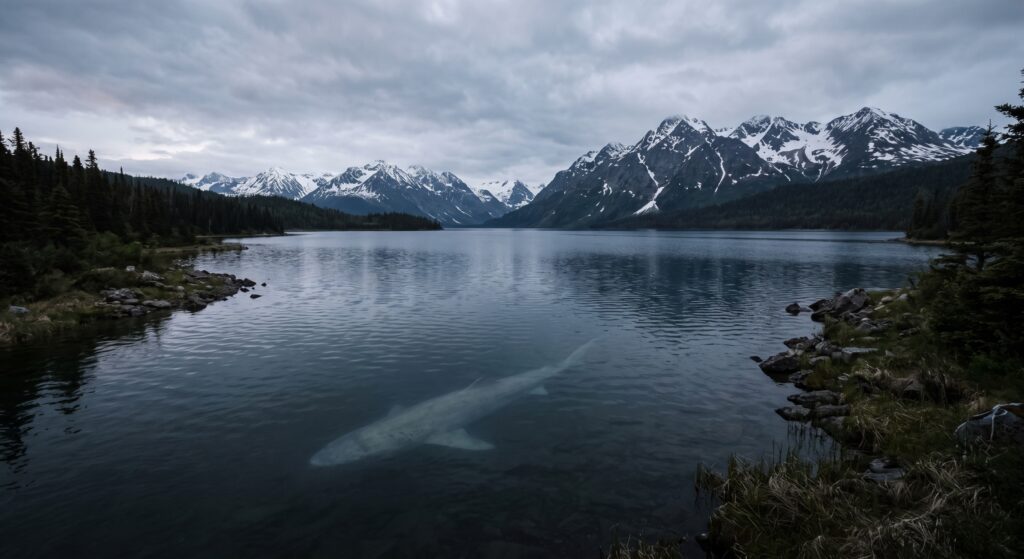
High in Colorado’s Front Range, at roughly 11,000 feet on the edge of the James Peak Wilderness, sits a small alpine lake called Loch Lomond. It’s a quiet, scenic destination for hikers and anglers — except for the persistent local rumor that something large and strange lives beneath its surface.
A creature built from contradictions
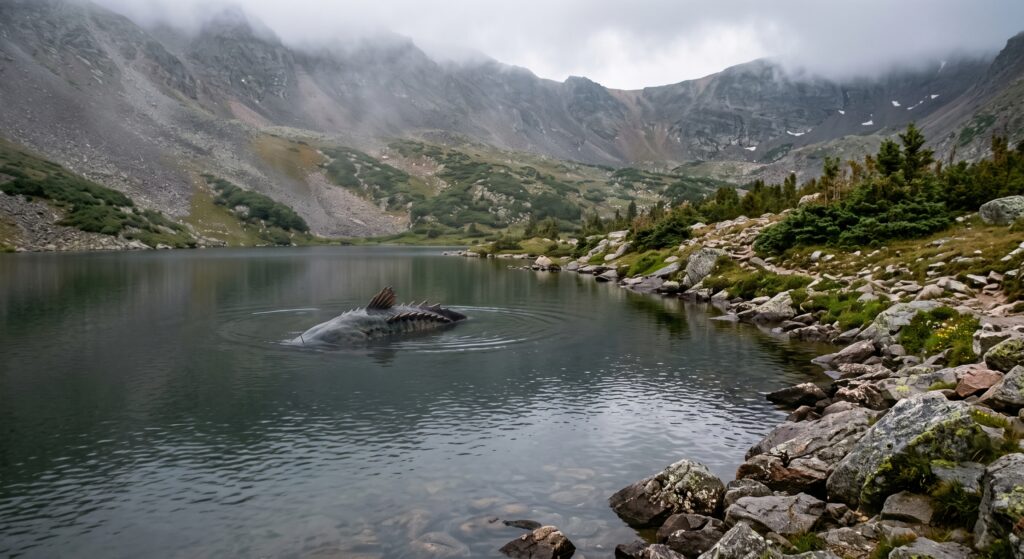
Nicknamed Bessie, the Loch Lomond monster is generally described as an unsettling hybrid: part carp, part catfish, and part something else entirely, with a massive head, spiny ridges running down its back, and spotted flanks that witnesses have compared to a drowned cow. It’s a deliberately strange composite description, less like a single recognizable animal and more like several half-remembered fish stories stitched together — which, depending on who you ask, may be exactly what it is.
What people say they’ve seen
Anglers and hikers describe Bessie surfacing suddenly in the lake’s frequent fog, sending rings rippling across the water before disappearing again without a trace. A handful of more dramatic accounts go further, describing the creature breaching the surface entirely and slapping its tail hard enough to douse startled hikers standing along the shoreline with icy lake spray.
A small lake with an outsized reputation
Skeptics have a reasonably simple explanation: Loch Lomond is a small, isolated body of water prone to sudden fog and eerie lighting at altitude, exactly the kind of setting where a fisherman’s exaggerated story—or a half-asleep hiker’s misremembered dream—can calcify into local legend over time. Even many locals who repeat the Bessie story do so with a wink, the kind of local color that’s more fun to pass along than to seriously defend.
That said, the legend persists precisely because Loch Lomond looks the part. Its remote setting, thin, high-altitude air, and tendency toward sudden fog give it an atmosphere that few other Colorado lakes can match.
Part of a bigger tradition
Bessie fits into a long tradition of North American “lake monster” folklore, echoing more famous cousins like Scotland’s Loch Ness Monster (which may have even inspired the lake’s borrowed name) and Lake Erie’s own “Bessie.” What makes Colorado’s version distinct is its scale and obscurity. For hikers who do make the trip, that obscurity is part of the appeal: a chance to encounter one of the state’s least-known folklore traditions in one of its most out-of-the-way settings.