Some legends deal in ghosts and monsters. This one deals with the unbearable choices that desperation forces on a parent. The tale of Slaughterhouse Canyon carries a heavy warning and touches on the deaths of children, so read on knowing the subject is dark. Locals say her screams still echo through the canyon on still nights near Kingman.
The story dates to 1882, during Arizona’s Gold Rush years. The canyon southwest of Kingman goes by two names, Luana’s Canyon and Slaughterhouse Canyon. Behind both names sits one of the state’s most sorrowful folk tragedies.
This is not a tale of malice or evil. It is a tale of poverty, isolation, and a mind broken by hopelessness. Understanding it means understanding how brutal frontier life could be for a family with no safety net and no one to call for help.
A Family on the Edge
The legend describes a family living in an isolated canyon home. The father worked as a miner or a hunter, providing what little the family had. He would leave for long stretches to earn money and gather supplies from the nearest town.
Each time, he returned with food to sustain his wife and their children. The family survived entirely on that fragile rhythm. Their remote home left them utterly dependent on his safe return, with no neighbors and no backup.
The isolation defined their lives. No town sat within easy reach, and no help waited nearby. When things went well, the family got by. When things went wrong, no one noticed and no one came to save them.
Then one trip changed everything. The father left as usual, promising to return soon. He never came back. No word, no supplies, and no explanation ever followed. The family waited in the canyon as their situation slowly turned desperate.
Descent Into Starvation
Days stretched into weeks without the father. The stored food dwindled and then ran out completely. The children grew pale and weak, their small bodies failing from relentless hunger.
They cried and begged their mother for something, anything, to eat. She had nothing left to give them. Every plea deepened her helplessness, and the canyon offered no rescue, no mercy, and no relief.
The mother searched for any way to feed her children. The legend gives her no options and no luck. Whatever she tried, the hunger only worsened, and the crying never stopped.
The tale depicts a mother slowly breaking under the crushing weight of her circumstances. She could not save her children, and she could not bear to watch them suffer and waste away. Her mind, the story says, finally gave way under the strain.
The Storm and the Tragedy
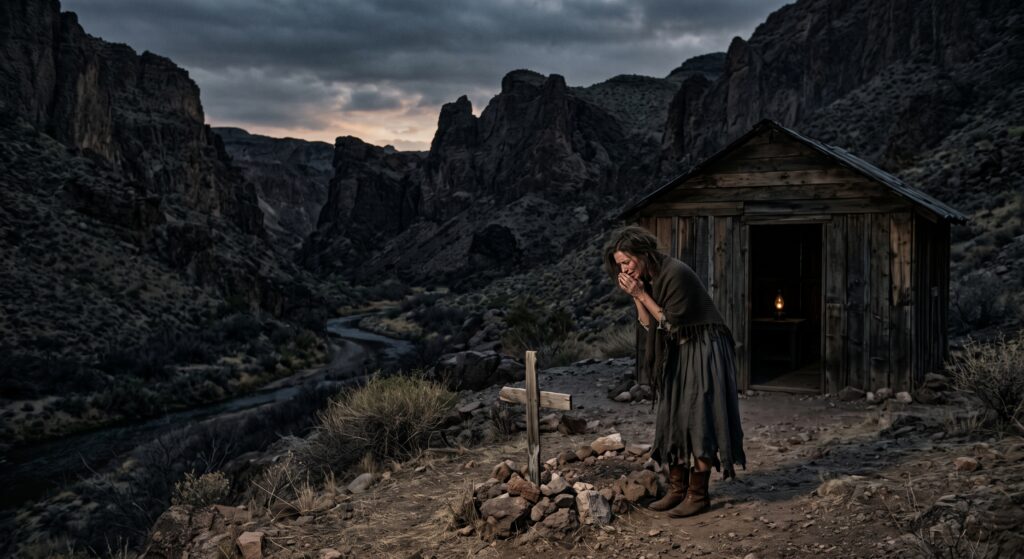
One stormy night, according to the tale, the mother snapped entirely. She put on her white wedding dress, a haunting detail that recurs in nearly every telling. Then, in a fit of madness and grief, she killed her starving children.
The act destroyed what little remained of her mind and spirit. Overwhelmed by horror, sadness, and guilt, she stayed on the riverbank. She wailed and screamed into the storm, unable to face what she had done.
By the next morning, the mother had died as well. The same starvation and despair that took her children took her too. The canyon claimed the entire family in a single terrible night.
Only the story survived to carry their memory. The names blur and shift across different versions, sometimes Luana and sometimes Luna. What remains constant is the image of a mother in white, wailing beside the water in the storm.
The Screams That Remain
The haunting centers on sound rather than sight. Visitors and ghost hunters claim that on quiet nights they hear terrible screams and sobs. The cries seem to belong to the anguished mother and her lost children.
The reports cluster on still, heavy evenings, when the desert air hangs thick over the canyon. People describe the wailing as painful and unmistakably human. Few visitors choose to linger once they hear it for themselves.
The canyon’s rock walls amplify any sound, which the legend uses to explain the eerie acoustics. A distant coyote or a gust of wind can twist into something that sounds like grief. Whether spirit or echo, the effect unnerves everyone who experiences it.
The mother’s sorrow seems to replay endlessly in the stone. Her guilt and grief, the story suggests, bound her to the spot where she died. She cannot leave, and she cannot stop crying for what she took.
A Legend Rooted in Real Fear
Slaughterhouse Canyon echoes older tales like La Llorona, the weeping woman of the Southwest. Both feature a mother, dead children, and inconsolable cries beside the water. The shared themes reveal a deep and ancient regional anxiety.
The story functions as a cautionary tale from a genuinely brutal era. Frontier families really did face starvation, isolation, and abandonment with no support. The legend distills those real dangers into one unforgettable image.
It also warns against the fragility of the mind under extreme stress. The mother is not a villain but a victim of impossible circumstances. Her tragedy asks listeners to imagine and fear the breaking point of a desperate parent.
Told with care, the tale honors that hardship rather than exploiting it. The canyon near Kingman keeps the memory alive across the generations. On the stillest nights, some say, it still weeps for a family the desert destroyed.
References & Further Reading
Slaughterhouse Canyon, Arizona – Only In Your State