It did not feel like a dream. That is always the first thing people say. Your grandmother was there, and she was fully herself, not the confused version memory sometimes produces. She looked well. She was sitting at the kitchen table as if no time had passed. She said something, or communicated something, and you knew when you woke that she had come specifically to say it. And now you are wondering whether that was a dream, a hallucination produced by grief, or something else.
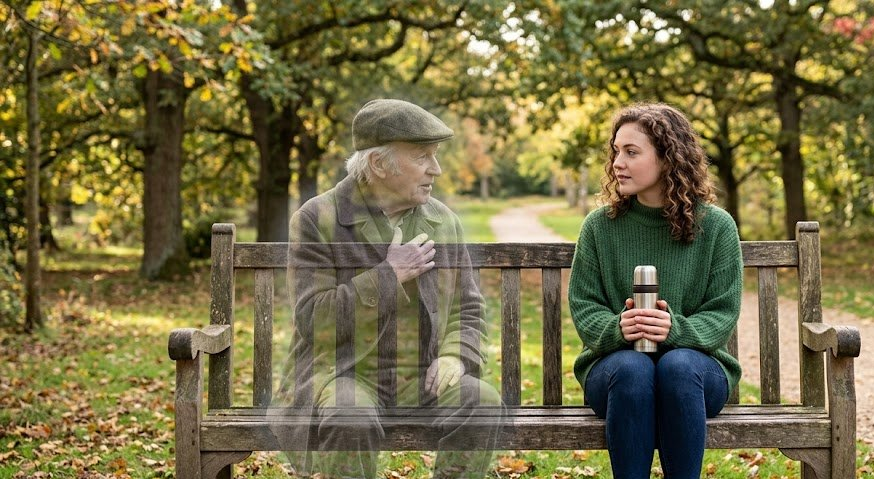
Visitation dreams, the experience of a deceased person appearing in a dream with a quality and clarity that feels distinct from ordinary dreaming, are among the most commonly reported and least formally studied paranormal experiences in the world. They deserve serious engagement rather than quick dismissal.
How Common This Is
Research on bereavement consistently finds that between 43 and 55 percent of bereaved individuals report some form of perceived post-death contact with the deceased. Visitation dreams are the most common form of this experience. Studies published in journals including Omega: Journal of Death and Dying and Dreaming have found that visitation dreams are more likely to be rated as positive, meaningful, and qualitatively distinct from ordinary dreams than non-visitation bereavement dreams. The features that bereaved dreamers consistently identify as making visitation dreams different: the figure appears healthy and at peace, the communication feels direct and purposeful, and the emotional residue of the experience persists into waking life in a way that ordinary dreams do not.
The Four Common Features
Researchers including Patricia Garfield and Raymond Moody have identified four features that appear consistently across visitation dream accounts across cultures:
- The deceased appears healthy and younger than at the time of death, free from the illness or injury that caused their death.
- The communication is direct and purposeful: the deceased has a specific message, reassurance, or farewell to convey.
- The dreamer has a clear sense that the visit is real in a way that ordinary dreams are not.
- The emotional impact of the dream persists significantly into waking life, often including a lasting sense of comfort or resolved grief.
The Psychological Framework
The mainstream psychological framework for visitation dreams holds that they are produced by the grieving brain drawing on its archive of the deceased person, their voice, their mannerisms, and their characteristic way of being to generate an encounter that the bereaved person needs. This is not dismissive. The unconscious capacity to produce a convincing, comforting, specific encounter with someone you loved deeply is itself remarkable, and the therapeutic value of visitation dreams is well-documented regardless of their source. Studies have found that bereaved individuals who experience visitation dreams tend to show better grief outcomes: less complicated grief, less depression, and a greater ability to integrate the loss.
The Harder Question
The harder question, the one that psychology brackets and the paranormal tradition takes seriously, is whether some visitation dreams contain information the dreamer could not have had. Researcher Peter Fenwick at the Institute of Psychiatry documented a number of cases in which visitation dreams contained verified information about the deceased’s condition or circumstances at or after the time of death that the dreamer could not have known by normal means. These cases are uncommon, are difficult to verify, and have not been accepted into mainstream scientific literature. They have been documented.
The most honest position, given the current state of evidence, is that visitation dreams are almost certainly a normal and healthy part of the grieving process, that they are produced in part by psychological mechanisms we understand, and that a small number of them may involve something that those mechanisms do not fully explain. Both things can be true simultaneously. Your grandmother at the kitchen table, looking well, may have been a gift from your own unconscious. It may also have been something more. Either way, it was real in the sense that matters most: it helped.



[…] Dream of a Dead Relative Visiting: Meaning, Grief, and Comfort Dreams […]
[…] Dream of a Dead Relative Visiting: Meaning, Grief, and Comfort Dreams […]