A president who chased his dead father through séance circles left behind a haunted castle and a ghost story about moving tombstones
The Victorians threw themselves at the dead. They held séances in parlors, photographed ghosts, and treated Halloween as a doorway. Into that hungry, mystical age walked James A. Garfield, a poor Ohio boy with a ferocious appetite for books and ideas.
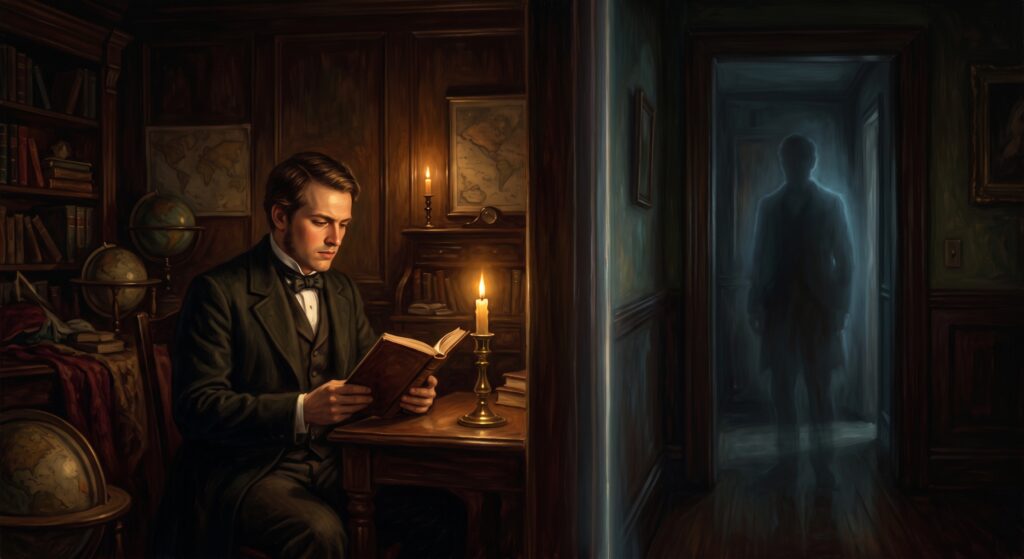
Garfield read everything. He preached, he soldiered, and he climbed to the House and then the White House. And beneath the brilliant public man ran a private thread: a lifelong pull toward the supernatural and a longing to reach one particular ghost.
That thread produces one of the eeriest legends in presidential history. Local lore insists Garfield foresaw his murder. What did he supposedly see, and why does the story persist?
The Séance Circle and a Longing for His Father
Garfield’s father died when James was barely a toddler. The loss shaped everything. The family fell into hard poverty, and the boy grew up chasing a man he could not remember.
That ache followed him into adulthood. According to regional historical lore, Garfield joined séances well before he entered the White House. He wanted to speak with his lost father across the veil.
The Spiritualist movement made such attempts feel almost ordinary. Millions of grieving Americans sought their dead through mediums and rapping tables. Garfield, endlessly curious, leaned in rather than away.
His era practically invited it. Victorian America blended parlor séances, mourning rituals, and a fresh fascination with Halloween into daily life. A brilliant, restless mind like Garfield’s found the supernatural intellectually irresistible. He studied it the way he studied Greek and geometry, with genuine hunger.
And here the legend turns strange. During these sessions, the stories claim, Garfield received premonitions. The circle he built to reach the past instead began whispering about his future.
The Prophecy of Charles Guiteau
The boldest claim is chilling. Ohio folklore holds that Garfield predicted his assassination before he ever took the oath. Some versions say he named the method. Some say he even named the man.
Treat that carefully. No verified document records Garfield forecasting Guiteau by name. The prophecy lives in local legend, not in the archive, and honesty demands we say so plainly. Its power lies in what happened next.
On July 2, 1881, Charles Guiteau shot Garfield at a Washington train station. Guiteau was a delusional office seeker who believed he had earned a diplomatic post. The full account of the assassination traces how his obsession curdled into murder.
The bullet did not kill Garfield. His doctors did. They probed the wound with unwashed fingers, and infection set in. He suffered for over two months and died on September 19, 1881.
A twist followed. The pioneering neurologist Dr. George Miller Beard argued against executing Guiteau, insisting the assassin was legally insane. His stance fed a national fight over the insanity defense, one the story of Guiteau’s bizarre trial captures well. Guiteau was hanged in 1882 anyway.
Lucretia’s Eternal Vigil at Lawnfield
Garfield’s widow, Lucretia, refused to let his memory fade. Celebrated for her faultless taste, she turned her grief into preservation.
She transformed the family home, Lawnfield, in Mentor, Ohio, into a shrine of memory. There she built the Memorial Library, one of the first presidential libraries in the nation. The history of Lawnfield and the Garfields survives today as a national historic site.
Then the ghost stories began.
Security guards and park staff say Lucretia never left. They report footsteps pacing the upstairs corridors at night. Library lights flick on and off with no hand near the switch.
But Lucretia’s ghost, by local account, is no menace. She is helpful. During modern renovations, work crews claimed she tidied up after them. She cleaned messes the living had left behind, a first lady still keeping her house in order across the boundary of death.
The tale fits the woman. In life she guarded his legacy with fierce devotion. In legend, she simply never stopped. For more on Lucretia, check out our other post here.
The Chessboard of the Dead
The strangest legend waits in Cleveland. Garfield and Lucretia rest inside the Garfield Memorial in Lake View Cemetery. It stands 180 feet tall, the largest and most elaborate presidential tomb in the country, per Lake View Cemetery’s own description.
Gargoyles crouch on its stone. Terra cotta panels trace Garfield’s life across the exterior. Sixteen stained glass windows ring the tower, and a golden mosaic dome crowns the hall.
It looks like a castle because, essentially, it is one. And castles collect legends.
Here is the wildest. Local ghost lore claims that after dark, Garfield’s spirit steps out of the sandstone tower to play chess. His opponent is his wealthy neighbor in death, oil baron John D. Rockefeller, buried nearby. The legend of the spectral chess game has circulated for generations.
The two ghosts do not use a normal board. They reportedly slide massive granite tombstones across the cemetery lawn, treating the monuments of the dead as chess pieces. A president and a tycoon, still competing and restless, move graves under the moon.
Visitors have also reported lights glowing inside the monument where no lights should burn. Cleveland ghost chroniclers have logged the tale for years, including this local account of Lake View’s haunts.
A Life and Afterlife That Rhyme
Garfield’s story closes on a strange symmetry. In life, he pressed his face to the veil. He hunted his father, courted the supernatural, and sat for premonitions in dim séance rooms.
In death, he became exactly the kind of legend he once chased. A prophesying president. A helpful ghost keeps house. A spirit playing chess with tombstones in a castle graveyard.
Sort the verified from the folklore, and a clear line remains. The assassination, the medical tragedy, the towering monument, and Lucretia’s real devotion all stand on record. The prophecy and the chess game belong to legend, and they know it.
Yet the folklore endures for a reason. It grew from a man who genuinely believed the dead stayed close. Garfield spent his life listening for voices beyond the grave. It feels almost fitting that we now tell stories of his own voice echoing back.
References & Further Reading
Wikipedia, “Assassination of James A. Garfield”
HISTORY, “The Bizarre Trial of James Garfield’s Assassin”
National Park Service, James A. Garfield National Historic Site
Lake View Cemetery, “The Garfield Memorial”