Construction crews at Lawnfield learned to expect a small miracle. They would leave a room dusty and cluttered at the end of a workday, then return the next morning to find it swept clean and tidy.
Nobody on staff had touched it. The mess simply vanished overnight, again and again.
The workers reached a quiet conclusion. The lady of the house was still cleaning up after them, more than a century after her death.
Most ghost stories trade in fear. This one, at the Garfield home in Mentor, Ohio, trades in devotion.
An Assassination and a Widow’s Mission
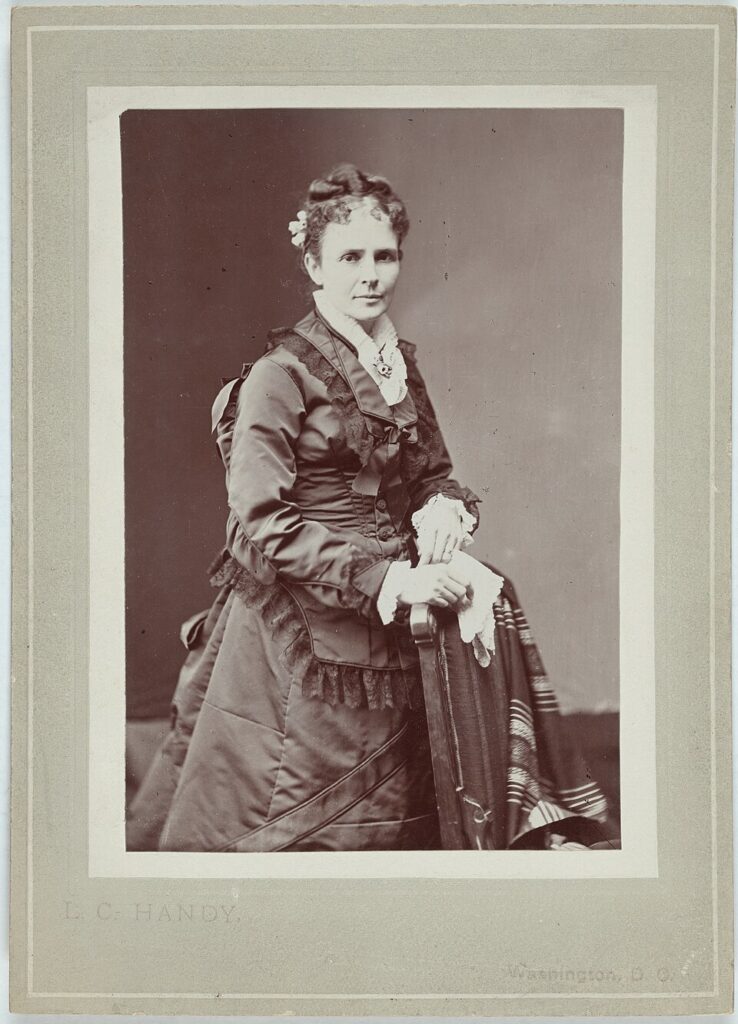
Lucretia Garfield became a widow under brutal circumstances. Her husband, President James A. Garfield, was shot in the summer of 1881 after only four months in office.
He did not die quickly. He lingered for weeks, suffering through crude medical care that likely worsened his condition. His slow death gripped the nation and left Lucretia to face the loss in the harsh light of public grief.
Devastated but resolute, she refused to let his memory fade. She spent her remaining decades at the family farm known as Lawnfield, guarding and organizing every piece of his legacy.
She built a fireproof memorial library wing inside the house to protect his papers and letters. Historians consider it the first presidential library, a model every later administration would eventually follow.
Her husband once praised her faultless taste, and she poured that care into the home. She oversaw its decoration and upkeep with a precision that bordered on reverence.
The Vigil of the Meticulous Caretaker
Lawnfield now operates as a historic site, and the reports about its most devoted resident share a common theme. She is still keeping house.
Security guards describe footsteps walking the upstairs floors at night when the building sits empty. The steps move with purpose, as though someone is making rounds through familiar rooms.
She also has a well-known habit that frustrates the night staff. She turns lights back on after the guards switch them off, as though she disapproves of leaving the house in darkness.
The cleaning stories remain the most beloved. Renovation crews have returned to swept floors and ordered rooms they left in disarray the night before. If any ghost earns the title of caretaker, it is Lucretia, who seems unable to tolerate a mess in the home she loved so fiercely.
A Presence in the Parlor
Visitors on tours report more than tidy rooms. Many describe a strong female presence, a sense of being gently watched by someone who belongs there and means no harm.
Some catch a fleeting glimpse of a woman seated at a small writing desk in the library. That room carries special weight, since it is the very space she built to shelter her husband’s papers.
Guests often connect the feeling to her portrait near the entryway. They describe the sensation that the painted eyes follow them, as though the mistress of Lawnfield still greets everyone who enters.
None of these encounters carry menace. The presence feels protective and proud, like the mood of a woman showing visitors through a home she has spent decades perfecting.
The First Presidential Library
Lucretia’s greatest achievement was quiet but lasting. After her husband’s murder, she added a fireproof wing to Lawnfield to house his papers, letters, and public records.
Historians widely credit her work as the first presidential library, the model that later grew into the vast system administered by the National Archives. Every modern presidential library traces a line back to a grieving widow in Ohio.
She did the work without fanfare and without a public mandate. She simply refused to let her husband’s record scatter and fade. Preservation became her tribute and her purpose.
The ghost story flows naturally from that work. A woman who devoted her life to caring for a house and its contents becomes, in legend, a spirit who still cares for both.
A Devotion That Shaped a Home
Lucretia lived at Lawnfield for decades after the assassination, tending the property and raising her family in the shadow of her loss. The house became an extension of her devotion.
She had a hand in every detail, from the decoration to the careful preservation of her husband’s memory. Her husband once praised her faultless taste, and she applied it to the home for the rest of her life.
That intimate bond with the house explains the gentle nature of the haunting. The spirit does not rage or mourn loudly. It tidies up, it lights the lamps, and it keeps watch.
In the end, the legend of Lawnfield is a portrait of love expressed through care. Lucretia poured herself into a home and a memory, and the story imagines her doing so still.
A Grief Turned to Purpose
It is worth pausing on how differently Lucretia handled her loss. Grief can hollow a person out, as it did to Jane Pierce a generation earlier. Lucretia took the opposite path.
She turned her sorrow outward, into building and organizing and protecting. Where another widow might have retreated into darkness, she constructed something meant to last for centuries.
That choice defines her ghost story. The spirit at Lawnfield is not a prisoner of despair. It is a caretaker still fulfilling a mission she chose freely and pursued for decades.
Visitors sometimes leave the site moved less by the hauntings than by the woman behind them. Lucretia Garfield answered tragedy with quiet, relentless purpose, and the legend simply refuses to let that purpose end.
A Haunting Built on Love
This is a ghost story defined by love, not tragedy. Lucretia’s grief never curdled into despair or bitterness. She channeled it into preservation, discipline, and devotion.
She turned a private farmhouse into a monument. She protected the papers, organized the memory, and invented a form of tribute the country still uses today. Her mourning became a lifetime of purposeful work.
The legend simply lets that work continue. If she still turns on the lights and sweeps the floors, she is finishing the task she began the day her husband died.
Walk through Lawnfield and you walk through the achievement of a grieving wife who refused to let her husband be forgotten. Some vigils end with time. Hers, it seems, never truly will.
References & Further Reading
• James A. Garfield House (Ohio Haunted Houses)
• James A. Garfield National Historic Site (Ohio Haunted Houses)
• James A. Garfield National Historic Site Programs (National Park Service)



[…] The tale fits the woman. In life she guarded his legacy with fierce devotion. In legend, she simply never stopped. For more on Lucretia, check out our other post here. […]