Most presidential ghosts brood. They mourn, they wander, they replay old defeats in dim corridors. The ghost of Martin Van Buren does something almost unheard of.
He enjoys himself.
At Lindenwald, his elegant estate near Kinderhook, New York, witnesses describe him seated at the dinner table with his son, sharing food, drink, and relaxed company. In one charming detail, he reaches down to loosen the tight corset beneath his waistcoat, exactly as he did in life.
In a genre built on tragedy, this haunting stands out for a rare quality. It is joyful.
The Retirement of the Red Fox
Van Buren bought the Federal-style brick house in 1839 and renamed it Lindenwald. He hired a leading architect and transformed the place into a grand thirty-six-room estate with imported wallpapers and a spacious banquet hall built for entertaining.
He adored the house. He called these the happiest days of his life as a farmer in his native town. He planted orchards, kept sheep, and hosted a steady stream of guests and political allies.
He also refused to fully retire. He ran two more campaigns for the White House from the property, in 1844 and again in 1848 on the Free Soil ticket. He lost both. Neither defeat seemed to sour the pleasure he took in the house.
His son eventually moved in with a large family, filling the rooms with children and noise. Modern comforts arrived too, including running water and a kitchen range.
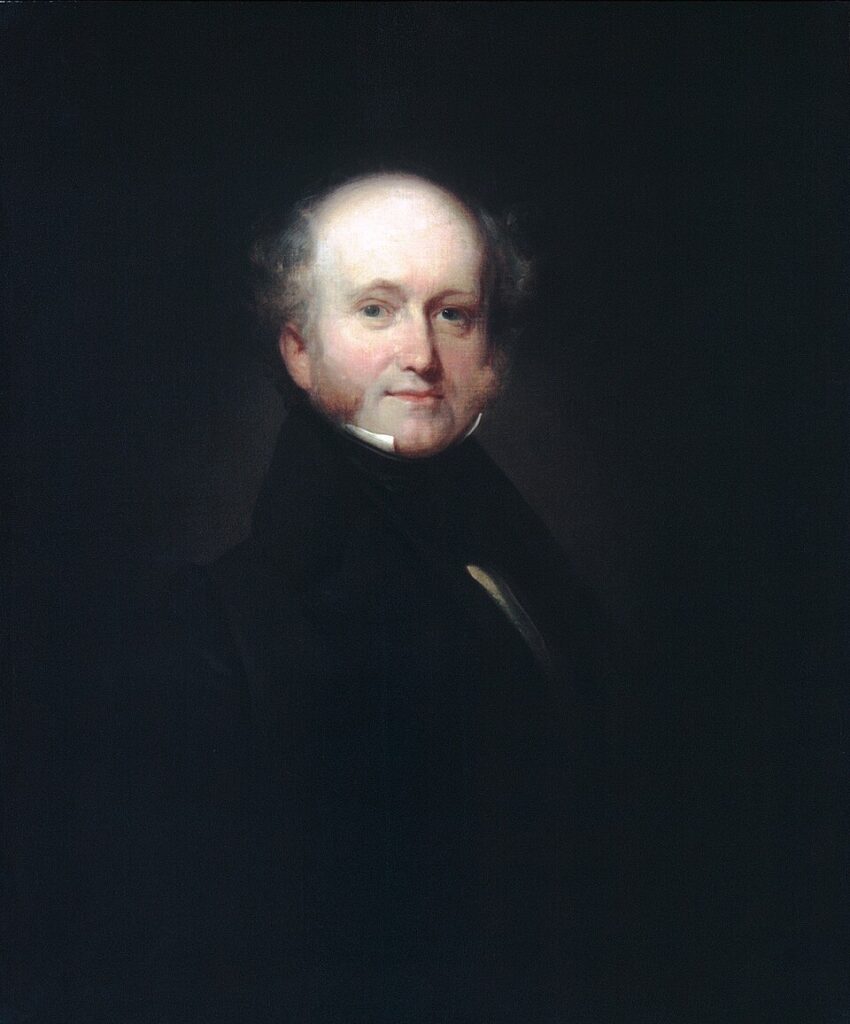
Van Buren earned the nickname “the Red Fox of Kinderhook” for his red hair and shrewd political instincts. He lived contentedly at Lindenwald until his death in 1862, surrounded by family and the comforts he had built.
A House Steeped in Legend
Lindenwald sits in the heart of Hudson Valley ghost country. Before Van Buren owned it, Washington Irving stayed on the surrounding land and drew inspiration for The Legend of Sleepy Hollow from the local folklore.
The property carries darker tales too. Legend places the spirit of Aaron Burr among the apple trees, along with a butler said to have taken his life in the orchard. The grounds seem to collect ghosts the way old estates collect ivy.
Van Buren himself trailed a strange rumor. During his life, gossips whispered that he was Burr’s illegitimate son, a claim later revived in a Gore Vidal novel. The two men’s names still tangle together in Lindenwald’s lore.
Against that backdrop of gloom, the president’s own haunting stands out for its warmth. His ghost does not seem trapped or tormented. It seems to be enjoying an afterlife spent just as he liked.
Dining With the Dead
The dining room is the stage for the most cherished sightings. Van Buren built the grand hall by combining two rooms, and he filled it with French wallpaper and a long banquet table. He designed it for exactly the scenes people now report.
Witnesses describe Van Buren and his son John as transparent figures, enjoying a phantom meal in the very room built for their company. The two men appear relaxed, sociable, and entirely at home.
The detail that wins people over is the waistcoat. In later life, the president wore a corset to hide a growing paunch, and it pinched. His ghost is seen reaching down to loosen it after dinner, a gesture so ordinary and human it dissolves two centuries in an instant.
That is the gift of this particular haunting. It does not frighten anyone. It humanizes a man most people remember only as a name in a textbook, the founder of the Democratic Party reduced to a face on an old engraving.
The Founder History Forgot
Van Buren deserves more memory than he receives. He founded the modern Democratic Party and built the machinery of American political organization that still shapes campaigns today.
He was also the first president born as a citizen of the United States, rather than a British subject. English was his second language, learned after the Dutch he grew up speaking in Kinderhook. He remains the only president who spoke English as a second language.
None of that secured him a lasting place in the public imagination. He served a single term shadowed by an economic depression and lost his reelection bid. Most Americans could not name a single thing he did.
The cheerful ghost of Lindenwald offers a kind of second chance at memory. Through the ghost story, a forgotten founder becomes a warm, human figure worth knowing.
A Fitting End for the Red Fox
The estate itself tells the story of his contentment. Van Buren spent lavishly to turn a simple Federal house into an Italianate showplace, complete with a banquet hall designed for the political dinners he loved.
He filled the house with family and continued to follow national politics from his study. Even his failed campaigns did not embitter him. He described his years at Lindenwald as the happiest of his life, and the record suggests he meant it.
When his son later lost the estate in a card game, the house passed from the family. Yet the legend keeps the president himself firmly in place, seated at his table as if nothing had changed.
It is a haunting that honors a life well enjoyed. The Red Fox stayed because he had no reason to leave a home that made him so happy.
The Party That Never Ended
There is a lesson tucked inside this cheerful ghost story. Van Buren spent his final decades in comfort and good company, at peace with a public career that had run its course.
His life ended not in bitterness but in contentment, at the head of his table. The legend simply lets him keep his seat.
Most hauntings ask us to feel fear or pity. This one asks us to feel something warmer, a kind of affection for a man who knew how to enjoy his house.
Pull up a chair at Lindenwald and imagine the scene. The Red Fox still presides over dinner, waistcoat loosened, glass in hand, thoroughly and forever at ease. Some ghosts haunt. This one simply refuses to leave an excellent party.
References & Further Reading
• The Haunting of Lindenwald (These Mysterious Hills)
• Martin Van Buren National Historic Site (Wikipedia)