While North America has Bigfoot and Mothman, the rest of the world harbors its own terrifying creatures hidden in deep lakes, remote jungles, and frozen wastes. Cryptozoology—the study of hidden animals—is a global discipline. Every continent has folklore that blurs the line between myth and undiscovered biology.
This guide maps the most compelling cryptids across the globe, exploring the cultural fears they represent and the expeditions launched to find them. For monsters closer to home, see our guide to the Cryptids of North America.
Europe: Alpine Lizards and Lake Monsters
Europe’s long history of human settlement leaves few places for large animals to hide, which makes its surviving cryptids all the more fascinating. The deep lochs of Scotland are famous for Nessie, but they also hide forgotten prehistoric sisters in other lakes, including Bessie, the monster of Loch Lomond. Further south, Italy claims its own aquatic beast: the Lariosauro of Lake Como, a legend revived by the discovery of Triassic fossils.
In the high mountains, a different kind of predator lurks. The Alpine Tatzelwurm is a thick, snake-like lizard with the face of a cat, feared by generations of Swiss and Austrian farmers.
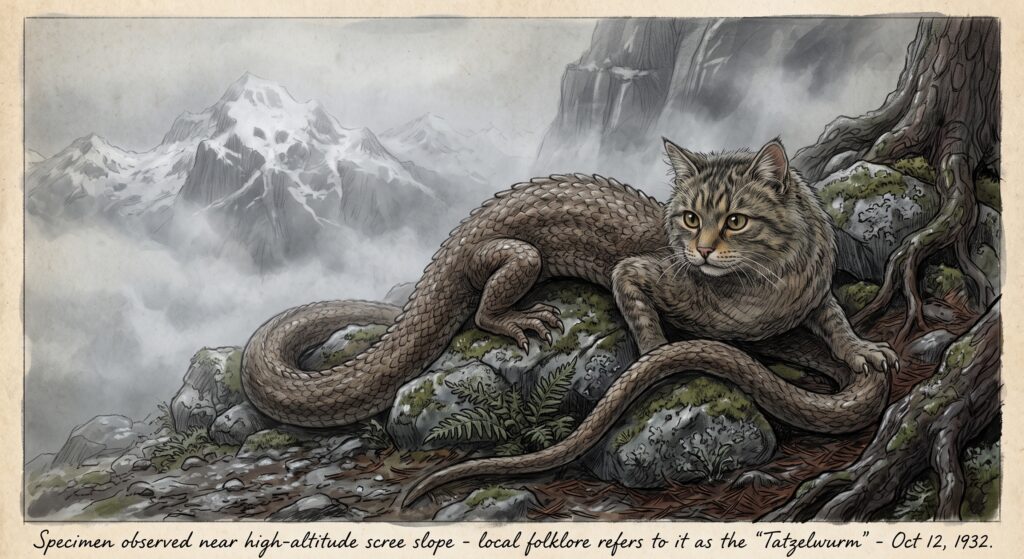
In the UK, the skies are haunted by the Owlman of Cornwall, a terrifying winged humanoid that mirrors America’s Mothman.
Africa: Living Dinosaurs of the Congo
The vast, impenetrable swamps of the Congo River basin have long been rumored to harbor prehistoric survivors. The most famous is Mokele-Mbembe, a sauropod-like creature said to dwell in the deep rivers. But it is not alone.
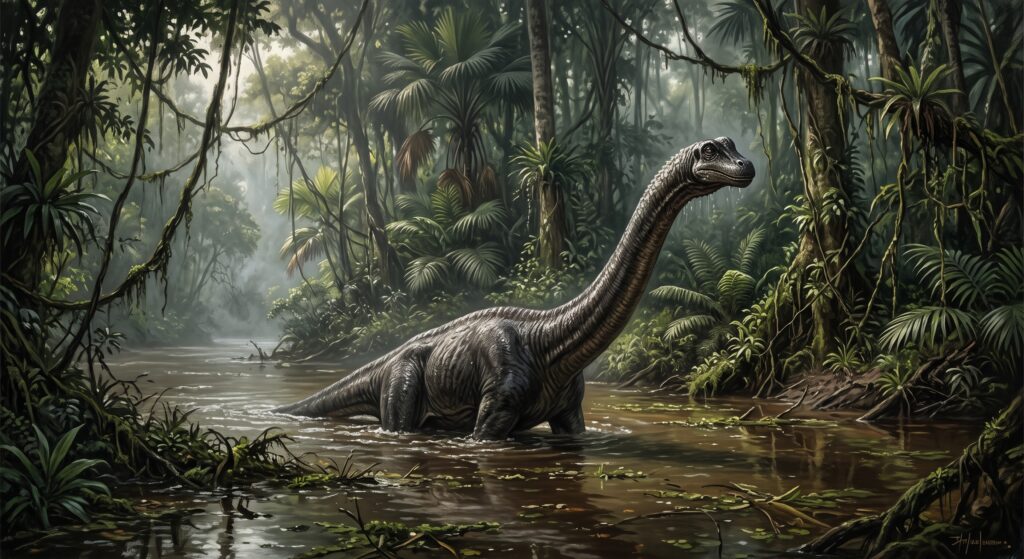
The region is also home to the Emela-Ntouka, the “elephant killer”, a heavily armored beast often compared to a ceratopsian, and a stegosaur-like cryptid that defies standard classification.
The skies over Central Africa are allegedly patrolled by the Kongamato, a winged terror that resembles a pterosaur. In the rivers, the heavily scaled Dingonek (the serpent-lizard) has baffled investigators for a century. Further south, South African folklore warns of the Tokoloshe, a malicious gremlin-like spirit that drives people to raise their beds on bricks for protection.
The Americas: Beyond Bigfoot
While the United States dominates modern cryptid media, the rest of the Americas have deeply rooted legends. In Latin America, the Chupacabra emerged in the 1990s as a blood-sucking predator of livestock, quickly becoming a global phenomenon. In Brazil, the terrifying Pisadeira is a crone-like creature associated with sleep paralysis.
Canada boasts one of the world’s most famous lake monsters: Ogopogo of Okanagan Lake, a serpent-like creature that predates Nessie in the historical record. (Its southern cousins include Champ, Bessie of Lake Erie, and the Flathead Lake Monster).
The Arctic and the Ice
The frozen extremes of the planet breed monsters adapted to the cold. In the Arctic, Inuit folklore warns of the Qalupalik, a sea-ice monster that snatches children, and the Akhlut, a terrifying wolf-orca hybrid that hunts the Bering Sea. Alaska’s coastlines are haunted by the Kushtaka, a shape-shifting otter-man.
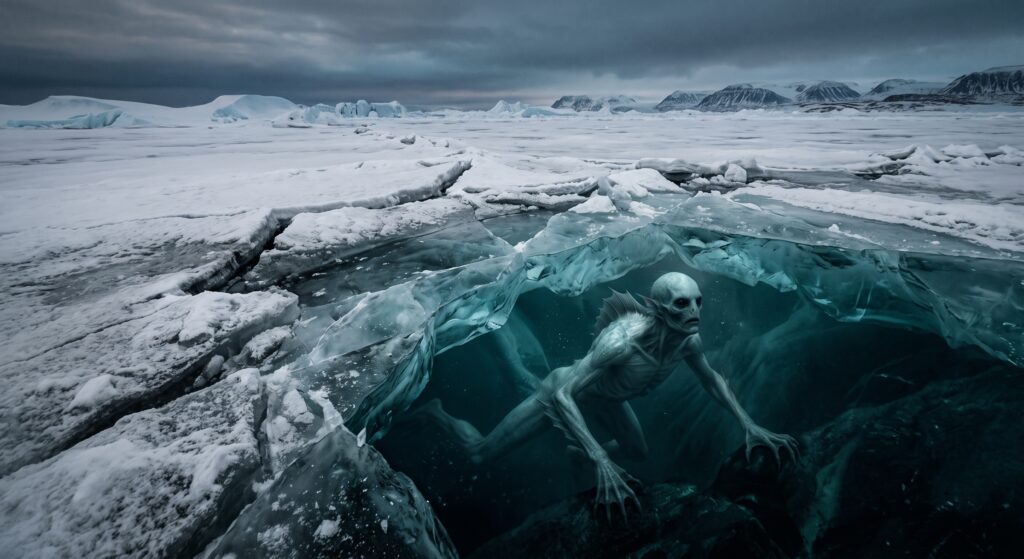
In northern Europe, Sweden and Russia share legends of reptiles of the ice, cold-water lake monsters that defy biological logic. At the opposite end of the globe, the internet age has birthed the legend of the Ningen, a massive, pale humanoid said to inhabit the freezing waters of Antarctica.
Australia and the Middle East
Australia’s vast outback is home to the Yowie, a hairy hominid that serves as the continent’s equivalent to Bigfoot, deeply rooted in Aboriginal tradition.
In the Middle East, the line between cryptid and spirit blurs. The phenomenon of Al-Jathoom—a jinn attack often associated with sleep paralysis—demonstrates how cultural context shapes our understanding of a terrifying presence in the dark.
As with all paranormal investigation, it is crucial to understand the cultural roots of these creatures. Treating an ancient cultural belief the same way you treat a modern internet rumor is a mistake—a distinction we explore in our guide to why Skinwalkers and Cryptids should not be treated the same.

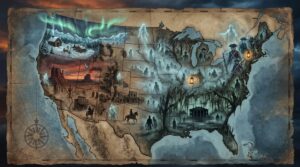
[…] For cryptids beyond North America, see our guide to the Cryptids of the World: A Global Guide to Hidden Monsters. […]
[…] Cryptids of the World: A Global Guide to Hidden Monsters […]
[…] For more on this topic, see our complete guide to the Cryptids of the World: A Global Guide to Hidden Monsters. […]
[…] For cryptids beyond North America, see our guide to the Cryptids of the World: A Global Guide to Hidden Monsters. […]