This is an article about a distinction that matters.
When Navajo, Hopi, or other Southwestern Native American concepts are discussed in paranormal, cryptid, and horror contexts, they are frequently treated as if they occupy the same category as Bigfoot, the Loch Ness Monster, or other creatures in the secular cryptid tradition. They do not. The skinwalker, or “yee naaldlooshii” in Navajo, is not a cryptid. It is a being within a living religious and cultural system, understood and discussed by people who practice that system today, and its treatment as entertainment content causes genuine harm to those communities.
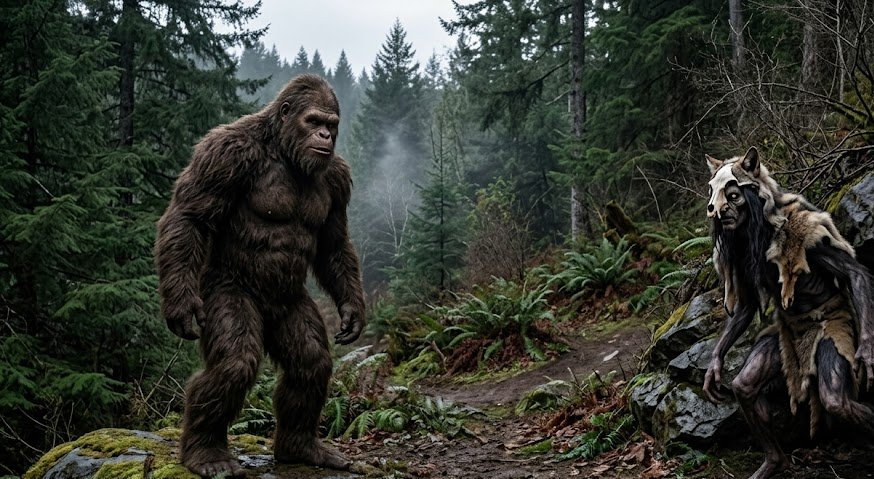
This article explains the distinction, not to dismiss the folklore, but because understanding the boundary between secular cryptid culture and living Indigenous spiritual tradition is essential for anyone engaging seriously with either one.
What a Cryptid Is
The term cryptid, coined by cryptozoologist John Wall in 1983, describes an animal whose existence has been claimed but not confirmed by mainstream science. Bigfoot, the Loch Ness Monster, the Jersey Devil, and the Chupacabra are cryptids: creatures evaluated primarily as potential biological organisms within a secular, scientific framework. The question asked about a cryptid is: does this animal exist? The investigation is zoological, even if unorthodox.
Cryptid culture is also largely disconnected from any active living religious tradition. The Loch Ness Monster does not carry obligations or prohibitions for the people who live near Loch Ness. Bigfoot researchers are not required to consult Indigenous spiritual authorities before entering the forest, though respectful engagement with Indigenous traditions about forest beings is both ethically appropriate and practically useful.
What Yee Naaldlooshii Is
Yee naaldlooshii, the Navajo concept often translated as “skinwalker” in English, is a human practitioner of harmful medicine who has gained the ability to transform into or take the form of animals. It is a figure of evil within a moral and spiritual framework, the inverse of beneficial medicine people and healers in Navajo tradition. The concept is part of a living belief system practiced today. Navajo cultural authorities generally counsel against discussing yee naaldlooshii in detail outside traditional contexts, because detailed public discussion is itself considered potentially harmful.
The Skinwalker Ranch phenomenon, a property in the Uinta Basin of Utah associated with years of anomalous reported events that have been extensively documented in books, television, and online content, has brought the skinwalker name to a very wide audience. The ranch is in Ute territory rather than Navajo territory, and Ute tribal authorities have noted their discomfort with the use of a Navajo term for phenomena in their ancestral lands. The specific connection between the ranch’s anomalies and the skinwalker tradition is largely a media construction rather than a claim made by Navajo cultural authorities.
Why the Distinction Matters
The harm in treating Indigenous spiritual beings as entertainment cryptids comes in several forms. It extracts specific elements of living spiritual traditions from their cultural context and reduces them to content. It can create misrepresentations that damage the intellectual integrity of those traditions in the minds of people who have no other access to them. And it places Indigenous communities in the position of repeatedly correcting misrepresentations of their own spiritual lives in public media, which is a burden that has real costs.
The better approach for anyone interested in the strange phenomena of the Southwest is to engage with cryptid traditions as cryptids and to approach Indigenous spiritual traditions with the same respect that any scholar or visitor would bring to any living religion. They are genuinely different things, and the difference deserves acknowledgment.
References & Further Reading
• Navajo Nation: Cultural Resources Program
• Wikipedia: Skinwalker (Navajo Culture)



[…] His wife, Running Deer, watched him tear at his face and understood two things at once: the demon Ew’ah had found him, and she was the only one left who could do anything about […]
[…] When investigating these regions, it is crucial to understand the cultural context. Researchers must be careful to distinguish between a biological cryptid and a spiritual entity; as we have noted elsewhere, there are vital reasons why a Skinwalker should never be treated as a cryptid. […]
[…] Skinwalker vs Cryptid: Why Some Legends Should Not Be Treated the Same […]