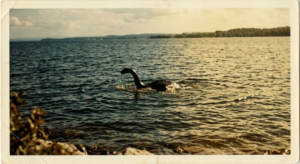
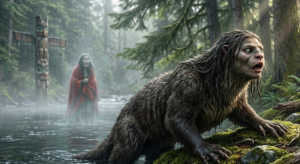
Most dinosaur-flavored cryptids favor warm, murky rivers and dense jungle cover. Sweden and Russia took a different path. They built serpentine legends that thrive in subzero water instead.
Storsjöodjuret, Sweden’s Bound Serpent
The Storsjöodjuret, or Great Lake Monster, is said to live in Lake Storsjön in Jämtland. Its earliest written mention appears in a 1635 manuscript. The text describes a serpent bound magically in the lake’s depths by a folk hero named Kettil Runske. Local tradition says his spell was carved into the nearby Frösö Runestone, where it still stands today.
Modern interest exploded in the 1890s. A wave of sightings led locals to form a company dedicated to capturing the creature in 1894, and the effort even won sponsorship from King Oscar II.
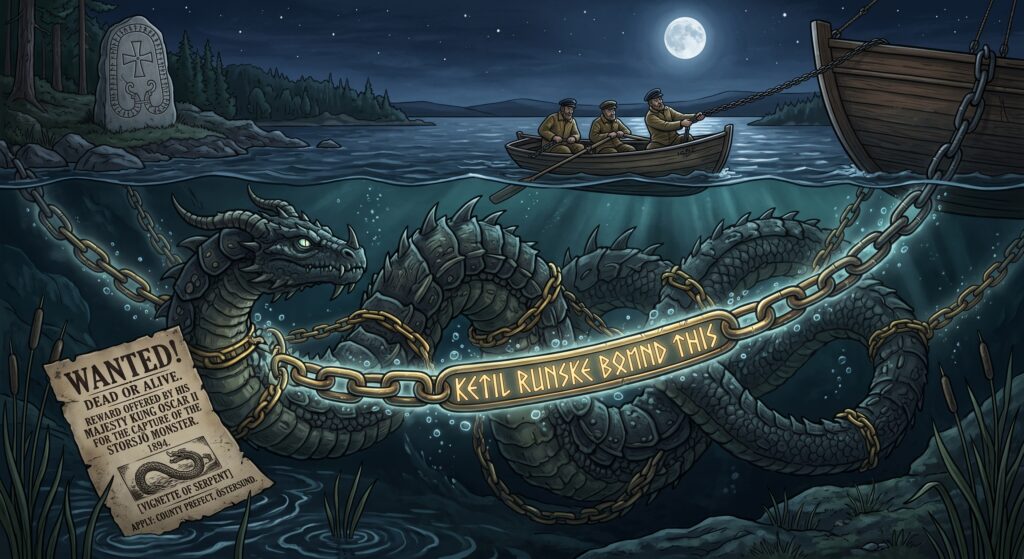
Sweden briefly took the legend further than any comparable country. In 1986, regional authorities formally declared the Storsjöodjuret an endangered species, granting it legal protection that stood until 2005.
In 2008, a film crew claimed infrared cameras had captured an unexplained heat signature moving through the lake. The footage reignited local interest, though it settled nothing. It fit a pattern that has held for well over a century: the lake keeps offering just enough ambiguity to keep the story alive.
The Brosno Dragon’s Bubbling Battlefield
Russia’s version lives in Lake Brosno, roughly 400 kilometers northwest of Moscow. Witnesses describe the Brosno Dragon thrashing to the surface in sudden, violent bursts. Geologists can now explain most of that image.
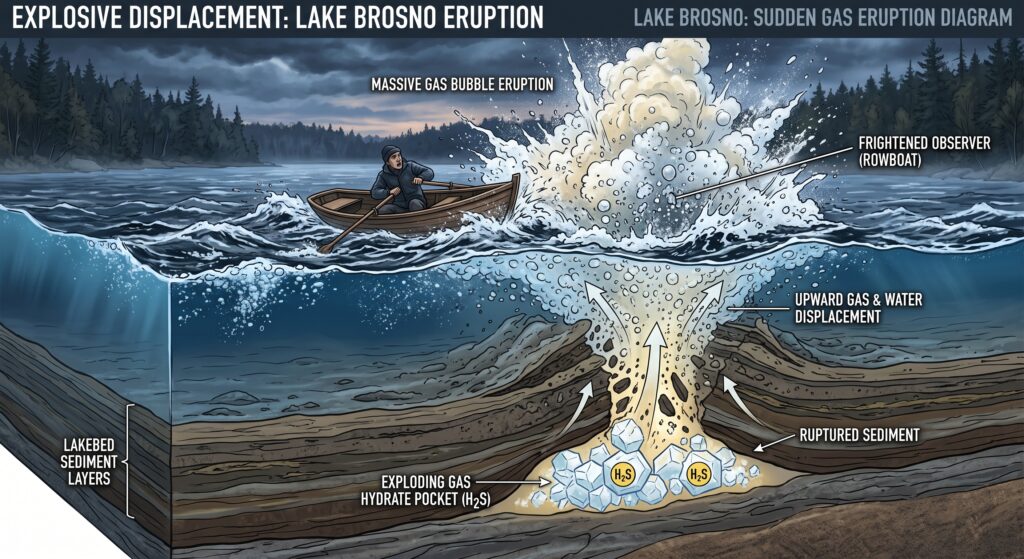
Decomposing plant matter on the lakebed releases hydrogen sulfide gas. That gas builds up as pressurized hydrate pockets beneath the sediment. When a pocket ruptures, gas surges upward and makes the surface boil and churn without warning. Anyone nearby, especially in a small boat, could easily mistake that sudden eruption for a surfacing dragon.
Why Cold Water Grows Different Monsters
Compare these two legends to a tropical counterpart like the Congo’s Mokele-mbembe, and the contrast is sharp. Warm-water cryptids usually get explained through misidentified megafauna: hippos, crocodiles, or oversized fish moving through dense cover. Cold-water legends lean on geology instead. They lean on runestones, gas hydrates, and the strange acoustics of a frozen lake.
Climate does not just shape wildlife. It shapes the monsters people invent to explain what that wildlife and that landscape leave unexplained.