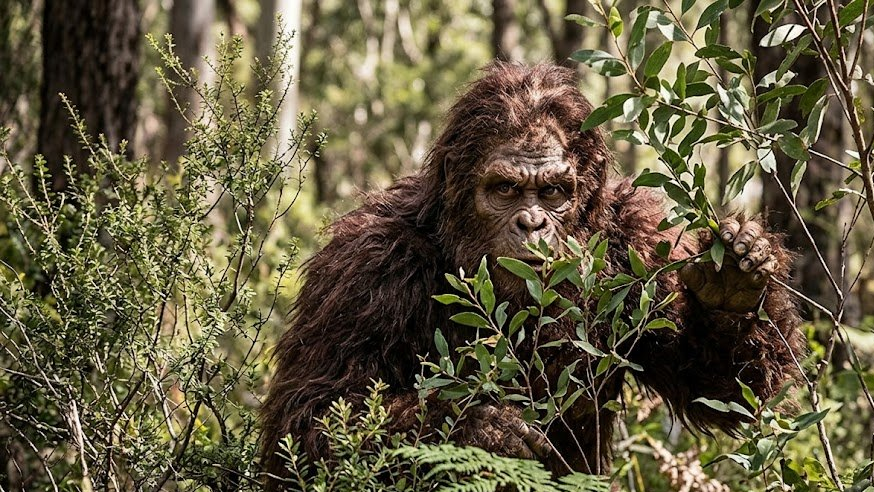
Australia is not supposed to have a Bigfoot. The continent’s mammalian fauna developed in isolation after the separation from Gondwana, producing an ecosystem of marsupials and monotremes that has no close relatives elsewhere in the world. There are no indigenous primates. There are no known bipedal hominids in the fossil record of Australia. There is no identified biological mechanism by which a large, hairy, bipedal primate could have arrived and established itself on the continent. And yet the Yowie tradition, which encompasses accounts of large, hairy, human-like bipeds seen in Australian bush and mountain terrain, extends from pre-European Aboriginal accounts through to contemporary BFRO-equivalent databases with thousands of entries.
The Yowie, also known regionally as the Youree, the Yahoo, the Tjangara, or simply the hairy man in various traditions, represents one of the more genuinely puzzling cryptid cases in the global inventory precisely because its existence requires either an extraordinary zoological event (a primate reaching Australia by some undocumented means) or an extraordinary cultural convergence (Australian communities independently developing a Bigfoot tradition that resembles North American reports in remarkable detail).
Aboriginal Traditions
Multiple Aboriginal nations across Australia maintain traditions about the Yowie or equivalent beings. The Bundjalung people of northern New South Wales describe the Quinkin, a tall, powerful, supernatural being associated with deep rocky country. The Wiradjuri describe the Jurrawarra, a large, hairy entity that lived in certain valleys and was to be avoided. These are not straightforwardly the same as the biological-animal Yowie of contemporary Australian cryptid culture, but they reflect a genuine, pre-European tradition of unusual large beings in Australian wilderness that provides cultural context for later accounts.
Rex Gilroy, a controversial but prolific Australian cryptid researcher, has documented what he describes as Yowie track casts and fossil evidence suggesting a large bipedal primate in Australian pre-history. His work has been received skeptically by mainstream paleontologists but reflects a genuine engagement with the question of whether Australia’s Pleistocene fauna included unexpected inhabitants.
Contemporary Sightings
Australian Yowie reports cluster in the Blue Mountains west of Sydney, the Gold Coast hinterland in Queensland, and the Brindabella Ranges near Canberra. The Queensland reports are particularly dense, with the Daniel Doon and Springbrook areas producing consistent accounts over decades. Researcher Paul Cropper and journalist Tony Healy, whose book The Yowie: In Search of Australia’s Bigfoot is the most systematic treatment of the subject, documented hundreds of accounts from across the continent, noting the same features that characterize North American Bigfoot reports: large bipedal figures, distinctive odor, evasive behavior, and the tendency to be seen in transitional zones between dense bush and agricultural land.
[…] Yowie Sightings in Australia: Wildman Folklore Beyond Bigfoot […]
[…] Yowie Sightings in Australia: Wildman Folklore Beyond Bigfoot […]