A haunting tethered not to trauma but to a marriage proposal
Most ghost stories are about death. This one is about a wedding proposal. In the Blue Room, the lore says, you can still hear John Tyler asking Julia Gardiner to marry him, a man replaying the happiest negotiation of his life over and over.
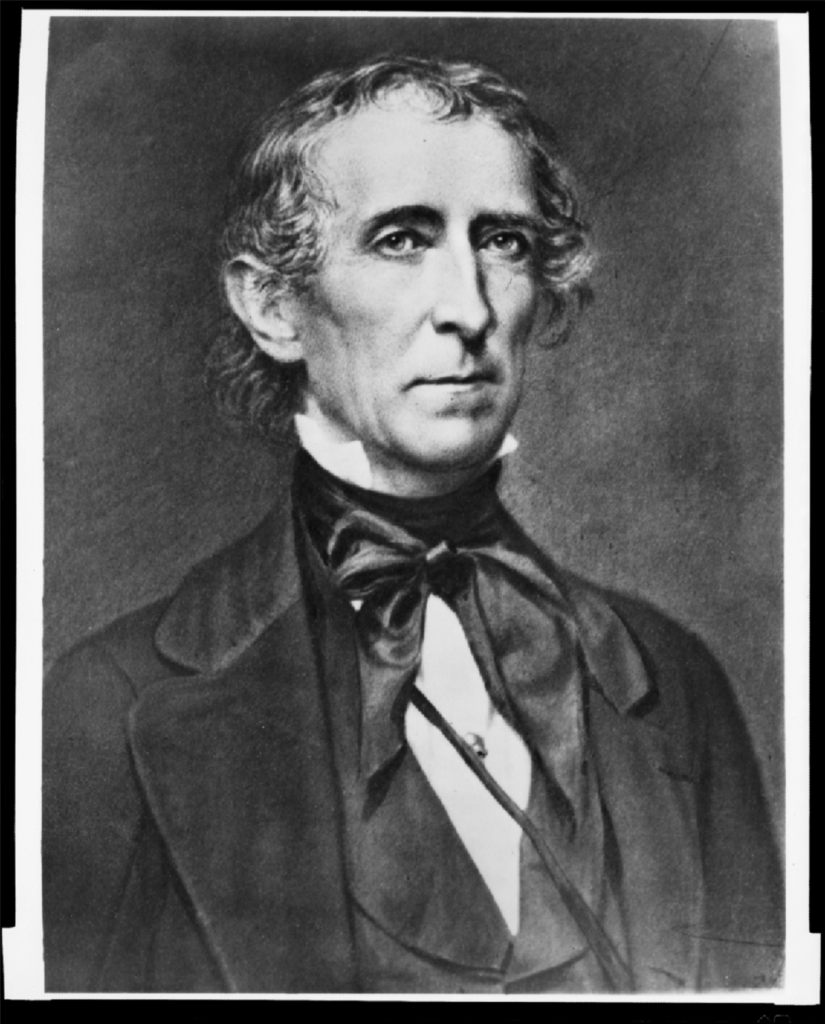
After a series of grief-soaked hauntings, Tyler offers something genuinely rare in this house. His ghost is in love.
The accidental president and the young bride
Tyler took office in 1841 when Harrison died, the first vice president to inherit the role mid-term, which earned him doubters who called him “His Accidency.” His personal life drew even more attention. During his presidency he married Julia Gardiner, a woman thirty years his junior, in a union that scandalized and fascinated Washington.
That marriage became the emotional anchor of his haunting. Mary Todd Lincoln, the same resident who heard Jackson swearing, reported hearing Tyler’s voice repeating his proposal to Julia. As with several of her accounts, she appears to have been the only witness, which makes her a fascinating recurring narrator in White House ghost lore.
A house that witnessed joy
The Blue Room shows up repeatedly in these stories as a site of romance and ceremony rather than crisis. Both Tyler’s proposal and the wedding of another president we will meet in this series attach to it. The room seems to collect the mansion’s happier emotional peaks.
Tyler’s haunting suggests the building does not only record suffering. It also holds the high points, the private moments of joy that happened to powerful people who lived their whole lives in public.
The happiest haunting
Tyler quietly challenges the central theory of White House hauntings. The usual explanation says trauma leaves the imprint, that war and grief tether spirits to the place. Tyler tethered himself with happiness instead.
If a marriage proposal can echo for a century, then the imprint theory needs widening. It is not pain specifically that lingers. It is intensity. Tyler felt his proposal with his whole being, and intensity, not just sorrow, appears to be what the house remembers.
A scandalous, genuine romance
The Tyler marriage was the talk of the nation, and not gently so. The president was a widower in his fifties when he fell for Julia Gardiner, a celebrated young New York beauty barely out of her teens. The thirty-year gap drew gossip and mockery. Yet, by most accounts, the affection was real and mutual, and the courtship had an almost cinematic intensity.
It also carried a dark backdrop. Julia’s father died in an 1844 explosion aboard the USS Princeton, a naval demonstration that killed several officials while the president looked on. Tyler comforted Julia through that grief, and the bond deepened. They married soon after. The proposal that the legend replays in the Blue Room emerged from a whirlwind of spectacle, tragedy, and devotion, which may be exactly why it left such a strong imprint.
Mary Todd Lincoln, the recurring narrator
One figure keeps surfacing across these stories, and she deserves recognition. Mary Todd Lincoln is the reported source for both the Jackson haunting and the Tyler proposal. A devoted spiritualist who held séances in the White House to reach her dead son, she was unusually attuned to, and unusually willing to report, what she believed she heard in those halls.
That makes her something like the chief witness of the early White House ghost tradition. Skeptics note that her grief and her spiritualist convictions primed her to perceive the supernatural everywhere. Believers counter that her sensitivity is precisely what allowed her to notice what others missed. Either way, a striking share of the mansion’s nineteenth-century lore traces back to one bereaved, perceptive first lady who listened to the house more closely than anyone before her. Tyler’s eternal proposal is, in a real sense, a story she preserved.
Why a proposal, of all things
Of every moment in Tyler’s eventful life, the legend fixates on a single question posed to a single woman. That selectivity is the striking part. Tyler had a sprawling public career and the largest family of any president, fathering fifteen children across two marriages. He could be remembered for any number of dramatic episodes. Instead, the house keeps the proposal.
The choice suggests these hauntings are not really about historical importance. They are about emotional peaks. The Blue Room proposal was, by all evidence, the most exhilarating private moment of Tyler’s life, a late and unlikely second chance at happiness. If the building records intensity above all, then the proposal makes perfect sense as the thing that stuck. It was the instant Tyler’s guarded heart was most fully open.
That reading also softens a figure history often treats harshly. Tyler is remembered as a stubborn, isolated president who alienated his party and earned the nickname His Accidency. The ghost story remembers something gentler: a widower who fell genuinely in love and asked, hopefully, for a yes. There is a quiet humanity in letting that be the moment he repeats forever, rather than any of his political defeats.
There is a final tenderness in the story. The proposal Tyler repeats is not a moment of power but a moment of vulnerability, a man asking to be loved and risking a “no.” Of all the things the house could have kept of him, it kept the moment he was least guarded. That is a generous way to be remembered and a reminder that the building holds private hopes alongside public deeds.
It is striking that the most romantic story in the house comes secondhand, through Mary Todd Lincoln, a woman who knew profound loss and listened for the dead more closely than anyone. That a grieving first lady chose to preserve a love story, rather than another sorrow, says something hopeful about her. Even in mourning, she heard the house remember joy.
More in This Series: White House Hauntings
- The Cabinet of the Dead: Inside the Most Haunted House in America
- The Resident Who Never Left: The Strange Persistence of Lincoln’s Ghost
- Old Hickory’s Eternal Grudge: The Auditory Haunting of Andrew Jackson
- Laundry in the East Room: The Eternal Diligence of Abigail Adams
- The Ghost Who Stopped the Shovels: Dolley Madison’s Floral Legacy
- Faint Melodies in the Yellow Oval Room: Thomas Jefferson’s Spectral Violin
- One Month in Office, Eternity in the Attic: The Harrison Haunting
- Echoes of Sad Things: The Haunted Weight of the Johnson Years
- Death in the Executive Mansion: The Lingering Presence of Zachary Taylor
- The Bride of the Blue Room: The Eternal Youth of Frances Cleveland
References & Further Reading
Fairweather Lewis: Ghosts of the White House
White House Historical Association: White House Ghost Stories
Elections Daily: Hauntings at the White House
US Ghost Adventures: Haunted Tales from the White House
For more on this topic, see our complete guide to the Ghosts of the Founding Fathers and the Haunted White House.


[…] Proposals in the Blue Room: The Romantic Specter of John Tyler […]