The call came three days after the funeral. The number on the screen was his. You answered because you did not register, in the half-second before you spoke, that this was impossible. And then you heard something, or you heard nothing, or you heard static in which there was the beginning of a word. The call lasted four seconds. You called the number back and reached a disconnected service message. His phone had been buried with him.
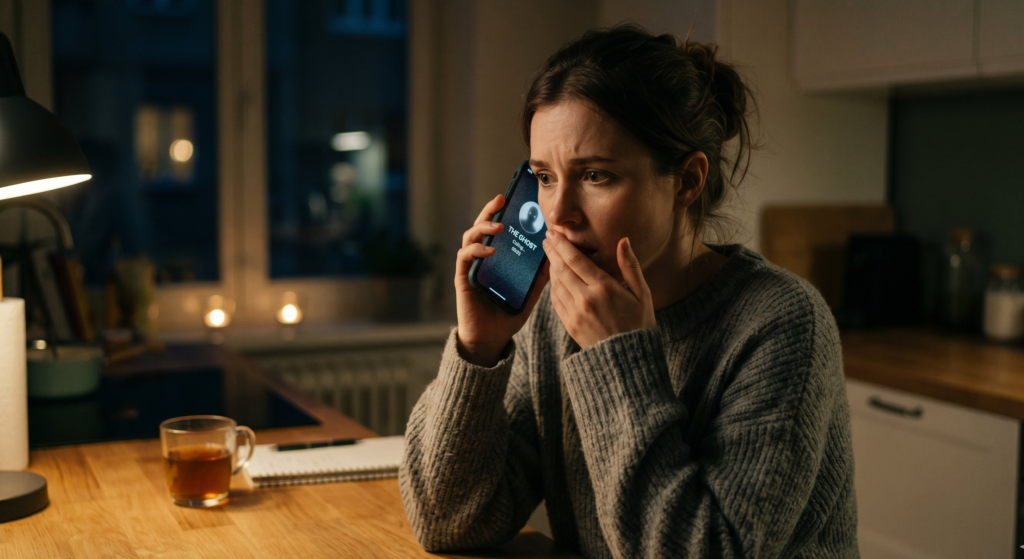
Phone calls from the dead, the experience of receiving a telephone communication from a deceased person, is a specific and well-documented category of post-death contact experience. It has a formal research literature, a plausible set of technical explanations, and a small number of documented cases that those explanations do not fully account for.
The Research Foundation
The foundational text in this field is Phone Calls from the Dead, published in 1979 by parapsychologists D. Scott Rogo and Raymond Bayless. Their two-year investigation compiled accounts of spontaneous telephone communications from deceased individuals, finding consistent features across independent cases: the calls tended to occur shortly after the death, the voice was recognized by the recipient, the calls were brief, the communication was limited and sometimes difficult to understand, and the calls could not be traced to any existing phone number. Rogo and Bayless concluded that the phenomenon appeared genuine and might be more common than reported, precisely because many recipients were reluctant to share their accounts.
Research on instrumental trans-communication, the broader category of alleged spirit communication through electronic devices, has continued through the decades since. EVP researcher Sarah Estep reported recording a telephone call she attributed to Konstantin Raudive, a prominent EVP researcher who had died twenty years previously. Two other researchers in the field reported similar experiences. These accounts are anecdotal and cannot be independently verified, but they come from individuals with substantial records of careful investigation.
The Technical Explanations
Several conventional technical explanations account for the majority of phone call anomaly reports. A phone that was not fully disconnected from a service, or whose number was reassigned to a new user who called at a coincidental moment, can produce a call that appears to come from the deceased’s number. Old voicemails that are replayed or received by the bereaved person’s phone with a delayed timestamp can feel like a new contact. Technical glitches in cellular networks occasionally produce misattributed caller ID. A phone buried with its owner may have a residual charge sufficient to send a partial signal before fully dying.
In the case of text messages, which have generated their own category of accounts, delayed delivery from a phone with an intermittent signal before death or messages drafted but not sent that are subsequently transmitted automatically can produce the experience of post-death communication that is entirely technical in origin.
What the Technical Explanations Do Not Cover
The cases that resist technical explanation are those where the call came from a phone that was demonstrably destroyed, buried, or disabled prior to the call; the content of the call included information the deceased could not have known before their death; or the call was simultaneously heard by multiple people on the same line. These cases are rare, are poorly documented in most instances, and have not been rigorously investigated under controlled conditions. The Center for Paranormal Research and Investigation, which maintains an archive of such accounts, notes that phone calls from the dead are among the most underreported paranormal experiences because recipients rarely seek investigation before the technical evidence has been lost.
The Grief Context
Phone calls from the dead are reported disproportionately in the days and weeks immediately following a death, when grief is most acute and the desire for continued contact is most intense. This correlation supports the psychological interpretation: a bereaved person whose nervous system is scanning for any signal of the deceased’s continued presence may interpret a dropped call, a wrong number, or a distorted connection through that framework. The emotional certainty of the experience is real regardless of its mechanism.
What distinguishes the cases worth taking seriously from grief-driven misinterpretation is specificity and corroboration: a specific verifiable piece of information communicated, a second witness who heard the same content, and a technical investigation of the originating number that produces no conventional explanation. Most reported cases do not meet all three standards. The ones that do are worth the attention of anyone interested in genuine paranormal research.
References & Further Reading
• Higgypop: Phone Calls from the Dead
• The Paranormal Scholar: Telephone Calls from the Dead
• Encyclopedia.com: Telephone Calls, Paranormal



[…] Phone Calls from the Dead: Stories, Folklore, and Technical Explanations […]