The room is on the fourth floor of a hotel built in 1912. The bellhop mentioned, briefly, that guests sometimes ask to move rooms from this floor. You did not ask why at the time. It is now 2 a.m., and the television has just turned itself on for the third time, always to the same channel, always showing static.
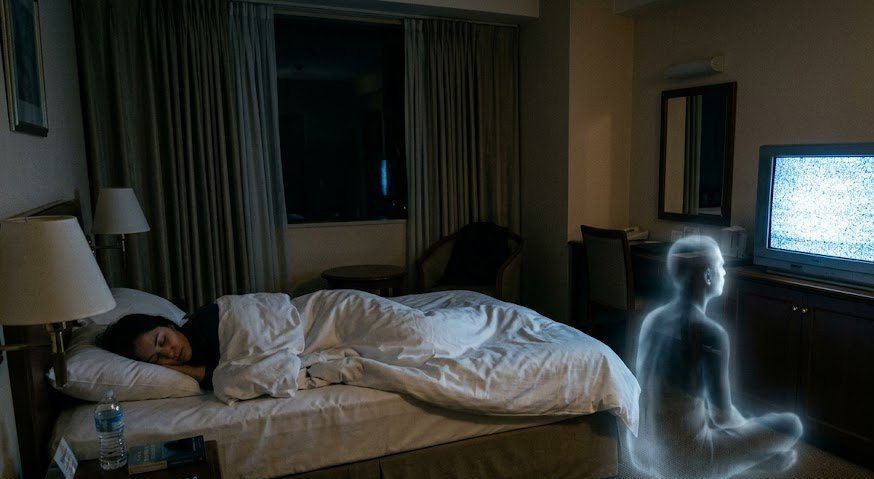
Hotels are among the most frequently reported haunting locations in America, and the reasons are both practical and psychological. Understanding those reasons helps you assess your own experience more clearly while also explaining why some hotel reports resist the easy explanations.
Why Hotels Accumulate Ghost Stories
A hotel room is a space that has been occupied by an extraordinary number of people under an extraordinary range of emotional conditions. Births, deaths, affairs, grief, joy, fear, desperation, and hundreds of thousands of unremarkable nights have all passed through the same walls. If locations retain any emotional or energetic residue from the events that occurred in them, a century-old hotel is among the most densely saturated environments imaginable.
The practical reasons are equally significant. Hotels have genuine, documented histories of deaths. The Cecil Hotel in Los Angeles, which has seen a disproportionate number of deaths and disappearances across its history, including the recent documented tragedy of Elisa Lam, is an extreme example. Most historic hotels have quieter but equally real records of deaths in specific rooms. When those records become known to guests, via local legend, online forums, or direct staff disclosure, the psychological priming effect shapes everything the guest subsequently experiences.
The Most Commonly Reported Signs
Guests who report haunted hotel experiences consistently describe a recognizable set of phenomena. Electronic disturbances are the most common: televisions that turn on or change channels without input, phones that ring with no caller, and lights that flicker or extinguish in patterns inconsistent with power fluctuation. Temperature anomalies, particularly in specific areas of a room rather than the room overall, follow closely. Physical sensations, most commonly pressure on the bed or the feeling of someone sitting beside the guest, are reported frequently in accounts that feel too specific and too calm to be easily attributed to fear and suggestion.
Auditory phenomena are particularly common in old hotels, and here the rational explanation is particularly strong. Old buildings with extensive plumbing systems, multiple floors, elevator shafts, HVAC ducts, and thin walls between rooms transmit sound in ways that are genuinely difficult to trace. A voice that seems to come from inside the room may be traveling through a shared wall from an adjacent space. Footsteps on the ceiling above may be from a guest three rooms away whose sound is traveling through the building’s structural frame. Old radiators contracting at night produce sounds that range from knocking to something alarmingly close to a human moan.
The Stanley Hotel and the Room 217 Effect
The Stanley Hotel in Estes Park, Colorado, which inspired Stephen King’s The Shining after he stayed there in 1974, has become one of the most famous allegedly haunted hotels in America. Room 217 is the most requested room in the hotel, booked months in advance by guests who want to experience what previous visitors have reported: lights turning on and off, luggage being moved, and the feeling of a presence beside the bed. The hotel embraces its reputation and offers paranormal tours. What makes the Stanley interesting from an investigative standpoint is the sheer volume of independent accounts, many of them from guests who did not know the room’s reputation before staying and reported their experience before learning the history. Independent accounts, generated before the witness has absorbed the expected narrative, are the most evidentially significant.
How to Assess Your Own Experience
If you are in a hotel room and something feels wrong, work through this before drawing any conclusions. Check the obvious physical causes: old wiring in historic buildings produces genuine electrical anomalies. Note whether the room has a shared wall with an elevator shaft, plumbing stack, or HVAC unit. Check whether the window faces a busy street where light and sound patterns could explain what you are experiencing.
If you have checked all of that and something still feels unexplained, note the details carefully: time, specific location within the room, duration, and any concurrent anomalies. Ask at the front desk about the room’s history. Check whether the hotel has a documented paranormal record. And if the experiences are repeatable and consistent across your stay, consider contacting a paranormal investigation group that can bring calibrated equipment and an independent perspective.

[…] Haunted Hotel Room Signs: What Guests Report and How to Stay Skeptical […]
[…] Haunted Hotel Room Signs: What Guests Report and How to Stay Skeptical […]