The keeper’s log entry dated October 14, 1880, records only routine maintenance at St. Simons Lighthouse in Georgia. It does not record what happened that evening between head keeper Frederick Osborne and his assistant John Stevens. What the historical record does confirm is that Stevens shot and killed Osborne during an argument and that the lighthouse continued to operate, tended by Osborne’s widow, who later reported hearing footsteps on the spiral stairs each night that sounded precisely like her husband’s distinctive tread.
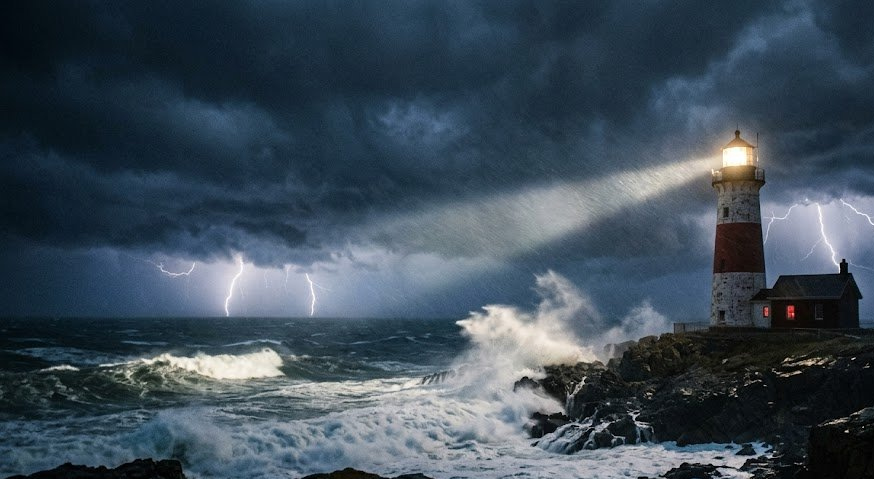
Haunted lighthouses are among the most consistently documented paranormal sites in America, and the reasons are not mysterious. Isolation, tragedy, duty, and the peculiar psychology of lives spent alone at the edge of land and sea created conditions that generate and preserve ghost stories with unusual intensity. Here is a survey of the cases that have accumulated the most compelling documentation and an explanation of what makes this category of haunting so persistent.
What Makes Lighthouses Haunted
The lighthouse keeper’s life was one of the loneliest professions in American history. Stationed at isolated structures, often accessible only by boat, keepers lived for months at a time with minimal human contact. Their primary responsibility was not to fail: a light that went dark could mean a shipwreck and deaths for which the keeper bore moral responsibility. That combination of isolation, duty, and the proximity of real marine tragedy produced lives of intense psychological pressure. When keepers died at their stations, which was not uncommon, the circumstances were often alone, often undiscovered for days, often in the context of years of obsessive dedication to the light.
Point Lookout Lighthouse in Saint Mary’s County, Maryland, is consistently cited as the most haunted lighthouse in America, and its history makes that reputation comprehensible. Built in 1830, it sits at the site of Camp Hoffman, the largest Union prison camp for Confederate soldiers during the Civil War. As many as 52,000 prisoners passed through, with up to 4,000 dying there, their graves subsequently removed. The emotional weight of that history, layered onto a structure already associated with maritime isolation and death, has produced one of the most investigated paranormal sites in the country.
The St. Augustine Lighthouse, Florida
Construction on the St. Augustine Lighthouse began in 1871. During its construction, the superintendent in charge, Hezekiah Pittee, lost two daughters and a young friend when the supply cart they were riding plunged into the sea. The girls, Eliza and Mary Pittee, and their companion were drowned. Head keeper Peter Rasmussen, who served at the lighthouse for years, fell to his death from the tower while painting it in 1859, several years before the new structure was built on the site of the old one. Independent accounts from paranormal investigators who have investigated St. Augustine over several decades consistently report the sounds of children’s laughter and footsteps on the spiral stairs, a smell of cigar smoke attributed to Rasmussen, and a female apparition on the grounds. The lighthouse is open for tours and has been investigated by multiple national paranormal television programs.
Heceta Head Lighthouse, Oregon
Heceta Head Lighthouse on the Oregon coast has generated one of the most specifically documented apparition accounts in American lighthouse lore. The site has two derelict cemeteries on its grounds, and historical records confirm the deaths of infants and adults associated with the keeper families who lived there. A female figure known as the Gray Lady, or Rue, has been reported in the keeper’s cottage that is now operated as a bed and breakfast. The most frequently cited account involves maintenance workers who reported seeing a face in a window of the attic, went up to investigate, found nothing, but subsequently discovered disturbed materials and, in one version of the account, were joined at breakfast by a woman in grey who disappeared from the table. The face in the window has been reported by multiple independent visitors with sufficient consistency that it is treated as one of the more reliable recurring apparitions in the Pacific Northwest.
The Ledge Light, New London, Connecticut
The New London Ledge Light sits offshore in Long Island Sound, a three-story Second Empire structure that was manned by lighthouse keepers until its automation in 1987. The legend attached to it involves a keeper named John Randolph, known as Ernie, whose wife reportedly left him for the captain of the Block Island Ferry in the 1930s, after which Ernie jumped from the upper deck. Whether the historical details are accurate is disputed. What is documented is that Coast Guard crews who staffed the light after his alleged death reported consistent activity: doors slamming, televisions turning on, blankets pulled from beds, and a general sense of a presence that led multiple crew members to refuse overnight postings. The lighthouse has been featured in several paranormal investigation programs and was designated a Connecticut Historic Landmark.
Why the Stories Keep Coming
The lighthouse ghost category is unusually resistant to debunking because the underlying history is unusually well documented. These are not rumored tragedies. The deaths of the Pittee girls are in the historical record. The murder of Frederick Osborne is in the historical record. The condition of keepers who died alone at isolated stations is in the historical record. The ghost stories grow from real events and real grief, and the locations where those events occurred continue to be visited by people who sometimes have experiences they cannot explain. Whether those experiences are paranormal or the product of powerful suggestion in powerfully atmospheric environments is the question each visitor has to answer for themselves.
References & Further Reading
• Weird Darkness: America’s Most Haunted Lighthouses
• America’s Best Online: America’s Most Haunted Lighthouses
• The Ghost Posts: 9 Haunted Lighthouses with Scary Ghostly Legends