On May 12, 2019, an anonymous user on 4chan’s /x/ board posted a photograph in response to a thread requesting images that felt off. The image showed a long, empty interior space: monochrome yellow walls, dark, wet carpet, fluorescent lights at full hum, the space branching into more identical rooms beyond every visible threshold.
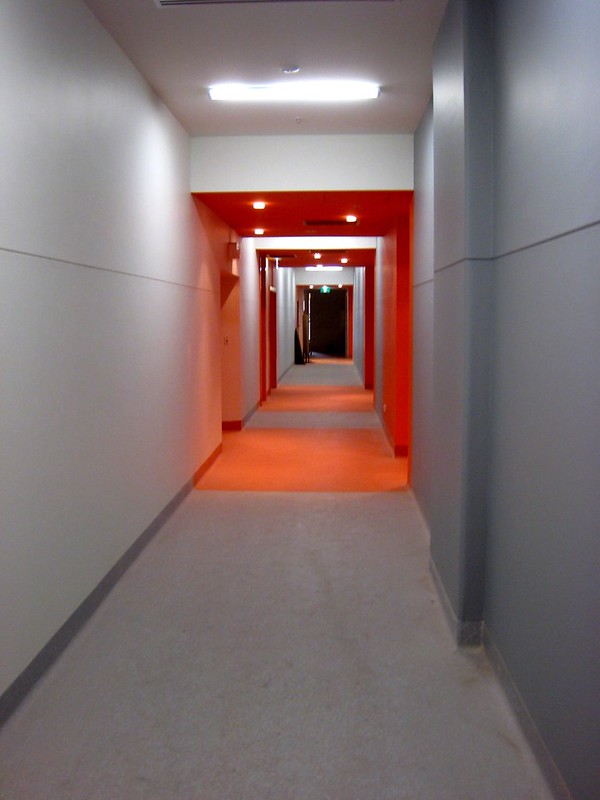
Another anonymous user replied with a paragraph that would eventually generate millions of pieces of fan content, multiple video games, a YouTube short film with over 40 million views, and a forthcoming A24 feature film: ‘If you’re not careful and you noclip out of reality in the wrong areas, you’ll end up in the Backrooms, where it’s nothing but the stink of old moist carpet, the madness of mono-yellow, the endless background noise of fluorescent lights at maximum hum-buzz, and approximately six hundred million square miles of randomly segmented empty rooms to be trapped in. God save you if you hear something wandering around nearby, because it sure as hell has heard you.’
That paragraph is the Backrooms. From that two-sentence origin, one of the most generative horror mythologies of the digital age was born.
The Video Game Grammar That Made It Work
The genius of the original post is the specific vocabulary it deployed: noclip. In gaming, to “noclip” is to pass through a solid surface you were never supposed to pass through, to exit the designed game world and find yourself in the void of unrendered geometry behind the scenes. It is a glitch, but also a revelation: the game world turns out to be thin. There is a behind.
In the Backrooms, noclipping applies to reality itself. You brush against a wall in the wrong way in the wrong place, and you fall through. The horror is not a monster or a stalker; it is spatial. You are somewhere the rules of the normal world no longer apply, the space is infinite, and you are alone.
Why This Image, Why This Space
The original photograph taps several overlapping psychological registers. The yellow walls and institutional carpet belong to a specific period of corporate and educational American design, roughly 1970 to 1990, that carries a particular nostalgic weight for the demographic that populated /x/. These were the interiors of the buildings of childhood: schools, doctor’s offices, and shopping centers. Familiar, but not comforting. Recognizable, but not safe.
The absence of people in a space clearly built for people is a precise execution of the uncanny valley effect in architecture. And the implied infinity, rooms beyond rooms beyond rooms, invokes kenophobia, the fear of vast empty spaces, in a setting that should by rights be claustrophobic.
From Single Post to Global Mythology
A wiki was created within two months of the original post. By 2020 the community was generating levels, different environmental variations on the original theme, each with its own rules and entities. YouTuber Kane Parsons uploaded a nine-minute found-footage short film in January 2022 that treated the Backrooms as a piece of institutional documentary footage from 1996, and its 40-plus million views effectively brought the legend to a mainstream audience. A24 subsequently acquired a feature film adaptation with Parsons directing, making the Backrooms the first 4chan-origin story to reach major theatrical distribution.
What the Backrooms Has in Common With Traditional Paranormal Folklore
Scholars of folklore note that the Backrooms follows the structural logic of classic liminal horror: the threshold crossed by accident; the hostile or indifferent space that does not follow normal rules; and the isolation from the social world that provides safety. These elements appear in folk traditions of entering fairy mounds, in the mythology of the Underworld, and in Indigenous accounts of falling through into spirit worlds. What the Backrooms adds is digital vernacular, the noclip grammar, the wiki structure, and the collaborative world-building. The mythology is genuinely new. The emotional grammar is ancient.
The most thoughtful analyses converge on the same reading: it is an anxiety dream about the institutional spaces of late capitalism. Strip away the purpose, remove the people, extend the space to infinity, and you have the architecture of a specific kind of modern dread. The monster in the Backrooms is the building itself. A great many people recognized it immediately.
References & Further Reading
• Creepypasta.com: The Backrooms, Original Text and History
• The Tab: The Terrifying Original Story of Backrooms Explained