Something is happening in your home. You know it the way you know things that resist easy articulation: a pattern of small events that individually have explanations but collectively produce a feeling of wrongness that will not go away. The cabinet that was closed is open. The smell that has no source. The sound has been the same every night at the same time for the past three weeks.
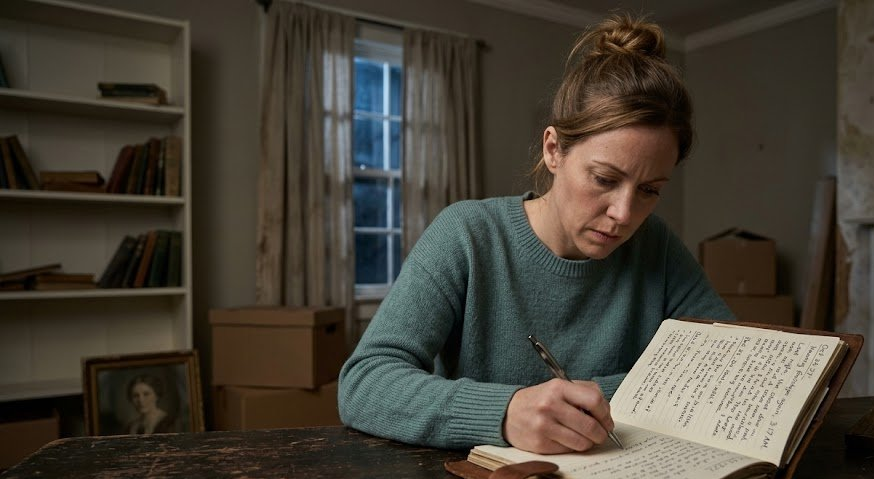
The single most useful thing you can do in this situation is not call a paranormal investigator. Not yet. The single most useful thing is to start writing it down. A haunting journal, maintained carefully and consistently over time, is the foundation of any genuine investigation. Without it, you have experiences. With it, you have evidence.
Why Documentation Changes Everything
Human memory is not a reliable archive of paranormal events. It is a reconstructive system that fills gaps, smooths inconsistencies, and shapes experience into narratives that feel coherent in retrospect. Within days of an unusual experience, the details that felt sharp and specific have already begun to blur. Within weeks, the sequence of events may be genuinely confused. Within months, you may be uncertain whether three events happened or five; whether the cabinet was in the kitchen or the hallway; or whether the smell preceded the sound or followed it.
A written record made immediately after each event preserves the specificity that memory erodes. That specificity is what allows you to identify patterns (same time, same location, same type of event), to rule out mundane explanations systematically, and to present a credible account to anyone you eventually want to involve in assessing the situation.
What to Record in Every Entry
Your haunting journal entry should include, for each event,
- Date and exact time.
- Location within the home: not ‘the kitchen’ but ‘the northwest corner of the kitchen, near the window.’
- Nature of the event: sound, visual, smell, physical sensation, temperature change, emotional shift, or object movement.
- Duration, or best estimate.
- Your own state at the time: rested or tired, alone or with others, anxious or calm.
- Environmental context: weather, temperature, time of year, any changes in the building’s systems.
- Immediate rational checks: what did you do to rule out a mundane cause? Did you check for drafts, pests, electrical issues?
- What you concluded in the moment, and whether that conclusion changed on reflection.
The Baseline Entry
Before anything unusual occurs, and before you have decided the house is haunted, write a baseline entry describing the normal state of the home. Note the sounds the building normally makes, the behavior of appliances, the patterns of light and shadow in each room at different times of day, and which areas of the building are colder or warmer than others. This baseline is what makes subsequent anomalies meaningful. A cold spot in the northeast corner of the bedroom is only significant if the northeast corner of the bedroom is sometimes warm.
The Review Process
Every two weeks, read back through all your entries and look for patterns. Ask: Does this event happen at a consistent time? In a consistent location? Under consistent environmental conditions (always when it rains, always when the temperature drops, always in winter)? Is there a correlation with a specific person being home or absent? With a specific activity? With specific emotional states?
Patterns that survive this review are worth taking seriously. Patterns that resolve into mundane correlations (it always happens when the heating comes on) are their own useful answer. The journal does not need to prove the paranormal. It needs to produce clarity, and clarity about a haunted house is valuable regardless of what the explanation turns out to be.
When to Involve Other People
Your haunting journal becomes the basis for any meaningful next step. If you want to involve a paranormal investigation group, a well-maintained journal covering several months gives them something to work with rather than nothing. If you want to consult a building specialist about structural causes, the journal’s pattern data gives them a specific focus. If you want to involve a mental health professional to rule out perceptual causes, the written record helps them distinguish systematic environmental events from internally generated ones.
The journal is not a sign that you believe your house is haunted. It is a sign that you are taking your own experience seriously enough to document it properly. That is the only starting point that leads anywhere useful.
References & Further Reading
• ParaGhosts: Top 10 Paranormal Investigation Tips
• American Ghost Walks: Ghost Hunting Tips for Beginners
• Dummies: Tips for Paranormal Investigations
• My Haunted Project: How to Conduct a Paranormal Investigation


[…] jumping to conclusions is critical. The most effective tool you have is a written record. Keeping a calm evidence log or haunting journal helps you track dates, times, weather conditions, and exact details of the activity. Over time, […]