This guide gives you a ready-to-use question script, explains the reasoning behind each type of question, and covers the setup and review process that separates credible EVP work from wishful listening.
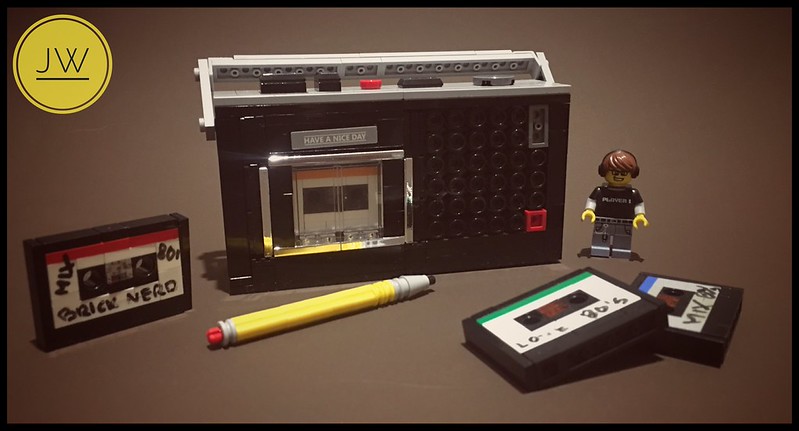
You Have the Recorder. Now What Do You Actually Say?
Electronic Voice Phenomena (EVP) investigation is one of the most accessible entry points in paranormal research. All you need is a digital audio recorder, a quiet location, and a willingness to ask questions into what appears to be an empty room. But most first-time investigators hit the same wall: they press record, the silence stretches out, and they have absolutely no idea what to say.
Before You Begin: Setup Matters
Good EVP work starts before the first question is asked. Choose a digital recorder with a high sample rate (44.1 kHz or higher) and no voice activation feature, which can clip the beginning of responses. Record in as quiet an environment as possible: turn off HVAC systems, fans, and anything with a motor. Note all ambient sounds in real time by speaking them into the recorder, for example, saying “that was a car outside” or “investigator shifting position.” This prevents genuine background noise from being misidentified during review.
State your name, the date, the time, and the location at the start of every session. This creates a clean record and, some investigators believe, establishes a point of contact for any responding entity.
The Question Script
Opening the Session
“My name is [your name]. I am here respectfully and I mean no harm. If there is anyone present who would like to communicate, I am going to ask some questions and I will leave time for you to respond.”
Pause for 10 to 15 seconds after this statement. This pause is not theatrical: review experience shows that responses, when they occur, often come within the first few seconds of silence following a prompt.
Basic Identification Questions
“Is there anyone here with me tonight?”
“Can you tell me your name?”
“How many of you are present in this location?”
“Were you connected to this building, or did you come here for another reason?”
Pause 15 seconds between each question. Resist the urge to fill the silence.
Contextual and Historical Questions
“What year do you think it is?”
“What do you remember about this place?”
“Is there something here you want people to know about?”
“Did something happen here that you feel is unresolved?”
Permission and Comfort Questions
“Are you comfortable with me being here?”
“Is there anything you would like me to do, or stop doing, while I am here?”
“Do you mind if I come back to this location?”
Closing the Session
“I want to thank you for any responses you may have given tonight. I am going to stop recording now. If you have anything final to say, please say it now.”
Leave 30 seconds of silence. Then state the end time and stop the recording.
Questions to Avoid
Certain question types consistently produce problems in EVP work, either by generating ambiguous responses or by creating an adversarial session dynamic.
Avoid provocative questions: “Are you evil?” or “Why are you still here?” can introduce confirmation bias during review and are considered disrespectful by most experienced investigators. Avoid yes/no questions where a random sound could too easily be interpreted as an answer. Avoid compound questions: asking two things at once makes responses impossible to attribute. And avoid leading questions that contain the answer you are hoping to hear.
Reviewing Your Recording
EVP review requires patience and critical self-awareness. Listen at normal speed first, then at 50 percent speed for anything that sounded like it might be a word. Use headphones. Listen to each potential EVP at least three times before forming an opinion about what it says. Have at least one other person listen without being told what you think you heard, and see whether they identify the same content independently.
The most common source of false EVP is pareidolia: the brain’s powerful tendency to find patterns, especially speech patterns, in random noise. White noise, HVAC hum, distant traffic, and the investigator’s own breathing are the most frequent culprits. A credible EVP is one that sounds like a voice, responds appropriately to the question asked, and cannot be explained by documented ambient sources.
A Note on What EVP Is and Is Not
EVP investigation does not prove the existence of ghosts. What it does is provide a structured, documentable method for capturing audio anomalies in locations of interest. The interpretation of those anomalies is a separate question, and honest investigators acknowledge that. Approach your sessions with genuine curiosity and genuine skepticism. The combination is what makes the work worthwhile.
References & Further Reading
• Haunt Scout: Ghost Box Sessions and EVP Question Guides
• Association for the Scientific Study of Anomalous Phenomena
[…] audio recorders to capture Electronic Voice Phenomena (EVP) requires a structured approach. Using a respectful script for EVP interviews ensures you maintain control of the session and avoid provoking hostile […]
[…] For a detailed look at how investigators approach electronic voice phenomena and the tools used to document potential spirit communication, see our guide on EVP interview questions and session setup. […]
[…] In paranormal investigation, spectral evidence takes contemporary form as subjective testimony, EVP recordings that require interpretation, and photographs with ambiguous content. All of these are true by definition. But they share the […]