A dead silver town got a second life from a cereal executive, and its ghosts never got the memo.
A Silver Rush in the Middle of Nowhere
Prospectors discovered silver in the hills above the Mojave Desert in 1881, quickly transforming an empty stretch of California desert into a booming mining town. Calico grew to support roughly twelve hundred residents at its peak, along with saloons, hotels, and a busy central schoolhouse.
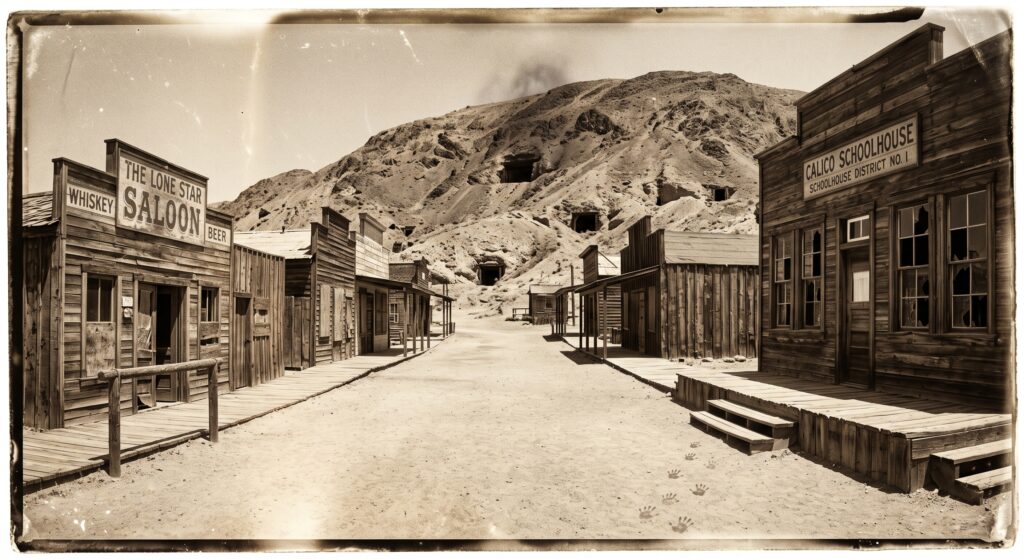
The silver market collapsed in the 1890s, and Calico followed the familiar path of so many Western mining towns. Residents left in waves, and by the early twentieth century, the town had almost completely emptied, leaving its buildings to the desert wind.
That abandonment might have been permanent, except for an unlikely rescuer decades later. Walter Knott, founder of Knott’s Berry Farm, purchased the site in the 1950s and began a careful restoration project using much of the town’s original material.
Knott approached the project as a genuine preservation effort rather than a pure tourist attraction, consulting historical records and surviving former residents wherever possible.
That research-based approach gave Calico a level of historical accuracy rare among restored Western tourist towns. Most such towns lean heavily toward invented atmosphere over documented fact.
A Rare Second Act for a Dead Town
Most American ghost towns do not get a genuine second chance at survival. Fewer still receive one funded by an unrelated business fortune with a personal family connection attached. Calico’s revival remains an unusual case study in accidental historical preservation.
The restored buildings now support a small but steady tourism economy. Local staff lead tours, maintain historic structures, and document ongoing paranormal reports from visitors passing through each season.
That economic activity has, in turn, funded further preservation work. It creates a sustainable cycle that keeps Calico maintained, without relying entirely on outside grants or uncertain private funding streams.
Lucy Bell’s daily walk between her home and the general store continues indefinitely, it seems. Both buildings stopped serving their original working purpose long ago, and now serve as museum pieces instead.
A Widow Who Still Walks Her Old Route
Lucy Bell Lane lived in Calico during its working years, co-owning the town’s general store alongside running her own household nearby. Her daily route between home and shop became so routine that neighbors could set their clocks by her passing.
That routine reportedly continues today. Visitors and staff describe her figure still walking the same path between her old home and the store. She moves with the same purposeful, unhurried pace neighbors once recognized from a block away.
Some witnesses report catching only a glimpse before she disappears around a familiar corner. Others describe a longer, sustained sighting that extends the length of the walk itself.
Her continued presence has become one of Calico’s signature hauntings, distinct from the more commercialized ghost stories found at some restored Western attractions.
Teachers and Marshals Who Never Clocked Out
Calico’s old schoolhouse carries its own separate haunting. Visitors report the apparitions of former teachers looking out from its windows, long after the building stopped holding classes. Witnesses describe the figures as watchful rather than threatening, consistent with educators still keeping an eye on their students.
A ghostly town marshal reportedly still patrols Main Street after dark, maintaining law and order in a town that technically stopped needing either generations ago. Visitors describe him moving with the deliberate authority of a man still working his beat.
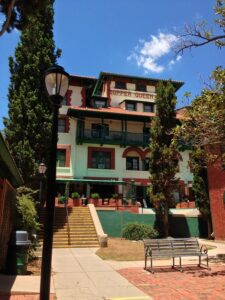
These figures collectively give Calico a sense of a town still functioning just below the surface. Former residents seem to continue routines that outlasted the mining industry that first brought them there. For a similar story, see our post on Jerome, Arizona, or our post on St. Elmo, Colorado.
Staff who work at the restored site regularly compare notes on sightings, building an informal record of encounters that stretches back through decades of the park’s operation.
That layered activity, spread across multiple buildings and figures, sets Calico apart from single legend ghost towns built around one dramatic event.
A Cereal Fortune Saved a Ghost Town
Walter Knott’s connection to Calico ran deeper than simple business interest. His wife’s uncle had lived in the town during its mining years, giving Knott a personal connection that likely motivated his restoration effort beyond pure commercial calculation.
Knott donated the restored town to San Bernardino County in 1966, ensuring its preservation would outlast his involvement and any single family’s ongoing commitment. That transfer gave Calico a stable institutional future that many privately maintained ghost towns never achieve.
The National Register of Historic Places later recognized Calico’s significance, cementing its status as one of the most authentically restored mining towns in California. Many visitors do not realize how close the site came to disappearing entirely before Knott’s intervention.
That rescue effort, driven partly by personal family history, gave Lucy Bell a preserved stage on which to keep walking. The schoolteachers and the old marshal got the same gift, decades after the silver ran out and the original residents moved on.
Few ghost towns anywhere owe their continued existence to such a personal and unlikely chain of events. It started with a cereal executive’s wife and her uncle’s old mining claim.
That accidental chain of events resulted in California having one of its most carefully restored mining towns, complete with ghosts, chipmunks, and all.

[…] St. Elmo today balances both identities comfortably. It is a family-friendly experience by day; however, Annie’s window draws a second look from anyone who remembers her story. For more on haunted mining towns, see our posts on Jerome, Arizona, and Calico, California. […]
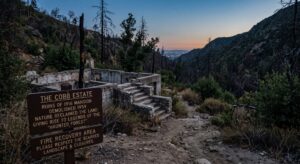
[…] hauntings range from the desert ruins of Calico to the disrupted foundations of San Francisco. The Bay Area alone claims the Phantom Cow of Goat […]