How a Victorian palace of innovation became the most haunted address in London, and why guests still flee the third floor.
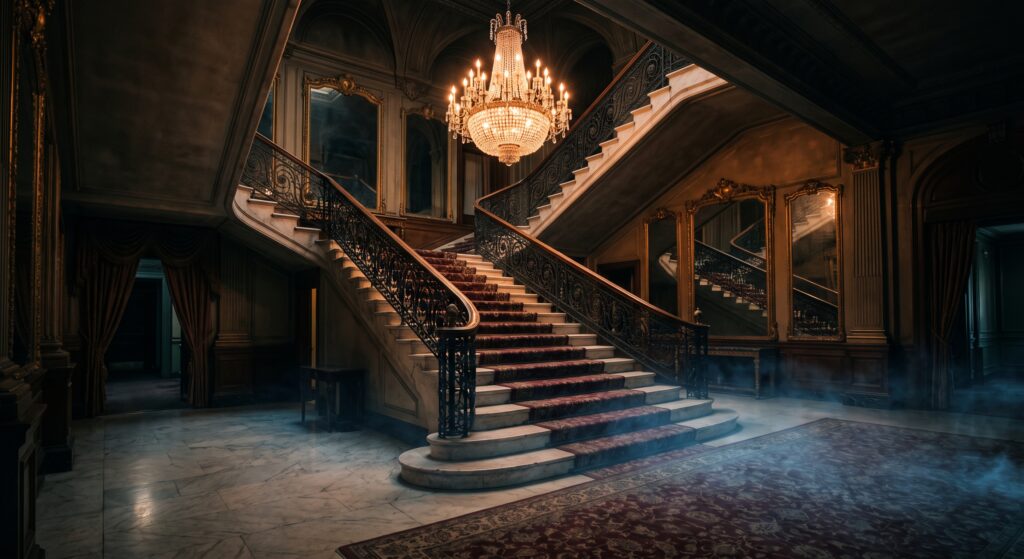
Picture yourself sliding the key into a door on the third floor of a five-star London hotel. The corridor behind you falls quiet. Too quiet. No footsteps, no muffled televisions, no doors being tried. Then the temperature drops, fast and hard, and the hair on your arms rises before your brain catches up. Somewhere in this building, four separate BBC journalists swore they saw the same thing. None of them could explain it. Neither could you.
The Langham sits at 1 Portland Place, directly across from BBC Broadcasting House. On the surface it is a temple to Victorian luxury. Beneath that polish runs something stranger, a reputation as the most haunted hotel in the capital. To understand why, you must start with the building itself, because the haunting and the architecture grew from the same root.
A Palace Built to Outshine Every Rival
Builders broke ground in 1863 and finished two years later. The architect John Giles designed a Florentine-styled colossus, and the Prince of Wales opened the doors on June 10, 1865. The bill came to £300,000, a staggering sum at the time. The payoff was London’s first purpose-built grand hotel, and it arrived swinging.
Here is what made it remarkable. Giles packed the Langham with technology that England had barely seen. The hotel installed the first hydraulic passenger lifts in the country, a genuine novelty when most guests still trudged up staircases. Electric lighting reached the entrance and hallways by 1879, absurdly early for the era. Add early air conditioning and en suite bathrooms, and the result felt less like a hotel and more like a glimpse of the next century. Nearly 500 rooms made it the largest in the city.
The guest book is a record of history. Oscar Wilde drank here. Mark Twain stayed. Napoleon III, Charles de Gaulle, Haile Selassie, and Winston Churchill all passed through. Arthur Conan Doyle set scenes from two Sherlock Holmes stories inside its walls. Decades later, Princess Diana favored the place. A building this saturated with human drama tends to collect stories, and the Langham collected more than most.
Then the wars came. During the Second World War, the hotel traded silk service for sandbags, operating as a military post and a first aid station. A German bombing raid tore through the structure and forced it to close. The damage proved a turning point. The BBC acquired the battered property and converted rooms on the third floor into overnight accommodation for its journalists. That decision matters because the ghost reports did not flood in until the broadcasters moved in. Working late, sleeping in shifts, and walking those corridors at three in the morning, BBC staff started seeing things. They counted at least five regular spirits.
A five-year, £80 million restoration later returned the Langham to its Gilded Age glory. Modern travelers now experience the hotel almost exactly as a Victorian visitor would have, roughly 150 years on. The luxury came back in full. So, apparently, did the residents who never checked out.
Meet the Regulars Who Never Left
Most haunted hotels claim a single ghost. The Langham claims a roster. Paranormal researchers count at least five recurring entities, each with its own territory, costume, and grim backstory. Think of them less as random apparitions and more as long-term tenants who simply forgot to die properly.
The German Prince
The most active spirit in the building wears a tightly buttoned military jacket. The late BBC announcer Ray Moore described him bluntly as beefy, cropped-haired, and dressed for war. Legend holds that a German nobleman threw himself from a fourth-floor window before the First World War. Now he walks the early morning hours, passing straight through closed doors and solid walls. Witnesses say a sudden, bone-deep cold announces his approach. He shows a particular fondness for Room 333.
Emperor Napoleon III
History records that Napoleon III fled to England after his defeat in the Franco-Prussian War, living out his exile in rented comfort. Stripped of an empire and reduced to a guest, he spent his final stretch at the Langham. Staff now feel him most strongly in the basement, the original 1865 service area, where cold spots and the sense of a watching presence cluster thickest. Whether concentrated personal tragedy leaves a mark is a question for the reader. The basement reports, notably, both predate and outlast his stay.
The Victorian Doctor
This is the figure that built the Langham’s dark legend. A silver-haired doctor in a cloak and cravat, with blank, staring eyes, he is tied to the most gruesome tale in the building. He stays in Room 333 and follows a schedule. Witnesses report him only during October, which turns a Halloween-season booking into a genuine test of nerve.
The Butler and the Man on the Stairs
Two lesser-known spirits round out the cast. Guests describe a butler drifting along the third-floor corridors, still tending to visitors who left long ago, recognizable by the holes worn through his socks. Far more unsettling is the man on the stairs, an entity with a gaping wound torn across his face, who is glimpsed wandering the stairwells and hallways. Some BBC staff added a sixth figure to the list, a footman in pale blue livery and a powdered wig, whose arrival drops the temperature in an instant.
Room 333: The Epicenter
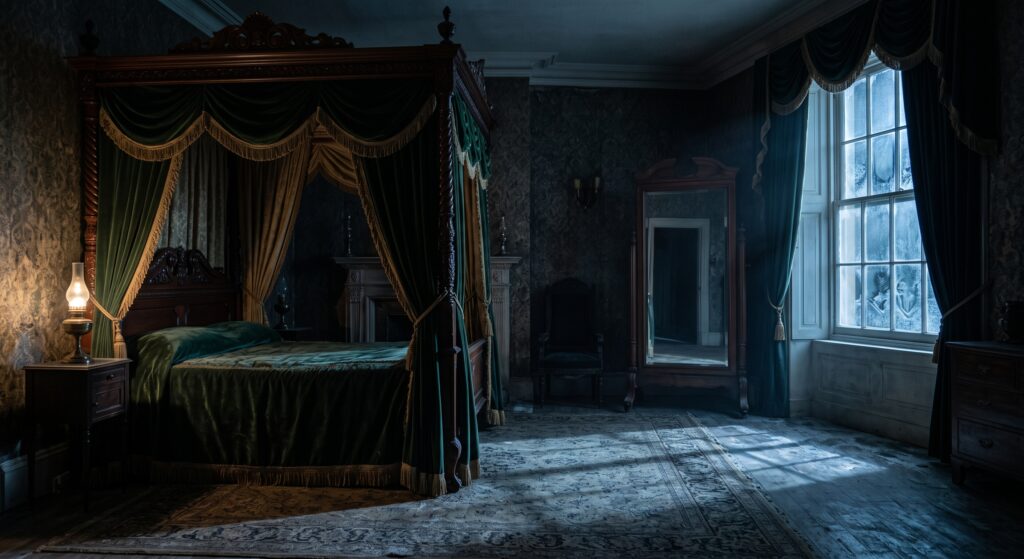
Every haunted building has a center of gravity. At the Langham, it is Room 333. The entire hotel reports activity, yet this single third-floor room concentrates the worst of it. Multiple apparitions overlap here, and the physical events turn aggressive. If you book one room in this hotel for a scare, it should be this one. Most guests, told the truth, choose not to.
The Honeymoon That Ended in Blood
The story goes like this. An older Victorian doctor checked into Room 333 with his new bride to celebrate their wedding night. Sometime before checkout, in a fit of madness nobody has ever explained, he murdered her in the room and then killed himself. The doctor’s spirit lingers, recognized by his cloak, his cravat, and those empty, vacant eyes. He surfaces only in October, which means the room’s most dangerous tenant keeps the same calendar as the holiday built around fear. Historians note the German prince and the murderous doctor stories blur together across accounts, and neither is fully verified. What holds steady is the consistency of the Room 333 sightings across decade after decade.
The 1973 BBC Encounter
This is the sighting that resists easy dismissal because of who saw it. In October 1973, BBC announcer James Alexander Gordon, famous nationwide as the voice reading Saturday football scores, slept in Room 333. He woke to a glowing, fluorescent ball of light hovering in the dark. As he watched, it slowly assembled into human shape, a silver-haired gentleman in extravagant Victorian evening wear, floating roughly two feet above the floor with the lower portion of his legs simply absent.
Gordon did the brave thing first. He asked the figure what it wanted. The apparition answered by drifting toward him, arms outstretched, eyes blank and fixed. Gordon broke and fled. When he returned with a colleague, the ghost was still there, leaning over the bed where he had been sleeping moments earlier, slowly fading from view. The detail that unnerves investigators most is the missing lower legs, reported identically across different decades. Some suggest the figure walks on a floor level from an earlier phase of the building, a height that no longer exists.
The Bed That Throws You
Not every event in Room 333 stays politely visual. Guests describe an invisible force that grabs the bed and shakes it with violent intent. On more than one occasion, sleepers have been tossed clean out and dumped onto the floor. One occupant reported the bed bucking so hard that he abandoned the hotel in the middle of the night. The doctor watches. Something else throws furniture.
Modern Terror: The 2014 Cricket Team
Skeptics like to file the Langham’s hauntings under old Victorian melodrama, the kind of tale that fades under modern scrutiny. The summer of 2014 made that harder to argue. Several members of the England national cricket team checked in during a test match, drew rooms on the third floor, and walked straight into the legend.
Fast bowler Stuart Broad gave the most quoted account. He woke in the night to an intense, smothering heat that made sleep impossible. Then the bathroom taps roared on at full blast for no reason. When he switched the bedroom lights on, the taps stopped dead. When he switched them off, the water surged again. The on-off pattern held, lights against water, until the experience spooked him badly enough to demand a room change. His partner, Bealey Mitchell, refused to settle either.
The unease spread through the squad. Moeen Ali’s wife flatly refused to stay at the hotel at all, unsettled by the stories and the atmosphere. All-rounder Ben Stokes battled serious sleep problems on the same notorious third floor. Broad later admitted he had felt a presence in his room during an earlier series at the hotel, waking around half past one in the morning convinced he was not alone. When professional athletes, not exactly a superstitious crowd, request room changes and skip the hotel entirely, the story stops sounding quite so quaint.
Would You Spend the Night?
Strip away the marketing and the Langham presents a genuine puzzle. A building engineered to feel like the future became a magnet for the past. The very innovations that made it famous—the lifts, the lighting, the scale—drew guests whose tragedies seeded the legends. Then a generation of trained, skeptical BBC journalists, people paid to verify facts, kept writing down the same impossible details and never recanting.
You do not have to believe in ghosts to find that pattern strange. The figure with no lower legs was described the same way across fifty years by witnesses who never compared notes. The cricketers fleeing the third floor in 2014. The doctor who only appears in October. Coincidence stretches only so far before it starts to look like a thread.
Here is the part that matters. Room 333 remains a standard, bookable room. It carries no premium for its reputation, and the hotel discusses its history with dry, unbothered composure. The door stands open, the bed is made, and the night is yours to claim. So the question that ends every honest account of the Langham is the only one worth asking. If you find yourself in London’s West End, would you have the courage to book a night in Room 333?
References & Further Reading
The Langham Hotel, London – Haunted Rooms
Countdown to the Most Haunted Hotel: The Langham London – Five Star Alliance
The BBC Ghost of Room 333 – John Pullen
Room 333: The Most Haunted Hotel Room in London – HuffPost
London’s Most Haunted Hotel – Londonist
The Ghosts and Haunted History of Langham Hotel – SpiritShack
Is the Langham Hotel Haunted? – Haunted Hovel
World’s Most Haunted Hotels: Langham Hotel, Room 333 – Travel Noire
The Many Ghosts of The Langham Hotel in London – Moon Mausoleum
[…] of the most unsettling forests in Europe. For those who prefer their hauntings with room service, Room 333 of London’s Langham Hotel has a documented history of paranormal activity stretching back over a […]