You are awake. The room is dark and quiet, and nothing has changed, and yet you know, with the animal certainty that bypasses any rational evaluation, that something is in the room with you. Not a sound. Not a movement. Just the absolute conviction of presence where there should be none.
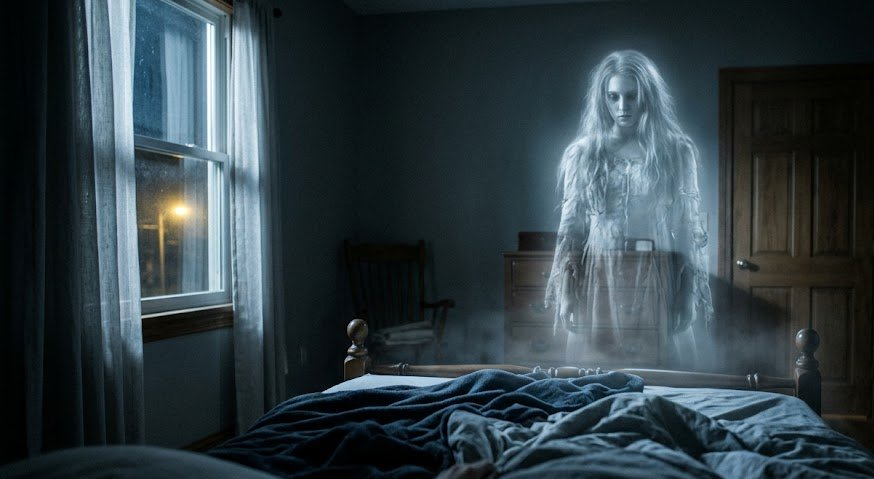
The sensed presence experience, a felt awareness of another person or being that occurs without any sensory confirmation, is one of the most universal human experiences reported in paranormal contexts. It is also one of the most well-studied from a neurological standpoint, with documented mechanisms that explain the majority of cases while leaving the edges of the phenomenon genuinely open.
The Neuroscience: The Brain That Generates Company
Research by Olaf Blanke at EPFL in Switzerland, published in Current Biology, identified a specific neurological mechanism for the sensed presence experience. By stimulating specific areas of the sensorimotor cortex in patients undergoing brain mapping, Blanke’s team reliably produced the experience of an unseen presence. The mechanism involves a conflict between the brain’s model of the self and its model of other people in the environment. When sensorimotor processing is disrupted, the brain may generate a representation of a presence that is felt as external but is produced internally. The same mechanism operates in specific conditions: sleep deprivation, extreme fatigue, high stress, high altitude, and the transitional states entering and leaving sleep.
The Hypnagogic and Hypnopompic States
The moments of transition between waking and sleep are among the most neurologically unusual states the brain enters regularly. In the hypnagogic state, entering sleep, and the hypnopompic state, waking from sleep, the brain partially maintains waking consciousness while also running the processes associated with dreaming. This combination produces experiences that feel more real than dreams: sensory hallucinations, heard voices, visual figures, and most commonly, a felt sense of presence that the person experiences as a genuine encounter with someone in the room.
These states are more common than most people realize. Research suggests that up to 37 percent of people experience hypnagogic hallucinations with some regularity, and that the sensed presence is the most common specific content. Sleep deprivation, stress, and irregular sleep schedules significantly increase the frequency. The experiences are benign, are not associated with psychiatric disorder in people who do not otherwise have symptoms, and typically resolve immediately upon full waking.
The Paranormal Framework
In paranormal tradition, the sensed presence is often interpreted as the most fundamental form of ghost experience: not a visual apparition, not a physical event, but the direct perception of another consciousness in the space. Some paranormal investigators argue that this interpretation deserves as much attention as the neurological one, precisely because the experience is so universal and so consistent across cultures and across individuals with no prior paranormal belief.
The cross-cultural consistency of the sensed presence is worth noting. It appears in virtually every tradition that has a language for spiritual experience. The ‘felt presence of the Holy Spirit’ in Christian charismatic tradition, the ‘Guardian presence’ in Islamic mystical accounts, the presence of the recently deceased reported by bereaved individuals across multiple studies, and the malevolent watching presence in haunting accounts all describe the same phenomenological category: an awareness of another consciousness that arrives without sensory confirmation and carries emotional weight that ordinary imagination does not.
When to Take It Seriously
The sensed presence that occurs at the threshold of sleep, in a person who is tired, stressed, or in an unfamiliar sleep environment, is almost certainly a hypnagogic or hypnopompic experience. It is real in the neurological sense and worth understanding, but it does not require a paranormal explanation.
The sensed presence that occurs consistently, in a fully awake state, in a specific location in a specific building, that is reported by multiple independent people who have not compared accounts, is a different category of experience. That consistency and independence is what separates a genuine investigative data point from a personal sleep experience. One person sensing a presence in their bedroom is interesting. Twelve people who have occupied the same room over twenty years independently described the same presence in the same corner, which is a pattern worth documenting.

[…] Sensed Presence at Night Explained: Sleep, Fear, and Folklore […]
[…] Sensed Presence at Night Explained: Sleep, Fear, and Folklore […]
[…] by neuroscientist Olaf Blanke at EPFL, covered in our piece on sensed presence at night, identified the specific mechanism by which the brain generates the experience of an unseen […]
[…] paralysis. This state can produce terrifying hallucinations, including shadow people and a deeply sensed presence. Another jarring sleep phenomenon is Exploding Head Syndrome, which causes loud, imagined […]
[…] Sensed Presence at Night Explained: Sleep, Fear, and Folklore […]