For a cross-cultural deep dive on sleep paralysis, see our post here.
In Japan, the experience has a name that describes the sensation exactly. Kanashibari. Bound in metal. The sleeper feels frozen as if wrapped in thick, invisible chains, held fast by a force they cannot see.
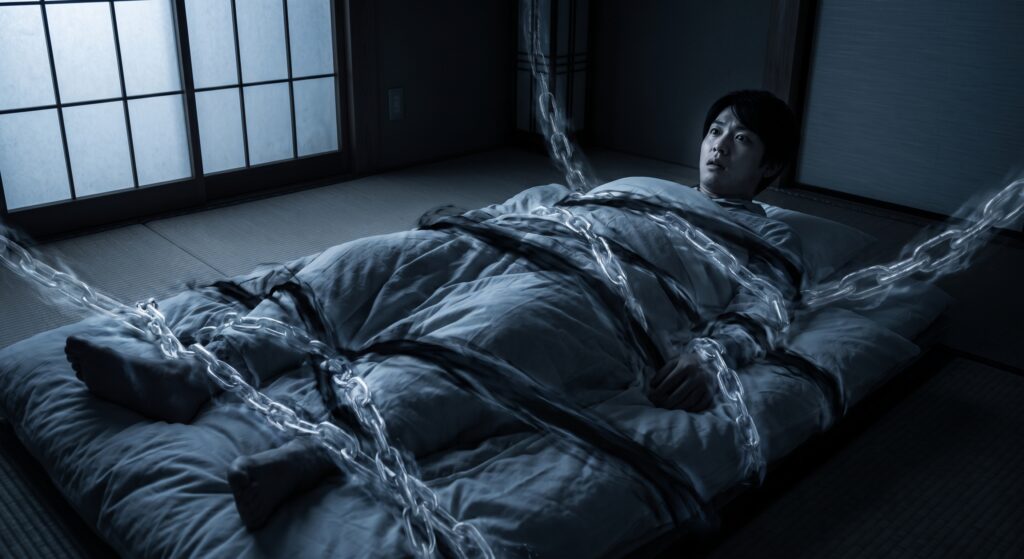
But kanashibari stands apart from every other entry in this series for two reasons. Scientists proved it happens in a laboratory. And Japanese children try to summon it on purpose, for fun.
Bound in metal
The word itself comes from an old idea of magical binding, rooted in esoteric Buddhist practice, where a spell could freeze a target in place. Over centuries it became the everyday Japanese term for sleep paralysis.
The folklore offers several culprits. Animal spirits might be responsible: a fox, a dog, or a raccoon-dog possessing the sleeper. A pillow-flipping child ghost might visit. Alternatively, a powerful priest or sorcerer might have cast the binding spell. Sufferers wake to dread, frozen, sometimes feeling an invisible figure gripping their limbs.
The scientist who caught it in the lab
Here is what makes kanashibari special in the history of science. Japanese researcher Kazuhiko Fukuda studied it rigorously, and the phenomenon turned out to be common and measurable.
Fukuda’s 1987 survey of 635 college students found that about 40 percent had experienced kanashibari at least once. That single finding helped establish that sleep paralysis is not a rare disorder but a normal, widespread human event.
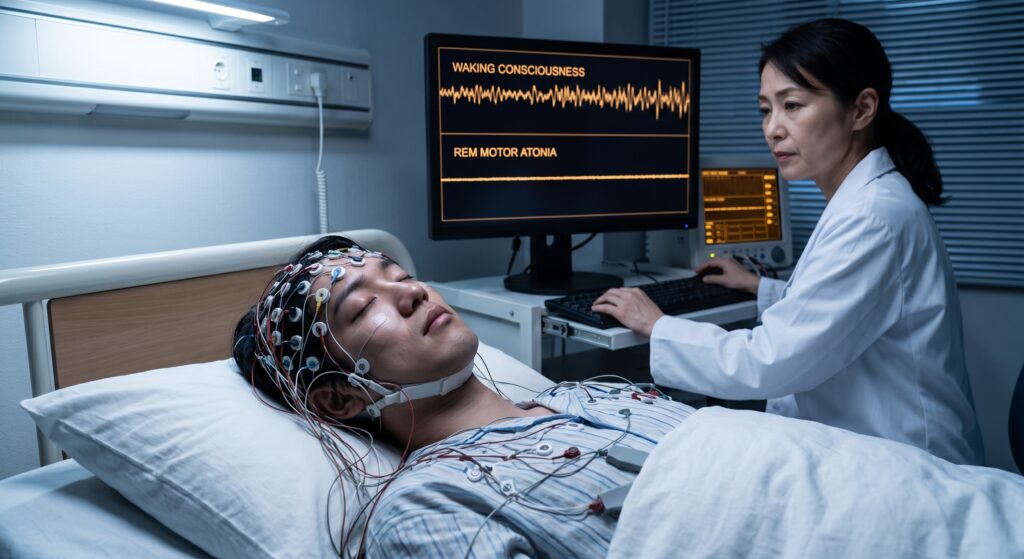
His research tied kanashibari to the sleep-onset REM period, where REM sleep intrudes at the wrong moment. Lab work documented the telltale signature: a mixed brain state, part REM and part waking, with muscle atonia present while the mind was conscious. The demon left a readable trace on the equipment.
That 40 percent figure landed hard. It meant kanashibari was not a fringe affliction. It was a normal part of the human sleep cycle, hiding behind a supernatural name. The lab turned a ghost into a data set.
Fukuda surveyed hundreds of students and found roughly two in five had felt it. He tied it to sleep-onset REM, where dreaming intrudes at the wrong moment. The lab reading confirmed a mixed state of waking mind and sleeping muscle.
The body inside the chains
The mechanism is the universal one, now with instruments attached. During a SOREMP, the brain slips into REM at sleep onset or during disrupted sleep. Consciousness returns while atonia still holds the muscles offline.
The sensation of being bound in metal is a precise translation of total motor lock. Fukuda noted that many sufferers had been under physical or psychological stress, or had disrupted sleep and wake cycles, right before an episode. Stress and broken sleep schedules load the dice.
Stress and broken sleep set the stage. Fukuda noted many sufferers had been overworked or jet-lagged before an episode. The binding favored the exhausted and the irregular sleeper.
From holy sutras to summoning games
Traditionally, defense meant spiritual authority. Buddhist priests recited holy sutras to drive out a possessing animal spirit or yokai. The binding was a spiritual problem that required a spiritual cure.
Then something unusual happened. Modern Japanese pop culture fully absorbed kanashibari. It became a familiar, almost trendy concept, woven through anime, horror films, and urban legend. The hallucinated figures even updated with the media, sometimes appearing as horror-movie icons rather than old yokai.
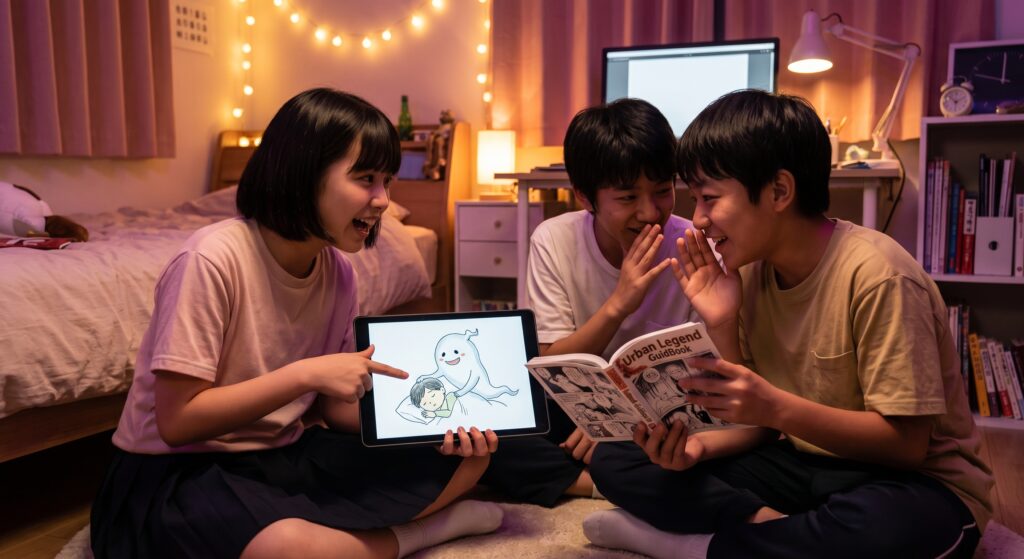
Most striking of all, children began treating it as a dare. They swap tips on how to trigger kanashibari deliberately, chasing the eerie thrill on purpose. A terror that once required priests became a schoolyard game.
The cultural journey is remarkable. Priests once recited sutras to drive out a possessing spirit. The binding was a sacred problem.
Then pop culture absorbed it. Anime, horror films, and urban legend made kanashibari familiar. The hallucinated figures even updated with the media.
Children took the final step. They trade tips on triggering it on purpose, chasing the thrill. A terror that once needed priests became a schoolyard dare.
A culture that stopped being afraid
That shift is quietly profound. In Egypt, cultural beliefs about a deadly jinn make sleep paralysis longer and more terrifying. In Japan, familiarity ran the other way. Widespread understanding and pop-culture playfulness drained much of the dread.
Kanashibari suggests something hopeful. If belief can worsen the experience, it can also defuse it. A culture that treats the visitor as a known, survivable, even entertaining event hands its sleepers a kind of protection.
The contrast with Egypt serves as a miniature version of the entire lesson. Where a culture teaches deadly fear, episodes worsen. Where a culture teaches familiarity, it eases. Same brain event, opposite emotional weather.
The hopeful lesson of Japan
Kanashibari offers something the scarier traditions cannot. It indicates that a culture can defuse its own night demon.
Japan did not banish the experience. Sleepers still wake bound in invisible metal. What changed was the emotional framing. Understanding and familiarity replaced dread.
The proof is in the playfulness. When children dare each other to trigger kanashibari, the terror has clearly lost its grip. A summoning game is the opposite of a death fear.
That is the reassuring aspect of cultural priming. If belief can worsen an experience, as in Egypt, it can also tame it. Japan chose to treat the visitor as known and survivable, and its sleepers benefited.
The friendly monster
Kanashibari is the demon that got domesticated. It was studied until it gave up its secrets and retold until it lost its sting. The invisible chains are still there in the dark. Japan just decided to stop screaming and start taking notes and, occasionally, daring each other to feel them.
References & Further Reading
Kanashibari phenomenon as a sleep disorder: recurrent idiopathic sleep paralysis (Fukuda, 2018)



[…] Japan, “kanashibari” carries added layers. The term comes from a medieval paralysis spell practiced by priests of […]