America’s most famous haunting rests on a single book, and its source manuscript has never surfaced.
A Farm Family and a Frontier Ordeal
John and Lucy Bell settled a farm on the Red River in 1804, in what is now Robertson County, Tennessee. They raised nine children and built the kind of modest prosperity common to early frontier families.
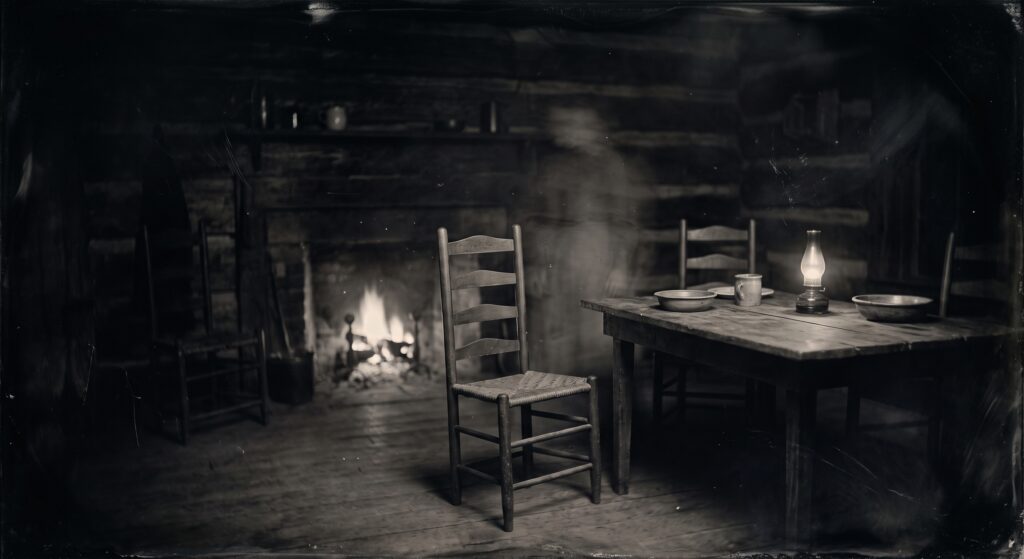
According to the legend that later grew around them, strange phenomena began in 1817. Family members reported scratching sounds, disembodied voices, and physical attacks on daughter Betsy that included pinching and hair pulling.
Word of the disturbances reportedly spread quickly through Robertson County. Neighbors, ministers, and curious visitors are said to have come to witness the phenomena firsthand. Within a few short years, a private family ordeal had turned into a community spectacle.
The entity eventually took the name Kate and reportedly conversed with the family for years, sometimes tender toward Lucy Bell, consistently hostile toward John. The story culminated in John Bell’s death in 1820, which the entity allegedly claimed credit for.
A Single Book, Seventy Three Years Later
Almost everything modern audiences know about the Bell Witch traces back to one source. Martin Van Buren Ingram, a newspaper editor familiar with sensational storytelling, published An Authenticated History of the Famous Bell Witch in 1894.
That is seventy-three years after the haunting supposedly ended. Ingram claimed his account came from a manuscript written by Richard Williams Bell, one of John Bell’s sons. Williams was reportedly six years old when the disturbances began.
Nobody has ever located that manuscript. Some researchers doubt it existed at all. Skeptic Joe Nickell has argued that Ingram wrote the supposedly independent corroborating material himself. That material reportedly includes a reference to Goodspeed County history that Ingram appears to have inserted to lend his own book unearned credibility.
None of this proves the Bell family invented their experiences. It does mean the version most people know was assembled decades later by a man with a professional talent for making stories sell.
The President Who Probably Never Came
No detail illustrates the problem better than Andrew Jackson’s supposed visit. Ingram’s book describes Jackson’s wagon becoming inexplicably stuck near the Bell farm and a disembodied voice releasing it once Jackson credited the witch aloud.
Jackson was one of the most closely documented men in early American history, and his movements during this period are well established. No diary, letter, or contemporary account places him anywhere near Robertson County during the years in question.
Ingram’s version has Jackson calling out that the incident beat fighting the British, a colorful line that reads more like a newspaperman’s invention than a verified quote. No independent record of Jackson ever repeating that line anywhere else has surfaced.
Historians studying the 1824 presidential election have noted how vicious that race became. Jackson’s opponents attacked him over nearly everything, yet none of them ever raised a supposed humiliating encounter with a witch. That silence is difficult to explain if the story had been circulating during his lifetime.
Researchers now generally treat the Jackson episode as a later addition, borrowed from his cultural stature to lend Ingram’s book the weight of a famous name.
Why the Story Still Grips Tennessee
Doubting Ingram’s sourcing does not mean dismissing the Bell family’s real experience. Something clearly disturbed this household enough that neighbors, ministers, and eventually curious strangers all came to investigate for themselves.
The Bell Witch Cave near the old farmstead still draws visitors today. Local tradition has softened the entity into a more benevolent presence there, said to help those who are lost nearby. That gentler version sits oddly beside the vengeful spirit Ingram described tormenting John Bell to death.
Adams keeps the legend alive through festivals, tours, and an entire local economy built around Kate’s story. Whether the original haunting was exaggerated frontier illness, family conflict, or something genuinely unexplained, the town has spent two centuries deciding it is worth telling either way.
That may be the most honest thing anyone can say about the Bell Witch. The documentation is thin, the primary source is compromised, and the story endures anyway, because a good frontier ghost story rarely needs airtight proof to survive.
What Frontier Life Actually Explains
Setting Ingram’s book aside, frontier Tennessee in the 1810s offered plenty of raw material for genuine fear. Families lived isolated from formal medicine, surrounded by unexplained illness, and steeped in inherited superstition from multiple cultural traditions.
John Bell’s decline could plausibly reflect an undiagnosed illness that nobody in 1820 had the tools to name. Betsy’s reported symptoms echo patterns some modern researchers associate with the stress responses of adolescence under difficult family pressure.
None of that requires an actual witch. It only required a family under real strain, living in a time and place where supernatural explanations were often the only ones available.
Frontier communities in this period also lacked the medical vocabulary to describe conditions like epilepsy, tuberculosis, or clinical depression. Symptoms that a modern doctor might diagnose in an afternoon could easily read as demonic affliction to a family with no other framework to reach for.
That gap between what actually happened and what got written down decades later is where most enduring folklore lives. The Bell Witch simply did it on a grander scale than almost any other American ghost story, with a former president’s name attached for good measure.
Two centuries later, the cave still fills with visitors every October. The festival grounds still draw crowds who know the historical shakiness of the story and come anyway. That willingness to enjoy a legend while questioning its sourcing may be the healthiest way to approach American folklore in general.
Robertson County has never needed Ingram’s embellishments to justify its place in Tennessee history. A frontier family, a mysterious illness, and two centuries of storytelling were always going to be enough on their own.
The witch, real or not, gave a small farming community something larger towns rarely get. It gave them a story the entire country still wants to hear, told again every autumn to a fresh audience of skeptics and believers alike. Few frontier households from this era are remembered by name at all, let alone remembered two centuries later. That endurance says as much about America’s appetite for a good ghost story as it does about anything that actually happened on the Bell farm.
References & Further Reading
The Bell Witch: The Truth Behind America’s Famous Haunting, Decoding the Unknown
Is the Bell Witch a chilling fact or a legend, World History Encyclopedia


[…] west, Tennessee claims the infamous Bell Witch of Adams, while Arkansas locals still look for the Gurdon […]
[…] violence of the Western frontier generated its own legends. The brutal history of Adams, Tennessee and the Bell Witch remains one of the most documented hauntings in American history. The restless ground of the Alamo […]