Hikers in one San Francisco park walk on names. Tombstones, broken and repurposed, still show dates underfoot on the trails. That unsettling detail captures a truth the postcards hide. Modern San Francisco stands, in places, directly on top of the people it buried and then chose to forget. The graves moved. The dead, by many accounts, did not all go quietly.
The eviction of a city’s dead
In 1900 the city banned new burials within its limits. Real estate had grown too valuable to leave to the deceased. Over the following decades, San Francisco relocated hundreds of thousands of bodies south to Colma, which today holds around 1.5 million dead and earns its nickname as the city of souls. The living reclaimed the emptied land. The transfer, though, proved messy, and the city treated its buried ancestors with a carelessness that reads as almost deliberate.
Buena Vista Park: walking on the forgotten
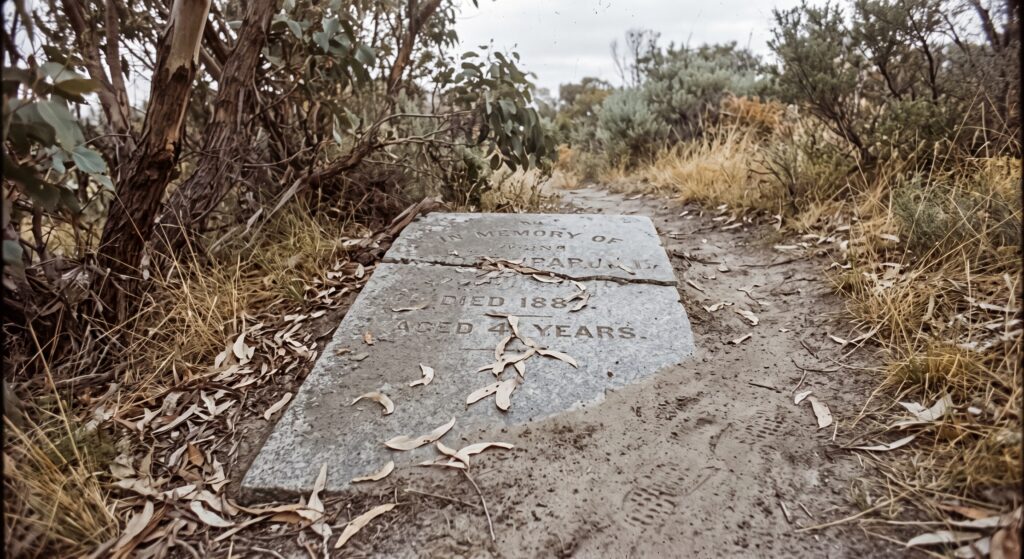
At Buena Vista Park the disrespect is literal. When crews cleared the cemeteries, unclaimed tombstones went unwanted. Instead of letting the stone go to waste, workers broke it up and laid it into the park’s gutters and walkways. Most fragments face down. A few, through error, face up. Hikers today still spot carved names and dates beneath their feet. Visitors report strange figures, disembodied voices, and the sound of footsteps on empty trails. A park paved with headstones seems unlikely to be at peace.
The Legion of Honor: 780 bodies and counting
The Palace of the Legion of Honor tells the opposite story of concealment. Builders raised the elegant museum directly over the Golden Gate Cemetery, a burial ground for the city’s poor. During a 1992 renovation, workers uncovered 780 bodies beneath the building. Experts believe thousands more still lie under the galleries. Patrons admire masterpieces while the forgotten poor rest in the dark below them. The contrast is difficult to shake once you know it.
The Big Four and the graves that never left
The largest removal centered on four cemeteries clustered around Lone Mountain: Laurel Hill, Calvary, Masonic, and Odd Fellows. Richmond District boosters campaigned for decades to clear them and open the land for housing and commerce. The Laurel Hill Cemetery Association held out until 1937, when supervisors demanded immediate evacuation. Crews reinterred roughly 35,000 bodies from Laurel Hill alone between 1939 and 1940.
The relocation was chaotic. Records show workers hauled remains to Colma in moving vans. Diggers often uncovered bodies in states of preservation. Advertising campaigns tried to find descendants, and most were never located. Today the University of San Francisco stands on the old Masonic grounds, and homes fill the rest. After heavy storms, full-sized gravestones sometimes surface at Ocean Beach, where discarded stone found a second use in seawalls and rubble.
The bodies that keep surfacing
Construction still unearths the forgotten. In 2001, builders renovating the site that became the Asian Art Museum found 97 bodies from the Gold Rush era. Crews later reinterred the remains at Cypress Lawn in Colma. That site had already held two public buildings before the third exposed its dead. Earlier decades brought similar surprises, including grave markers and coffins that turned up during 1930s roadwork.
These discoveries illustrate the issue. The Colma move was never complete. Researchers estimate that thousands of unmarked remains still lie beneath San Francisco streets and buildings. Many belong to the poor and the overlooked, the people least likely to have descendants who could pay to move them. The city grew over them and moved on, but the ground occasionally reminds everyone what it holds.
Mission Dolores: preserved, yet still restless
Mission Dolores stands as a rare survivor, one of the few sites where a graveyard remained. Even here, the ground remained disturbed. As the city expanded, it disinterred roughly 5,000 Native people buried at the mission, a fact that demands acknowledgment rather than spectacle. The remaining cemetery holds Charles Cora, a gambler hanged by the Committee of Vigilance in 1856, alongside his wife Belle Cora, who ran an upscale brothel. Their shared plot marks the frontier justice that shaped early San Francisco. Bound together in death after a vigilante hanging, the Coras make the mission a monument to the city’s violent youth.
The San Francisco Art Institute: tools that run on their own
At 800 Chestnut Street, the Art Institute sits near an earthquake-damaged graveyard, and its paranormal record is unusually active. A 1968 renovation triggered a run of accidents in the tower, which led staff to hold a famous seance. Participants said photographs from that night showed doors where old doorways had been, along with apparitions of long-dead figures. Reports continue. Witnesses describe power tools running in empty studios and phantom footsteps climbing the tower stairs. A building raised beside disturbed graves seems to keep company with the disturbed.
Dolores Park and the graveyards nobody remembers
The famous parks hide the same secret. Dolores Park, now a sunny gathering spot, once held a Jewish cemetery. The city relocated those graves to Colma decades ago. Before the 1900 ban, San Francisco used at least 30 cemeteries, many now buried under everyday blocks. Yerba Buena Cemetery sat where the Civic Center stands today. The dead did not choose these resting places. The living simply built over them once the land grew valuable.
Records for these moves ran spotty at best. Crews reburied some remains in mass graves. Others went into new coffins labeled with wrong information. Many stayed exactly where they lay. That carelessness means the true count of bodies beneath the city will never be known. San Francisco relocated its cemeteries, yet it never fully relocated its dead. The gap between those two facts is where the hauntings live.
A charm rooted in its own dark ground
San Francisco’s appeal ties directly to its restless foundations. From the tombstones underfoot at Buena Vista to the bodies beneath the art at the Legion of Honor, the city’s beauty rests on displacement and forgetting. Within a small geographic footprint, San Francisco packs a staggering density of buried trauma. That history does not diminish the city. It deepens it. Walk its parks and galleries with the knowledge that the ground beneath you has a longer memory than the map admits.
References & Further Reading
DoTheBay: The Bay’s Most Haunted Spots (Colma, Buena Vista)
Weird California: San Francisco County Ghosts (Buena Vista Park)
Inside Guide to San Francisco: Haunted Places in San Francisco