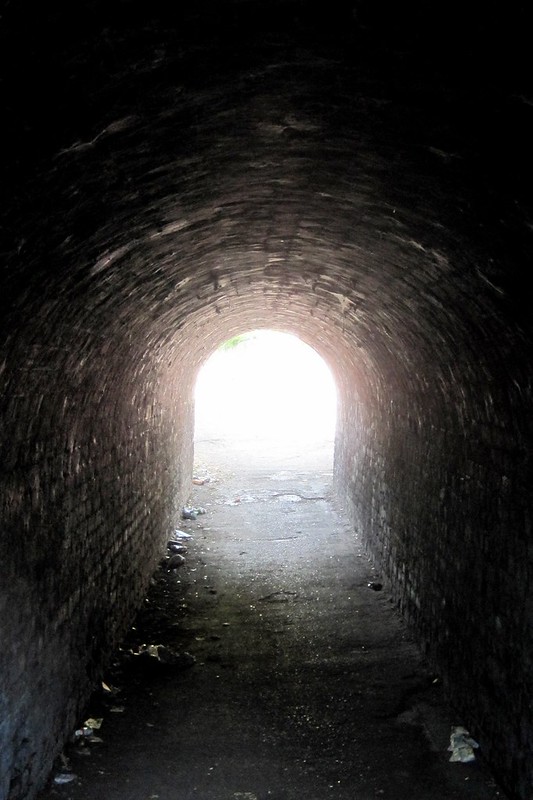
The details are specific and consistent enough that they have their own taxonomy. A sense of leaving the body and observing from above. Movement through a dark tunnel toward a point of intense white light. A feeling of peace so complete it erased every prior conception of peace. The presence of beings, sometimes identified as deceased relatives, sometimes as luminous figures without a prior identity, who communicated without words. A boundary that could be approached but not crossed. And then return.
Near-death experiences are reported by between nine and eighteen percent of cardiac arrest survivors in controlled studies. They are documented in children too young to have absorbed cultural scripts about the afterlife, in blind individuals who describe visual elements they had no prior framework for, and in people from non-Western cultures whose specific imagery differs from the tunnel-and-light template while sharing its structural logic. Whatever they are, they are not rare, not culturally parochial, and not easily dismissed.
The Neuroscience of the Tunnel
The most widely cited neurological explanation for the tunnel of light is oxygen deprivation affecting the visual cortex. As peripheral retinal cells are deprived of oxygen first, the visual field contracts toward the center, creating a progressive narrowing that produces the subjective experience of a tunnel. The light at the end is the last activity of central visual cortex before it also loses oxygen, the brain’s optical signal literally collapsing inward. Live Science describes how tunnel vision can occur when blood and oxygen flow is depleted to the eye, as happens during the extreme fear and oxygen loss common to dying. The specific causes of the full visual experience remain under active research.
REM Intrusion Theory
Neurologist Kevin Nelson at the University of Kentucky proposed that NDEs are related to REM sleep intruding into waking consciousness. His research found that the physiological switch between REM sleep and wakefulness, located in the brainstem, activates under extreme stress and produces the vivid, coherent, emotionally intense experiences characteristic of both REM dreaming and NDEs. Sixty percent of NDE survivors in his study reported REM intrusion as a regular feature of their consciousness, compared to 24 percent of the general population. During REM intrusion, people experience paralysis, out-of-body sensations, and extraordinarily vivid visual narratives, all features that map directly onto classical NDE accounts. Scientific American notes that the proposed link remains a hypothesis awaiting fuller experimental validation.
The Neurotransmitter Cascade
Cardiac arrest and severe oxygen deprivation trigger a cascade of neurochemical activity in the dying brain. Research published in peer-reviewed literature documents surges in serotonin, endorphins, and other neurotransmitters that produce profound peace, emotional intensity, and altered time perception. Stimulation of the temporal lobes, documented in both NDE survivors and in laboratory settings, produces vivid experiential narratives, feelings of presence, life review sequences, and occasionally out-of-body experiences. These neurochemical events are real and consistently associated with the phenomenological features of NDEs.
What the Neurological Framework Does Not Explain
The neuroscience accounts for a great deal. It does not fully account for: verified out-of-body perceptions in which the NDE experiencer accurately describes events occurring in the room during their cardiac arrest that they had no sensory access to; cases occurring in people who are congenitally blind and who report visual experiences with specific, verifiable content; and the cross-cultural consistency of structural elements in populations with radically different prior beliefs about what death involves. These cases do not prove an afterlife. But they establish that the experience, in some documented instances and contain information that the neurological model has not yet explained.
The Folklore Framework: The Threshold That Appears Everywhere
The tunnel-and-threshold structure of the NDE maps with remarkable precision onto the oldest mythological frameworks for the journey of the dead. The Greek underworld required crossing the river Styx, a threshold between the living world and the realm of the dead. Dante’s Inferno opens with a dark wood and a journey through successive realms toward light. Buddhist cosmology describes a bardo state between death and rebirth in which consciousness moves through specific stages. The Egyptian Book of the Dead describes a journey through halls toward final judgment. The consistency of the threshold motif across mythological traditions that developed independently suggests either a common human symbolic imagination or a common human experience of the threshold itself.
What the People Who Have Been There Actually Believe
The most consistent finding in NDE research is the transformative effect of the experience on the people who have it. NDE survivors across cultures and belief frameworks show dramatically reduced fear of death, increased compassion and altruism, decreased materialism, and, regardless of their prior religious or philosophical position, a strong personal conviction that consciousness persists beyond physical death. This conviction is not susceptible to rational argument because it is not based on argument. It is based on direct personal experience.
What that experience actually is, a glimpse of genuine afterlife, the last production of a dying brain, or something that does not fit cleanly into either category, remains the most important open question in the scientific study of consciousness. It remains open because the evidence, taken seriously on its own terms, does not resolve it.
References & Further Reading
• Live Science: Near-Death Experiences Explained by Science
• Psychology Today: The Neurology of Near-Death Experiences
• Scientific American: Are Near-Death Experiences the Brain’s Attempt to Survive Lethal Threats?
• PMC/NCBI: Near-Death Experiences, A Multidisciplinary Hypothesis


[…] Near-Death Experience Tunnel Meaning: Folklore, Science, and Afterlife Belief […]
[…] Near-Death Experience Tunnel Meaning: Folklore, Science, and Afterlife Belief […]
[…] Near-Death Experience Tunnel Meaning: Folklore, Science, and Afterlife Belief […]