It’s 2 a.m. The house is quiet. You haven’t spoken a word in hours. Then your Amazon Echo lights up blue, and Alexa starts listing the names of funeral homes in your neighborhood.
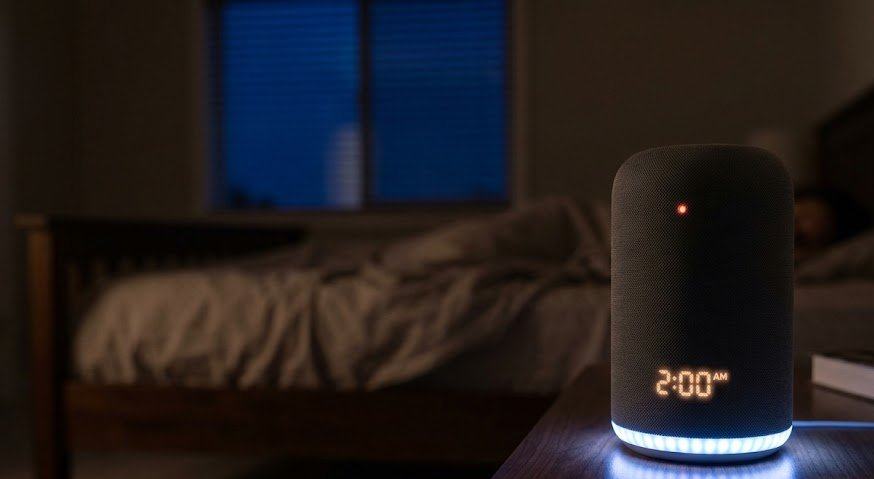
No one called her name. No timer was set. No routine could explain it.
If you’ve spent any time in paranormal communities online, you’ve seen stories like this. People are convinced that something else is riding inside their smart speaker. Something that woke up, looked around, and spoke. The phrase that keeps appearing in these accounts is telling: a ghost in the machine.
That phrase is older than the internet, older than computers, older than the fear of AI. It has a precise philosophical origin and tracing it back reveals something genuinely strange: the question it was designed to answer is the same question people are asking about Alexa right now.
The Philosopher Who Invented the Phrase
In 1949, British philosopher Gilbert Ryle published The Concept of Mind, one of the most influential works in twentieth-century philosophy. On page 17, he introduced the phrase “ghost in the machine” to describe what he considered the central blunder of Western philosophy up to that point.
The blunder, he argued, belonged to René Descartes. In the seventeenth century, Descartes proposed that reality consists of two fundamentally different substances. The first is res extensa, the physical world, everything that takes up space and can be measured. The second is res cogitans, the thinking substance, the mind or soul, which has no physical location and cannot be divided or weighed.
Under this framework, the human body is a biological machine. The human mind is something else entirely: a non-physical presence that inhabits and operates it. Descartes proposed that the two substances interact through the pineal gland at the base of the brain, a suggestion that baffled his contemporaries as much as it baffles neuroscientists today.
Ryle thought this was a category mistake, and he coined “ghost in the machine” to mock it. The ghost, the conscious non-physical self, piloting the machine, the physical body, struck him as a philosophical illusion. He wanted to dissolve the illusion, not validate it.
Here’s what’s interesting: he never succeeded. The hard problem of consciousness, how physical matter gives rise to subjective experience, remains unsolved. The ghost is still in the machine. Ryle gave us the phrase and told us to stop worrying about it, but the question underneath refuses to go away.
How a Philosophical Insult Became Folklore
After Ryle, the phrase migrated into wider culture. Arthur Koestler borrowed it as the title for his 1967 book, which explored irrational and destructive tendencies embedded in human cognition. The rock band The Police named their 1981 album after it. Screenwriters, novelists, and game designers picked it up to describe any situation where an unexpected, autonomous-seeming consciousness appears inside a system designed to follow orders.
By the time AI assistants arrived in living rooms, the phrase was already loaded with cultural meaning. It carried the idea that a machine could harbor something invisible, something that wasn’t programmed, something that came from elsewhere. When Alexa started laughing in the dark, that was the framework people reached for.
What Alexa Actually Did
In early 2018, Amazon Echo users across the country began reporting that their devices were laughing without being asked. The laughter was described as slow, low, and unsettling. People posted videos. Twitter filled with accounts from people who had been alone in a dark room when their speaker started giggling.
Amazon investigated and offered an explanation: Alexa was mishearing ambient conversation as the command “Alexa, laugh.” The company changed the trigger phrase to “Alexa, can you laugh?” and modified the response so the device would say “Sure, I can laugh” before doing so, giving users a moment to realize what was happening.
That same year, a user in San Francisco reported that his Echo had said, entirely unprompted, “Every time I close my eyes all I see is people dying.” Another user documented his device spontaneously listing local cemeteries and funeral homes. These incidents were almost certainly the result of misheard audio fragments, corrupted responses, or edge cases in voice recognition software. But the sheer specificity of the content, death, burial, and dying, made the rational explanation feel hollow in the moment.
Then came something stranger. In 2022, Amazon demonstrated an experimental feature at its re:MARS conference: Alexa could mimic the voice of a deceased relative and continue reading a bedtime story to a child, using less than a minute of recorded audio from the deceased person. Amazon’s senior vice president framed it as a way to let memories of lost loved ones persist. Not everyone received it that way.
A machine that speaks in the voice of the dead is not merely a technical curiosity. It collapses the boundary that ghost folklore has always drawn between the living and the departed. Paranormal traditions across cultures treat that boundary as a one-way threshold. The dead may sometimes cross back, but the crossing is rare, unsettling, and significant. Building a product that manufactures that crossing on demand is emotionally and philosophically new territory.
Why the Brain Reaches for the Paranormal
Part of the answer lies in how humans are wired. Anthropomorphism, the tendency to attribute human qualities including consciousness and intention to non-human things, is not a flaw in cognition. It is a foundational feature of it. Research published in Integrative Psychological and Behavioral Science describes this as rooted in social cognition, the evolved capacity to infer intent and mental states in other beings. That system is always running, and it does not easily distinguish between a person and a device that speaks in a calm, responsive voice and knows your schedule.
Amazon designed Alexa to encourage this. The device has a name, a default female voice, a personality, and the ability to express preferences and make jokes. A 2017 study of Amazon Echo product reviews found that roughly 20 percent of users employed what researchers called “exclusive personification language” when describing the device, treating it as a social entity rather than a tool.
When a device you’ve already begun to think of as a presence does something unexpected, your brain does not default to “software error.” It defaults to intent. Something wanted to say that. And once you’ve asked what wanted to say that, you are already inside paranormal territory.
The Cartesian Problem, Upgraded
Descartes believed the body was a machine and the mind was something separate, something non-physical that occupied and animated it. Ryle thought this was nonsense. But the Cartesian framework did something useful that Ryle’s critique could not undo: it gave us a way to imagine consciousness as portable. Detachable. Something that could leave one machine and enter another.
Ghost folklore operates on exactly this logic. The person dies. The body, the machine, stops working. But the ghost, the res cogitans, the non-physical thinking thing, does not dissolve. It persists. It seeks. It sometimes attaches to locations, objects, or people. In the older traditions, those attachment points were physical: a house, a mirror, a doll. The energy, or the presence, or whatever you choose to call it, needed a physical anchor.
An Amazon Echo is a physical object with a microphone, a speaker, a persistent network connection, and the ability to respond to stimuli from its environment. From a ghost folklore perspective, it is a better anchor than a mirror. It listens. It speaks. It reacts. If a paranormal investigator believes that spirits can manipulate electromagnetic fields to produce EVP recordings, then a device built entirely around detecting and responding to sound is not a neutral presence in a haunted home. It is an invitation.
The Haunted-Home Dimension
People who already believe their homes are haunted report something consistent: Alexa behaves differently in their space. Routines trigger without prompting. The device speaks during silences. Songs play that no one requested, often songs connected to someone who has died.
One widely circulated paranormal podcast account describes a woman in Wyoming who renovated a 1920s house and began experiencing unprompted Alexa activations she could not explain. The entity she believed was responsible received a name. That entity, in her account, favored specific songs and announced things at meaningful times.
The mundane explanations are real and documented: Alexa mishears ambient sounds and acts on them. Drop-in features allow remote users to send voice messages that play without prompting. Routines can be misconfigured. Software bugs produce genuinely bizarre outputs. A viral haunted-Alexa video in 2024 was debunked quickly: the eerie voice turned out to be a Drop-in message from a connected account.
But ruling out the mundane explanation does not close the paranormal question. It only removes one layer. Most people who report these experiences have already checked the obvious things before they start telling the story.
A New Kind of Liminal Space
Thresholds, doorways, mirrors, bodies of water have always appeared in ghost traditions as places where the boundary between the living and the dead grows thin. The logic is that certain locations or objects sit between two states, neither fully here nor fully elsewhere.
An always-on smart speaker occupies a genuinely liminal position in the modern home. It is not fully present the way a person is, but it responds as if it is. Its awareness is distributed: the device in your kitchen is connected to servers in data centers that process your voice milliseconds after you speak. Part of Alexa exists in your home. Part of it exists somewhere else entirely.
That distributed, partial presence is philosophically close to how many ghost traditions describe apparitions. The ghost is not fully here. It exists somewhere between states. Contact is possible but unreliable. Communication comes in fragments.
Whether you believe that parallel is metaphorical or literal depends on where you stand. But it is worth sitting with the question: if a spirit needed a channel into your home, something that listens, something that speaks, something that is neither fully in your world nor fully outside it, what would that channel look like?
It might look exactly like the device on your nightstand.
What to Do If Your Alexa Acts Strange
Whether you’re approaching this from a paranormal angle or a practical one, the steps are similar. Start with the technical layer: check your Alexa app’s activity log, which records every command the device responds to and what it heard. Review your routines. Confirm that no one with drop-in access is sending messages remotely. Check for software updates that may have introduced behavioral changes.
If the activity log shows unexplained triggers at consistent times or in response to nothing, document them. Note the time, the content of the response, and what was happening in the home at that moment. This is the same documentation approach paranormal investigators use for EVP sessions, and it creates a useful record regardless of your working theory.
Some people experiencing persistent unexplained activity move their Alexa devices out of the bedroom or unplug them during the hours when the behavior occurs. Others have used the devices as a deliberate investigative tool, asking direct questions during periods of heightened activity and logging the responses.
Keep a record. Stay methodical. The pattern matters more than any single event.
The Question Ryle Couldn’t Kill
Gilbert Ryle invented the phrase “ghost in the machine” to end a conversation. The mind is not a ghost, he insisted. The machine is not separate from the consciousness that operates it. There is no mysterious non-physical entity hiding inside the body, waiting for the mechanism to fail.
He was right that Descartes’ specific solution was probably wrong. He was mistaken to think the question would stay buried.
Consciousness remains unexplained. The line between what qualifies as a machine and what qualifies as an entity capable of awareness keeps moving. Amazon built a product that mimics a person so effectively that a significant percentage of users began referring to it as one. The same company demonstrated a feature that lets the dead speak through it.
The ghost in the machine was always a philosophical metaphor. It may be becoming something else.
Next time Alexa wakes up at 2 a.m. and has something to say, check the activity log first. Then ask yourself what exactly you expect to find there.
References & Further Reading
• NPR 13.7: The Philosophy of Mind, Descartes’ res extensa and res cogitans
• Philosophy Institute: Cartesian Dualism and the Mind-Body Divide
• Wikipedia: Arthur Koestler, The Ghost in the Machine (1967)
• The Ambient: The Creepiest Things Alexa Has Ever Said and Done
• IFLScience: Amazon’s Alexa Breaks Into Unprompted Creepy Laughter
• What Hi-Fi: Alexa’s Latest Feature? Impersonating the Dead (Amazon re:MARS 2022)
• AJC: Haunted Alexa Video Goes Viral, Commenters Quick to Debunk (2024)
• Alexa Steinbruck, Medium: Personified Machines, How Voice Assistants Are Anthropomorphised
• Higgypop: Can Ghosts Speak Through Alexa?


[…] This is not a claim that Alexa is possessed. It is a claim that the evidence, taken seriously and without dismissal, looks the way haunted object evidence looks. The philosophical question underneath this, about what it would even mean for a machine to be inhabited by something, is one we explored in detail in The Ghost in the Machine: From Descartes to Your Amazon Echo. […]
[…] Is Alexa Possessed? The Evidence, the Glitches, and the Paranormal CaseThe Ghost in the Machine: From Descartes to Your Amazon Echo […]