Before the Bay Bridge, before statehood, a butchered animal left a ghost that still moans beneath the traffic. Yerba Buena Island keeps its oldest secret hidden.
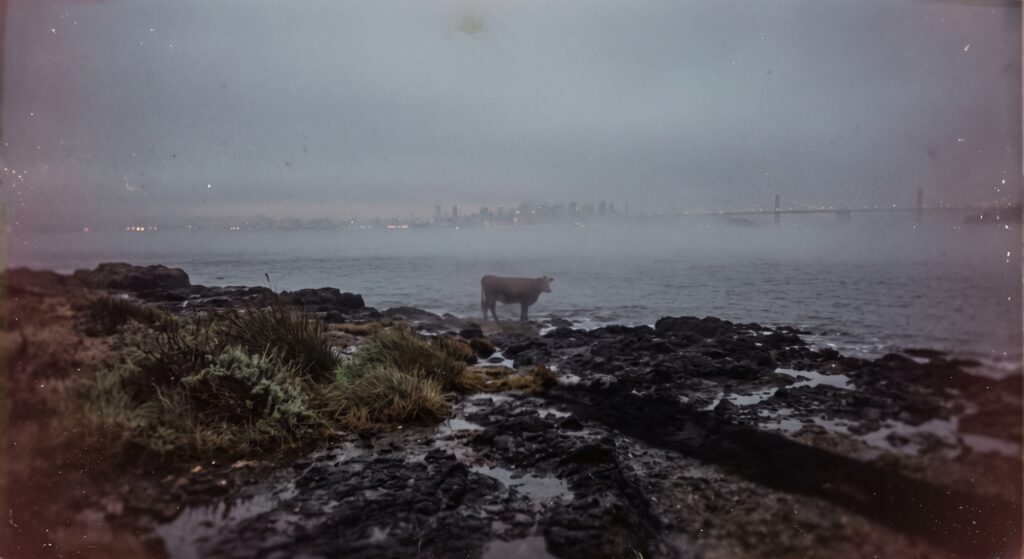
Every haunted place has a signature ghost. A lady in white. A pacing soldier. A weeping child. Yerba Buena Island answers with something no other haunted site can claim. It has a phantom cow.
The Moo in the Dark
Nineteenth-century legend tells of a cow that moans across the island, searching for a calf. Pirates allegedly butchered and ate the calf. They left the mother to grieve forever. The tale sounds absurd until you place it in context. The bay ran wild with smugglers and outlaws. A stolen animal could vanish into a cooking pot, and nobody kept records. A grieving mother is a grieving mother, no matter the species.
From Goat Island to Naval Base
The island wears its history in its shifting names. Once designated Goat Island, it later became a naval and transit hub. Each identity left a distinct residue. The rugged frontier lawlessness of the early years gave way to military discipline and then to the hum of bridge traffic overhead.
Near the old naval warehouses, particularly Warehouse 1, visitors report a specific dread. A sensation of being watched. A nauseating knot in the stomach lingers. The feeling clusters around the older structures, where the island’s layered history sits closest to the surface.
Pirate Lore and a Literary Bridge
A small isthmus links Yerba Buena to man-made Treasure Island. The name is no accident. Builders christened the artificial island after the novel by Robert Louis Stevenson. The choice connected the new land to a tradition of maritime adventure and buried secrets.
Layers Under the Rock
Yerba Buena means good herb, a name the Spanish gave for the wild mint that once covered the slopes. Sailors later called it Goat Island for the animals set loose to graze there. Each name buried the previous one. The phantom cow predates all of them.
The Isthmus and the Made Land
Treasure Island did not exist before 1936. Crews built it from bay fill for a world’s fair, then the Navy took it over. The new land fused to old Yerba Buena by a slim isthmus, joining ancient rock to manufactured ground. That seam matters to ghost lore. Made land unsettles people. It sits where water used to be, and folklore treats this ground as thin and restless.
Why the Weirdness Sticks
Most hauntings borrow gravity from human death. A phantom cow should not frighten anyone. Yet the story endures precisely because it is so odd. Strangeness has staying power. A grieving animal is not threatening. It is just sad. And sadness, it turns out, haunts more persistently than terror.
What People Actually Report
Strip away the folklore, and a consistent core remains. People near Warehouse 1 describe the same three things. A prickling sense of being watched. A sudden drop in the stomach. A sound that does not match the traffic overhead. None of that proves a ghost. Cold marine air, isolation, and a heavy history can all bend perception. Yet the reports cluster in the same spots and repeat the same details across decades.
Visiting the Anchor of the Bay
Yerba Buena sits at the midpoint of the Bay Bridge and connects to Treasure Island. Both are accessible from the eastbound span. Walk the older sections near the former naval buildings. The island is small enough to cover on foot in an hour.
Listen too, especially on a still night. A low, mournful sound may roll across the rocks with no cow in sight. If it does, you may have met the island’s oldest resident. She has seen every version of this bay, and she is still looking for what she lost.
References & Further Reading
Wikipedia, Yerba Buena Island: https://en.wikipedia.org/wiki/Yerba_Buena_Island
Wikipedia, Treasure Island, San Francisco: https://en.wikipedia.org/wiki/Treasure_Island,_San_Francisco
National Park Service, Golden Gate National Recreation Area history: https://www.nps.gov/goga/learn/historyculture/index.htm
[…] desert ruins of Calico to the disrupted foundations of San Francisco. The Bay Area alone claims the Phantom Cow of Goat Island, the Golden Gate ghost ship, the White Lady of Golden Gate Park, and the cursed mansions of Pacific […]