Visitors call it one of Virginia’s most haunted plantations, but the real story asks for compassion more than fright
The Man Who Never Signed
In 1775, Patrick Henry delivered the line that every American schoolchild learns: “Give me liberty or give me death” at Richmond’s St. John’s Church. Despite that legacy, Henry never signed the Declaration of Independence. He was busy serving as Virginia’s first governor when the Continental Congress finalized the document in Philadelphia. His political career occupied him with state affairs rather than the Continental Congress.
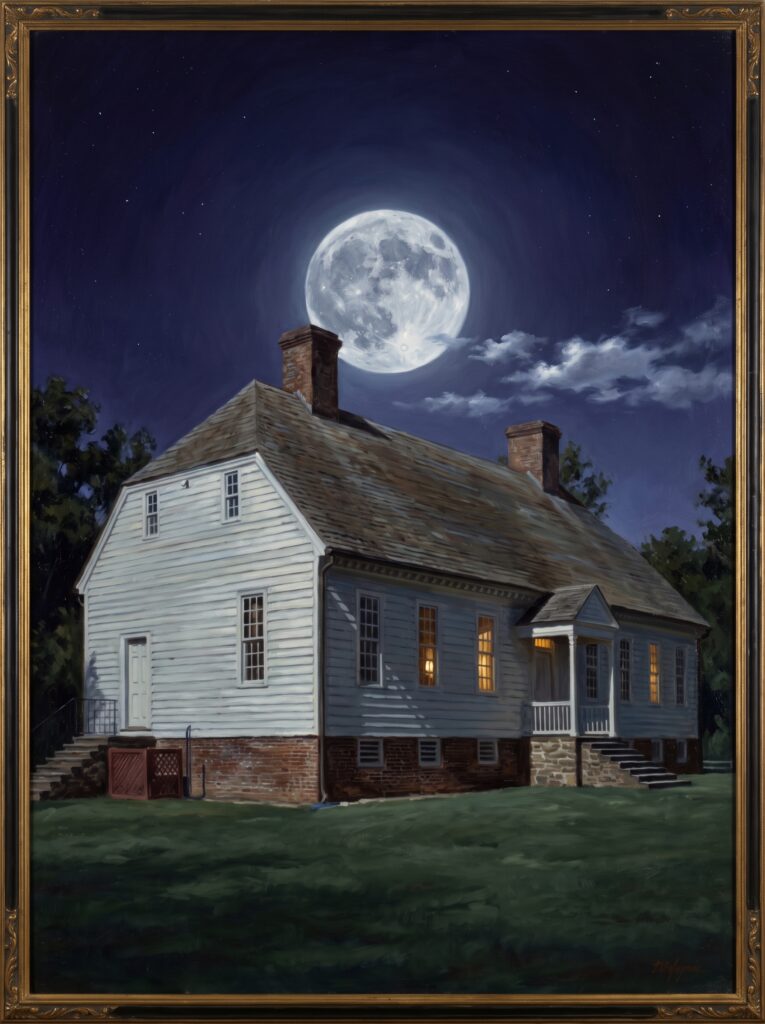
Before that speech, Henry and his wife Sarah Shelton moved into Scotchtown, a large plantation house in Hanover County, Virginia, in 1771. The couple had known each other since childhood and married when Sarah was just sixteen and Patrick eighteen. Henry had already tried and failed at farming and storekeeping before finding his footing as a lawyer, and the family arrived at Scotchtown hoping for a more stable chapter.
A Family Crisis With No Modern Understanding
After the birth of their sixth child, Sarah began showing signs of severe mental illness. Historians today generally point to postpartum depression or postpartum psychosis, conditions with no name or treatment framework in the 1770s.
Henry visited the only mental hospital in the region and came away horrified by what he saw there. Patients were shackled to bare walls in windowless rooms. Rather than send Sarah into that system, he prepared two rooms for her in the basement of Scotchtown, with an enslaved caregiver attending her.
By eighteenth-century standards, keeping Sarah at home with care was likely a more humane choice than the alternative. By any modern standard, confining a suffering woman to a basement for years remains a difficult, sorrowful story with no clean resolution.
Sarah died at Scotchtown in 1775, only weeks before her husband delivered the speech that made him famous. Because mental illness carried deep stigma at the time, her death and burial were handled quietly, with no lasting grave marker to record where she rests.
The Woman in White
Visitors and staff at Scotchtown describe a woman in a flowing white gown, sometimes carrying a candle, moving silently across the grounds near the basement exit. She never speaks and typically vanishes within moments of someone seeing her.
Other reports describe sudden screaming from the basement rooms where Sarah once lived, along with a basement door that resists opening despite having no lock or obstruction. Some visitors describe paint that will not adhere to the walls of those specific rooms no matter how many times contractors try.
A Grave That May Not Exist Where Legend Says
For years, popular accounts placed Sarah’s grave about thirty feet from the main house, marked only by a lilac tree Henry supposedly planted. More recent historical research has directly challenged that detail, finding no solid evidence to support the specific location.
In other words, even the ghost story’s own geography remains unsettled. Sarah’s actual resting place, like so much of her recorded life, stayed hidden by design during her lifetime and remains genuinely unknown today.
The family’s hardship did not end with Sarah. Her oldest son John later served in a Virginia regiment during the war and survived a brutal battle at Monmouth Courthouse in New Jersey. Afterward, witnesses found him wandering among the dead with his sword broken into pieces, inconsolable and unable to function. Military records at the time simply labeled him sick, since the language to describe what soldiers now call combat trauma did not yet exist. Whatever ran through the Henry and Shelton family, it touched more than one generation.
What Scotchtown Represents Beyond One Family
Sarah’s confinement was not an isolated cruelty invented by one husband. It reflected the only options available to almost any eighteenth-century family facing serious mental illness. Families could choose a brutal public asylum or a private, hidden arrangement at home. Wealthy families like the Henrys had the means to build private rooms and hire dedicated caregivers. Poorer families usually had neither option.
That context does not excuse the isolation Sarah endured, but it does explain why her story resonates beyond a single haunted house. Historians who study Scotchtown today increasingly frame the site as a lens into eighteenth-century mental health treatment, not just a stop on a ghost tour. That shift finally gives Sarah’s suffering the historical weight it always deserved.
Modern caretakers of the property have leaned into that shift rather than away from it. They pair ghost tour content with honest interpretation of Sarah’s confinement and the enslaved caregiver who tended to her. That pairing offers visitors a fuller picture than fright alone could ever provide.
Recent scholarship, including Mark Couvillon’s 2021 study of the Henry marriage, continues to revise even basic facts about Sarah’s life that popular ghost tours had long treated as settled. That ongoing correction matters. It means Scotchtown’s story keeps getting more accurate over time rather than calcifying into a fixed legend, which is rare for a haunted house tale this old.
Visiting Scotchtown
Scotchtown is preserved by Preservation Virginia and located in Hanover County, Virginia. The grounds are generally open daily from dawn to dusk, while guided interior tours run on a more limited seasonal schedule. Confirm current hours before making the drive.
References & Further Reading
Sarah Henry: Patrick Henry’s Basement Kept Wife – Richmond Ghosts
Sarah Shelton Henry (1738-1775) – Find a Grave Memorial
Patrick Henry’s Scotchtown-Williamsburg Ghost Tour