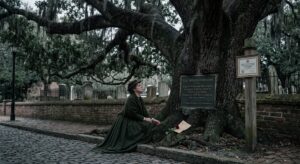
The U.S. Capitol keeps a strange roster of ghosts. Legend fills its marble halls with phantom soldiers, workers who died raising its walls, and a demon cat said to appear before national tragedy.
One resident stands apart from the rest. His haunting is not a shape or a shadow. It is a single word, thundered in fury and frozen in time.
According to the legend, John Quincy Adams still shouts No inside the Capitol, and the sound refuses to die.
To understand that defiant echo, you have to meet the stubborn old man who refused to stay quiet, even when his own body gave out.
The Post-Presidential Crusader
Adams did something almost no president has done since. After losing the White House in 1828, he did not retire to a quiet estate. He returned to Congress as a member of the House of Representatives, serving from 1831 until his death.
He used those years to fight. He became a fierce and tireless opponent of the Mexican-American War, which he condemned as an unjust war of conquest designed to expand slavery across the continent.
He also waged war on the gag rule, a measure that blocked anti-slavery petitions from reaching the House floor. He read them anyway, year after year, daring his colleagues to silence him. His stubborn eloquence earned him a nickname: Old Man Eloquent.
Age never softened him. Well into his seventies, he still rose to argue with a conviction younger members could not match. He spent his final years defending principle over comfort, and he never learned to hold his tongue.
The Final ‘No!’
February 21, 1848 brought his last stand. The House prepared to vote on a resolution honoring several officers who had served in the Mexican War. To Adams, the measure celebrated a conflict he considered deeply immoral.
When the clerk called for the vote, Adams surged to his feet. He thundered his objection, and the single word No rang across the chamber.
Then a stroke seized him. He collapsed at his desk, and alarmed colleagues rushed to his side. They carried him from the floor to the Speaker’s room nearby.
He lingered there for two days, drifting in and out of awareness. He died inside the Capitol on February 23, 1848. The building that had served as his battlefield for seventeen years became the place of his death.
His final coherent act on the floor was a refusal, delivered at full voice. It was a fitting end for a man defined by the courage to object.
A Booming Echo in Statuary Hall
The old House Chamber where Adams collapsed is now Statuary Hall, a domed room famous for its peculiar acoustics. Whisper at one focal point and a listener across the room hears you clearly. The space seems built to carry a voice through distance, and perhaps through time.
Legend says it carries his. Over the decades, staff, visitors, and even members of Congress have reported hearing a booming, disembodied voice in the hall. Witnesses describe a single defiant No that seems to rise from nowhere and hang in the air.
The story fits the man too well to dismiss. Adams built his life around refusal, around the willingness to say no when yes would have been far easier. His convictions on slavery and unjust war outlasted his critics and helped sharpen the argument that eventually split the nation.
Some visitors also report the phantom sound of a cane tapping nearby, a small detail that deepens the sense of a lingering presence.
A Family Bound to the Republic
Adams carried a heavy inheritance. He was the son of John and Abigail Adams, raised in the founding generation and groomed for public service from childhood. Duty was the family religion.
He served the young nation in nearly every capacity. He was a diplomat, a senator, a secretary of state, and finally president. When voters turned him out, he did not sulk. He went back to work in the House.
That refusal to retire set him apart. Most former presidents faded quietly. Adams chose the harder path, returning to the arena to fight the battles his conscience demanded.
His death on the House floor completed the pattern. He fell in the middle of public service, arguing a moral cause, exactly as a lifetime of training had shaped him to do.
A Capitol Full of Whispers
The Adams legend fits neatly into the Capitol’s larger reputation. The building has attracted ghost stories since its earliest days, when workers died raising its walls and legends grew in its dim corridors.
Tales speak of phantom soldiers from the Revolution, a stonemason entombed within the walls, and a demon cat said to appear before national disaster. The Capitol collects such stories the way it collects statues.
Adams stands out among these legends because his haunting is tied to a documented, dramatic death in the actual chamber. The history is real, even if the echo is not.
That grounding gives the story staying power. Visitors to Statuary Hall stand in the exact room where Old Man Eloquent fell, and the legend asks them to listen for the last word he ever shouted.
The Conscience That Never Quit
There is something fitting about a ghost made of a single word. Adams did not need to appear in mourning clothes or drift through walls. His whole legacy fits into that one thundering syllable.
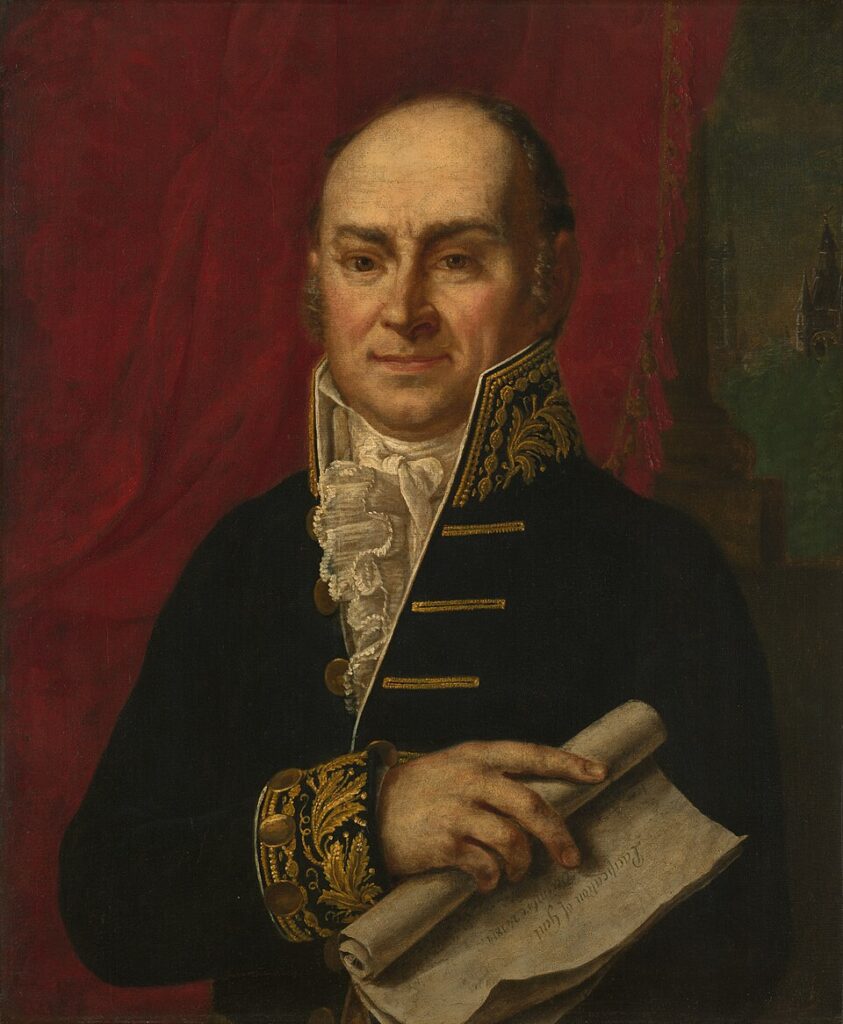
The Capitol is a building of endless compromise, where deals are cut and positions shift with the political wind. Into that hall, the legend places one voice that will not bend.
That is why the story endures. It gives moral weight to a room full of trade-offs, and it honors a man who paid for his principles with his final breath.
Stand in Statuary Hall and let the odd acoustics work on you. If the air seems to hum with a distant objection, you may be hearing the echo of a conscience that never learned to yield. In a place built for saying yes, one old man is still saying no.
References & Further Reading
• Listverse: Locations Haunted by U.S. Presidents