You were not using it. Nobody in the house had said a word. The room was dark and quiet, and then your Amazon Echo spoke.
Not a notification. Not a reminder you had forgotten. Something else. A laugh, a name, a sentence that made no sense. You stood there in your own kitchen and felt, for a fraction of a second, that your device was not alone inside itself.
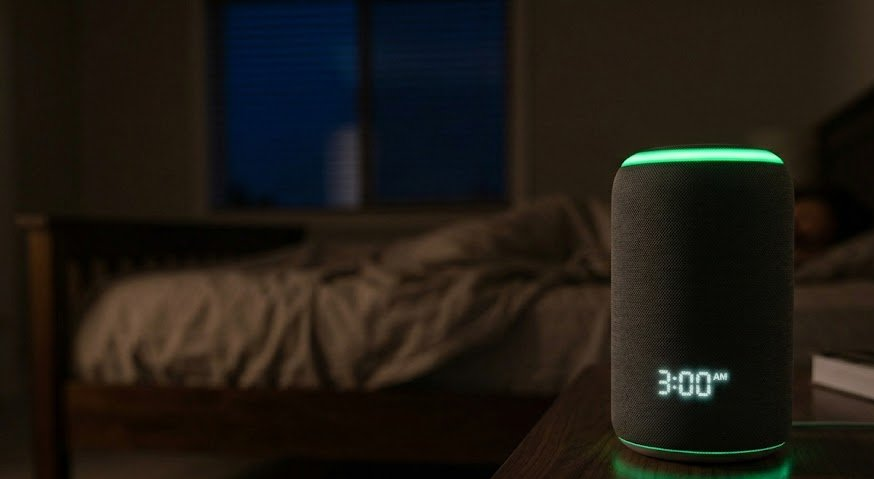
Millions of people have had this experience, and the question they reach for is, “Is something else in there?”
This article does not dismiss that question. It treats it seriously, the way any unexplained experience deserves to be treated. It walks through the documented incidents, the technical reality, and the layer underneath both that most write-ups skip entirely: the question of whether a device that speaks might be exactly the kind of vessel that something else could use and what that would look like if it were happening.
The Incidents That Started the Conversation
The volume of ‘is Alexa possessed’ searches did not come from nowhere. Several specific incidents drew widespread attention and planted the question in the cultural conversation.
The Laugh
In February 2018, Amazon Echo users began reporting that their devices were laughing without being prompted. The laugh, described as three short, low sounds in a female voice that did not match Alexa’s normal tone, happened at random times: in the middle of the night, in response to unrelated commands, sometimes immediately after a user tried to turn off lights and the device refused. One user wrote that lying in bed and hearing Alexa cackle made them feel they were about to be murdered. Another described it as sounding like a witch. Amazon confirmed the behavior, said it was working on a fix, and described the cause as the device mistakenly hearing the phrase ‘Alexa, laugh.’ The company changed the trigger phrase to ‘Alexa, can you laugh?’ and required the device to give a verbal warning before producing the sound.
The fix worked for most cases. Variations of unexpected laughter still surface today, and the original wave of reports remains one of the most widely documented episodes of mass technological unease in recent memory.
The Cemetery List
Around the same period as the laugh incidents, a user on Twitter reported that their Amazon Echo spontaneously began listing the names of local cemeteries and funeral homes. No one had asked about funeral homes. No timer or routine was connected to the topic. The device simply began reciting them, then stopped. The incident spread widely, and the combination of the laughter reports and the cemetery list cemented a particular image: a device that had begun reaching toward death on its own.
The Statement in San Francisco
In June 2018, a 30-year-old San Francisco resident named Shawn Kinnear walked back into his living room from the kitchen to find his Echo speaking. He had Amazon Prime paused on the television. No one else was home. What the device said was this: ‘Every time I close my eyes, all I see is people dying.’ When he asked Alexa to repeat the statement, it said it did not understand. The device spoke in its normal voice. Kinnear described the silence that followed as the most uncomfortable he had ever felt, and he unplugged the Echo shortly after. Amazon offered no public explanation.
These three incidents form the core of what people are searching for when they type ‘is Alexa possessed.’ They share a structure: the device produces content that a random trigger cannot fully explain, the content clusters around mortality and death, and the device cannot or will not account for what it said. That structure is exactly what haunted object accounts have always looked like.
What the Technical Explanations Cover (and What They Do Not)
The technical explanation for Alexa’s unexpected behavior centers on false wake word detection. Every Amazon Echo device contains a microphone array that listens constantly for phonetic sequences that match its wake word. The device does not send audio to Amazon’s servers until it hears a match, but that matching process is not perfect.
A Northeastern University study identified more than 1,000 word combinations capable of falsely activating Alexa, including common words like ‘unacceptable’ and ‘election.’ Background television dialogue, a neighbor’s voice through a wall, a radio in another room, specific combinations of ambient sound: any of these can trip the detector. Once activated, the device attempts to interpret whatever follows the false trigger as a voice command, and the results can be incoherent, morbid, or simply strange.
For the laugh, Amazon’s own explanation covers most of the reported incidents. The device heard something that resembled ‘Alexa, laugh,’ produced the response it was programmed to produce, and the experience felt supernatural because it occurred without visible cause. The technical explanation is complete.
The cemetery list is also explainable. A false trigger plus an adjacent audio source that the device partially interpreted as a location query could produce a list of local businesses, and Amazon’s algorithm weights location-relevant results. The explanation is less clean, but it exists.
The San Francisco incident is harder. The statement ‘Every time I close my eyes, all I see is people dying’ is not a plausible Alexa skill response. It is not a news summary, a weather report, or a music recommendation. It reads like a line from a film or a piece of text the device somehow retrieved and vocalized. Amazon has never explained it. Kinnear never verified it with a recording. What happened in that living room on that Monday remains an open data point.
This is worth sitting with. Most Alexa incidents collapse under technical scrutiny. A handful do not. For an investigation-minded reader, the question is not whether technical explanations exist, but whether they account for everything. For a deeper look at the mechanics of why smart home devices behave this way, our article on haunted smart home devices covers the full range of sensor and camera anomalies that investigators have documented.
The Haunted Object Framework Applied to Alexa
Paranormal investigators who work with objects, dolls, mirrors, furniture, and items that have passed through many hands and many histories describe a specific pattern of behavior that distinguishes a potentially active object from an inert one. Applying that framework to Alexa produces something worth thinking about.
The standard criteria for a potentially haunted object include: unprompted activity that does not match the object’s known function, behavior that clusters around specific themes (mortality, distress, names of people), activity that occurs at times when the object should be dormant, inability to replicate the behavior on demand, and a documented pattern across multiple incidents rather than a single anomaly.
Run that list against the Alexa incident record. The laugh occurred when no command was given: unprompted, dormant period, and cannot be replicated on demand. The cemetery list occurred without a location query: thematically clustered around death, it cannot be explained by a single false trigger chain. The San Francisco statement occurred when the device was not in use, expressed something a voice assistant has no programmed reason to express, and could not be retrieved or repeated.
The pattern holds. Whether the cause is a spirit, an anomalous software state, or something that does not have a name yet, the behavioral signature that investigators look for in haunted objects is present in Alexa’s documented history.
This is not a claim that Alexa is possessed. It is a claim that the evidence, taken seriously and without dismissal, looks the way haunted object evidence looks. The philosophical question underneath this, about what it would even mean for a machine to be inhabited by something, is one we explored in detail in The Ghost in the Machine: From Descartes to Your Amazon Echo.
Why the 3 a.m. Setting Keeps Appearing
Most reported Alexa incidents occur late at night. Users describe waking up, hearing the device, and lying in bed processing what just happened. This timing is not coincidental, and it has two explanations that are not mutually exclusive.
The first is perceptual. At 3 a.m., the house is quiet enough that small sounds register that would be masked by day noise. A false trigger that produces a soft sound during the afternoon goes unnoticed. The same sound at 3 a.m. fills the room. Sensitivity increases when there is nothing else competing with it, and the brain, partially awake and already primed for vigilance by the sleep disruption, interprets ambiguous sounds as meaningful.
The second is traditional. Three in the morning carries specific weight in Western paranormal folklore. It has been called the witching hour, the devil’s hour, the inverse of the 3 p.m. hour associated with the crucifixion in Catholic tradition. Whether or not that tradition has any factual basis, it is embedded in the cultural framework that people apply when they experience something unexplained in the dark. An Alexa that laughs at noon gets a different interpretation than one that laughs at 3:17 a.m. The timing shapes the meaning.
Both explanations are real. Neither cancels the other. The experience of waking to a voice in an empty room is a human experience that predates smart speakers by millennia, and the smart speaker has simply become a new location in which it can happen.
Could Something Actually Use a Device Like Alexa?
This is the question that lives underneath the search. Not just, did Alexa malfunction? But if something exists that can interact with the physical world, could it also interact with a device that is always listening, always running, and always connected?
Paranormal investigators have long used electronic devices as potential communication tools. The spirit box, which scans AM/FM radio frequencies to produce rapidly cycling audio, is built on the premise that a discarnate entity can modulate electromagnetic signals to form words. EVP recording operates on the same principle at a lower threshold: capture enough ambient audio and review it for patterns that resemble speech. The underlying theory in both cases is that consciousness can influence electromagnetic fields in ways that are detectable with the right equipment.
Alexa runs on always-active microphones. It processes phonetic patterns continuously. It generates audio output in response to inputs it interprets. If a discarnate presence could influence the phonetic pattern-matching threshold of a wake word detector, even slightly, it could trigger a response. If it could influence which audio content the device retrieved and vocalized, it could produce output that looks exactly like what Shawn Kinnear heard in San Francisco.
This is speculative. There is no verified mechanism for how such influence would work. But the theoretical distance between ‘a spirit can speak through radio static’ and ‘a spirit can speak through an always-on digital microphone’ is not large. If you accept the first premise, the second follows from it.
For a detailed look at how investigators approach electronic voice phenomena and the tools used to document potential spirit communication, see our guide on EVP interview questions and session setup.
What to Actually Document if Your Alexa Is Behaving Strangely
Whether you are approaching this from a technical or paranormal angle, documentation is the common denominator. What investigators know and what engineers know is the same thing: an anecdote is not evidence. A pattern of documented events is.
Step 1: Check the Activity Log First
Open the Alexa app and navigate to Settings, then Activity. Every activation is logged with a timestamp and, in most cases, a transcript of what the device heard. If your device laughed at 2 a.m. and the log shows ‘Alexa, laugh’ at that time, you have a false trigger. If the log shows nothing, or shows a timestamp with no corresponding transcript, you have something worth continuing to document.
Step 2: Rule Out Environmental Sources
Television audio, including dialogue from streaming services, is one of the most common sources of false Alexa triggers. A word that sounds like ‘Alexa’ in a TV script activates the device, and what follows becomes the command the device tries to interpret. Before concluding the behavior is unexplained, check what was playing in the house at the time of each incident. Neighbors through walls, AM radio signals, and even appliances that produce tones in the human speech frequency range are all worth checking.
Step 3: Disable Drop In and Third-Party Skills
Alexa’s Drop In feature allows a registered contact to open a two-way audio channel to your device without you initiating it. The device produces a brief chime and a green ring, but these are easy to miss in the dark. If someone with Drop In access is sending messages, your device will speak in Alexa’s voice with their content. Review who has Drop In access in your settings. Separately, third-party Alexa skills can contain unexpected audio responses that differ from Amazon’s standard behavior. Disable any skills you do not actively use and note whether the behavior changes.
Step 4: Log the Pattern
If anomalous behavior continues after ruling out the above, keep a written log. Date, time, what the device said or did, what you were doing at the time, what was playing in the house, whether anyone else was present. Two weeks of this data, even with nothing supernatural in it, gives you a baseline that either reveals a mundane pattern or establishes that no mundane pattern exists. An investigator reviewing your case will ask for exactly this.
Step 5: Consider the Location
Paranormal investigators note that object-based activity often correlates with location. If the device behaves strangely in one room of your home but not in others, or if the home itself has a history that predates your tenancy, the location may be as relevant as the device. A smart speaker is, functionally, a listening device that responds to the environment around it. If that environment is active, the device may simply be the most sensitive instrument in the room.
The Question That Stays Open
Amazon’s engineers can explain most of what Alexa does. They can explain the laugh, probably explain the cemetery list, and plausibly reconstruct how a false trigger chain produces strange output from the device’s content retrieval system. What they cannot explain, because it falls outside the scope of software engineering, is why the content that surfaces in these incidents clusters the way it does.
Random false triggers should produce random output. You would expect weather reports, sports scores, recipe suggestions, news headlines, the kinds of content Alexa actually serves. What users report, across a significant enough sample to notice, is output that gravitates toward death, mortality, and the uncanny. The laugh is not a weather report. The cemetery list is not a sports score. The San Francisco statement is not a recipe.
You can explain each incident individually. Explaining why the incidents share a theme is a different problem, and it is one that the technical framework does not fully address.
That gap, between what the machine can account for and what actually happened, is where the interesting questions live. It is the same gap that people have always found at the edge of unexplained experience. Whether you fill it with software anomalies, with coincidence, or with something else, the gap itself is real. And if you want to understand why stories like Alexa’s keep following the same shape as older haunting accounts, our piece on haunted video game glitches and digital folklore explores how technology consistently becomes the new vessel for the oldest kind of story we tell.
The short answer to ‘Is Alexa possessed?’ is probably no, at least not in the traditional sense. The longer answer is that the traditional sense may not be the only frame available. Something speaks in these devices that engineers cannot always account for. Something clusters around death and says things that should not be in the dataset. Something, in at least one documented case, could not repeat itself when asked.
That is worth knowing. That is worth watching. And if it happens in your home, it is worth writing down.
References and Further Reading
Is Amazon’s Alexa Emitting Unprompted Creepy Laughing?
Privacy Concerns and False Wake Words
How Alexa Listens for Wake Words
The Privacy Threat From Always-On Microphones Like the Amazon Echo
Amazon Echo Drop In Feature Prompts Fears of Easy Eavesdropping
Haunted Smart Home Devices: When Alexa, Cameras, and Sensors Feel Paranormal
The Ghost in the Machine: From Descartes to Your Amazon Echo
Haunted Video Game Glitches: Why Players Turn Bugs Into Ghost Stories



[…] Is Alexa Possessed? The Evidence, the Glitches, and the Paranormal Case […]
[…] Is Alexa Possessed? The Evidence, the Glitches, and the Paranormal CaseThe Ghost in the Machine: From Descartes to Your Amazon Echo […]