Old Alton Bridge in Denton County, Texas sits on a now-unpaved road between the towns of Copper Canyon and Denton, crossing Hickory Creek in a one-lane iron span built in 1884 by the King Iron Bridge Manufacturing Company. It was built to transport people and cattle to the town of Alton, which has since been swallowed by suburban development. The bridge still stands. The road it served largely does not. And on the bridge and in the wooded creek bottom around it, a legend has accumulated over the past seventy years that is simultaneously a story about racial violence, a story about supernatural retribution, and a story about what happens when communities fail to reckon with their own history.
The Goatman, as the creature associated with Old Alton Bridge is known, was reportedly a Black goat farmer named Oscar Washburn who worked the land around Hickory Creek in the 1930s. According to the legend, which is substantially supported by historical evidence, Washburn was hanged from the bridge by members of the Ku Klux Klan in 1938. Some accounts say the Klan then tried to throw his body from the bridge but found the rope empty when they returned. His ghost, or his monster form, has haunted the bridge and its surroundings ever since.
The Legend’s Complexity
The Goatman legend is worth engaging with carefully because it is not simply a monster story. It is a ghost story rooted in real racial violence, and the supernatural creature that has grown from it carries that history in ways that deserve acknowledgment rather than entertainment-only framing. Researcher Shaun Treat, writing on why ghost legends at sites of racial violence persist, argued that such stories often function as alternative historical records: preserving the horror of events that official histories preferred to leave unnamed in the only form that covert transmission allowed.
The creature that people report near Old Alton Bridge, the Goatman, combines features of the standard cryptid with specific elements rooted in the racial history of the site: the persistent smell of goats (referencing Washburn’s trade); glowing eyes that appear near the bridge at night; and a range of more dramatic phenomena, including shadow figures, sounds of a struggle, and the sense of malevolent watching. Whether any of these phenomena are genuine paranormal events, cultural scripts enacted by visitors who arrive at the bridge with the legend already loaded, or a combination of both, the site carries genuine weight that the pure cryptid framing does not capture.
The Broader Crybaby Bridge Tradition
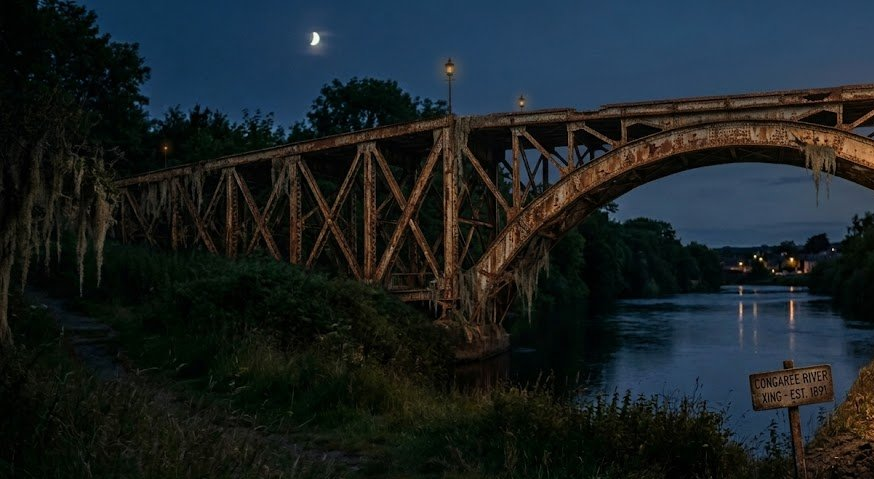
Old Alton Bridge is one of many American bridges that have accumulated ‘crybaby bridge’ legends, where the sound of a crying child is heard near bridges associated with historical tragedy. The template is widespread: a child, or a mother and child, died near or on the bridge, and their cries are heard by visitors who stop and listen at night. The Goatman bridge tradition is more elaborate than most crybaby bridge stories, with the specific creature and the history adding layers not present in the generic version. But it connects to the same underlying principle: bridges as liminal spaces where the dead are present, where the past and present are compressed into the same geography.