Lake Champlain is a working lake. Ferries cross it. Sailboats race in it. Commercial fishing boats have worked its cold, dark water for generations. The Vermont and New York communities along its shore are not remote wilderness outposts but actual cities and towns. In Plattsburgh and Burlington, where Champ is part of the local identity, the lake itself is present, taken for granted, and occasionally astonishing.
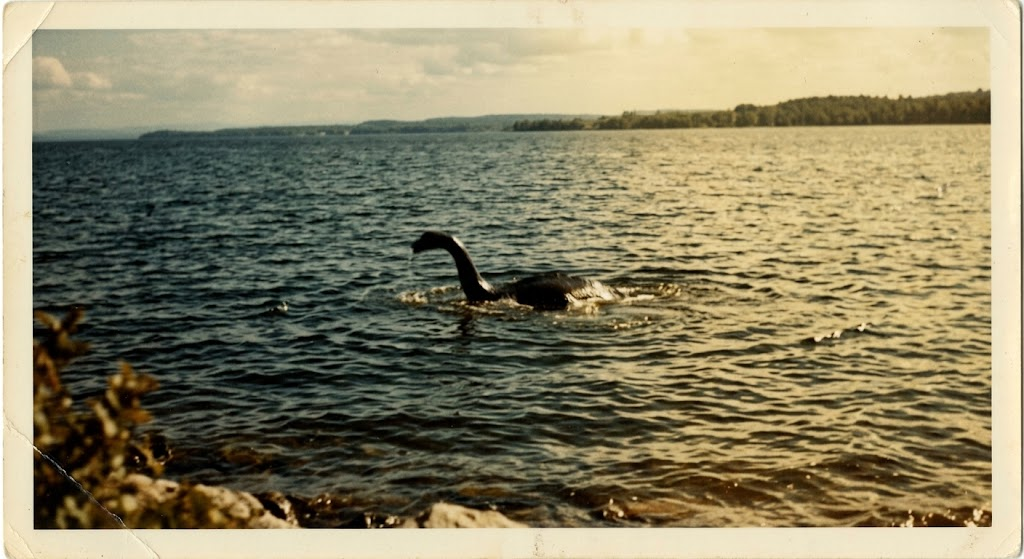
The Sandra Mansi photograph of 1977 is the central piece of evidence in the Champ story, and we should treat it carefully. Mansi was on a family outing near Saint Albans Bay, Vermont, when she photographed what she described as a large, long-necked creature. It surfaced near the shore for several minutes before submerging. She kept the photograph in a shoebox for four years before sharing it with researchers. When photographic experts at the Smithsonian Institution and Canadian marine biologist Paul LeBlond eventually analyzed it, they produced no satisfactory conventional explanation. The photograph has not been definitively identified as any known animal or as a hoax in the four decades since its publication.
The History of Sightings
Samuel de Champlain’s 1609 account is often cited as the origin of the Champ legend, but historians note that his description of a large, serpent-like creature in the lake is ambiguous and may refer to a garfish rather than a lake monster. The documented sighting tradition begins more clearly in the 1870s, when Vermont and New York newspapers began carrying reports of a large, dark, multi-humped object seen in different parts of the lake. P.T. Barnum offered a cash reward for the creature’s capture in 1873, suggesting its fame had already reached national dimensions.
The modern era of Champ research accelerated in the 1980s, when a group called the Lake Champlain Phenomena Investigation began systematically collecting accounts and analyzing the Mansi photograph. The investigation produced a catalogue of over three hundred reported sightings, concentrated near the deeper sections of the lake between Plattsburgh and Burlington. A second hotspot appeared near the Adirondack foothills on the western shore.
The Scientific Proposals
Proposals for Champ’s identity have included surviving populations of plesiosaurs, large eels, giant sturgeons, and zeuglodon-type archaeocetes.
Vermont and New York both formally recognized Champ’s protected status in 1981 and 1982, respectively, passing legislation that prohibits hunting or harming the creature if it exists. The legislation is both practically symbolic and genuinely interesting as an example of public policy responding to folk tradition.
What Visiting Looks Like
Lake Champlain is one of the most accessible cryptid lakes in the world, situated between Burlington, Vermont, and Plattsburgh, New York, with good road access from both directions. The Champ sighting tradition is diffuse enough that there is no single best viewing location, though the deeper sections of the main lake basin between the two cities have the densest historical report concentration. Burlington’s waterfront offers both lake access and the broader cultural context of a working lakeside city that has integrated Champ into its identity without becoming consumed by it. The Lake Champlain Maritime Museum in Vergennes, Vermont, treats the Champ tradition in the context of the lake’s broader natural and cultural history.



[…] some of our most enduring cryptids. Lake Champlain, bordering New York and Vermont, is home to Champ, a creature often compared to a plesiosaur. In the Great Lakes, Bessie supposedly patrols the […]