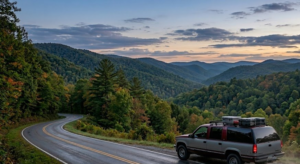
Mount St. Helens erupted on May 18, 1980, with the force of 24 megatons of thermal energy, flattening 230 square miles of old-growth forest and killing 57 people. The eruption fundamentally altered the landscape of a 150-square-mile area of Skamania and Cowlitz counties in Washington State, turning dense forest into a grey moonscape of fallen timber and volcanic ash. It also, according to the first documented Batsquatch account, disturbed whatever had been living in that forest before the blast.
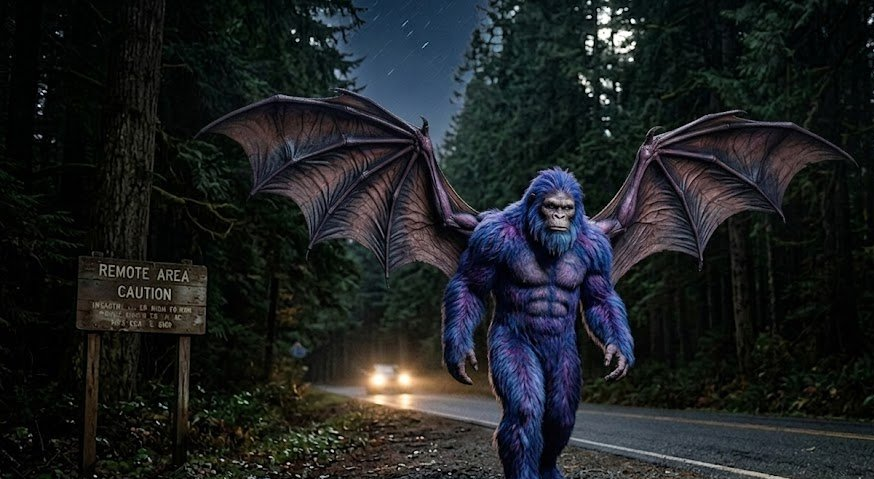
Bill Pitt of Auburn, Washington, reported encountering a large, winged, blue-purple creature with bat-like wings near Mount St. Helens in 1994, fourteen years after the eruption. Pitt described the creature as approximately nine feet tall, with yellow eyes, a furry body, and wings that were clearly capable of sustaining flight. His account was the first to use the name Batsquatch, which stuck to the creature’s subsequent tradition with the tenacity that memorable creature names tend to have.
The Sightings Record
Batsquatch sightings are sparse compared to Bigfoot or Mothman, but they cluster in a geographically coherent zone around the Mount St. Helens blast area and the adjacent Gifford Pinchot National Forest. A 1998 account from a hitchhiker near Buckley, Washington, described a large, winged creature landing briefly near the road before taking flight. The Mount Rainier area has also generated several reports of large, winged humanoids in the years since Pitt’s original sighting, and some researchers treat these as part of the same phenomenon rather than a separate tradition.
The volcanic connection in the Batsquatch legend echoes a pattern in Pacific Northwest creature lore more broadly: unusual creatures associated with specific volcanic or geologically unusual terrain. Mount Shasta in California has generated an extraordinary range of unusual encounter accounts. Mount Rainier’s upper elevations have their own cryptid tradition. The suggestion that volcanic geological features might either attract or generate anomalous entities is not scientifically supported but recurs consistently enough in Pacific Northwest lore to constitute a regional pattern worth noting.
The Pacific Northwest Winged Cryptid Ecosystem
The Pacific Northwest has a richer tradition of winged creature reports than any other region of North America outside the Mothman zone. Thunderbird traditions from Indigenous peoples of the Northwest Coast describe beings of enormous power associated with storm and high terrain. Since the early 20th century, people have intermittently reported accounts of large, dark, winged figures seen near volcanic peaks. The Batsquatch sits at the intersection of the Bigfoot tradition, which is the dominant Pacific Northwest cryptid category, and the winged creature tradition that the region maintains separately from the national Mothman conversation.
Whether Batsquatch is a distinct species of cryptid, a variant form of Bigfoot adapted for flight (a biologically implausible but culturally appealing combination), or simply the result of misidentified large birds seen in the unusual atmospheric conditions common to volcanic terrain is a question that the evidence does not currently resolve.