A powerful congressman climbs into a small plane, takes off from Anchorage, and disappears without a trace. Not the plane, not the passengers, not a single scrap of wreckage. That 1972 vanishing launched the legend of the Alaska Triangle. It also anchors a lot of theories that fall apart under scrutiny.
Most accounts pile on the vortexes, portals, and alien reports and call it a mystery. This one does something different. It separates the debunked claims from the explanation that quietly accounts for nearly all of it. The truth is less supernatural and more sobering.
The disappearance that started it
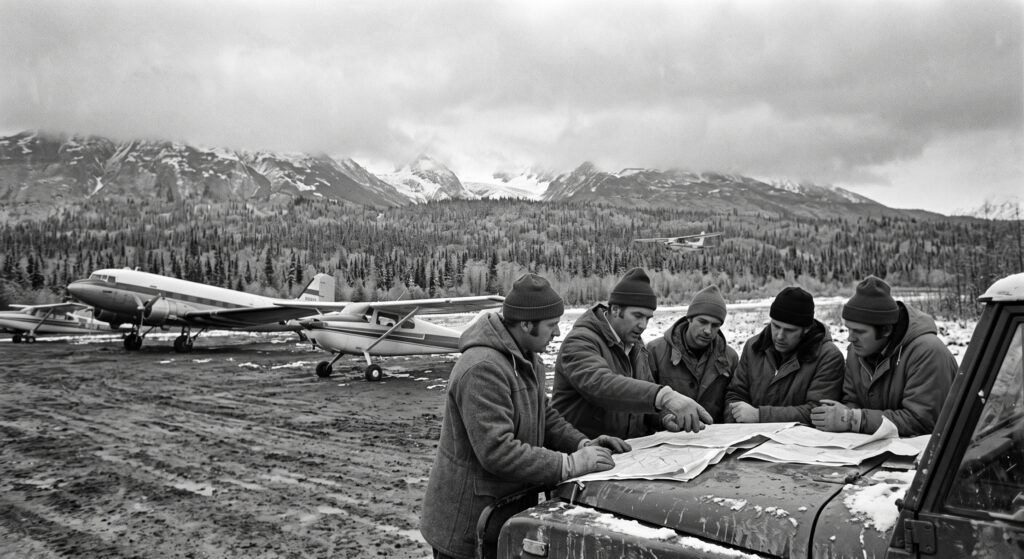
On October 16, 1972, a Cessna 310 left Anchorage for Juneau. It carried House Majority Leader Hale Boggs, Alaska Congressman Nick Begich, aide Russell Brown, and pilot Don Jonz. It vanished. The search ran 39 days and covered roughly 32,000 square miles, an area about the size of Maine.
Fifty civilian planes and 40 military aircraft found nothing. The scale of both the loss and the failed search seared the case into public memory. It gave the region its ominous nickname and its founding mystery, and it invited every theory that followed.
The Boggs flight was not unique, either. In 1950, a military aircraft carrying 44 people vanished in the same region with no wreckage found. A Cessna disappeared in 1990. Aviation is simply constant and dangerous in Alaska, where thousands of small planes have gone down over the decades. Some are never recovered at all.
The conspiracy theories, tested
Because Boggs was prominent, dark theories bloomed. Some claimed FBI Director J. Edgar Hoover arranged a bomb, since Boggs had criticized the bureau. That collapses on a simple fact: Hoover died months before the flight. A dead man arranges nothing.
Another theory pointed to Boggs’s seat on the Warren Commission investigating the Kennedy assassination. He had initially dissented from the single-bullet theory. Yet he later defended the commission’s majority view publicly. The motive evaporates once you follow the timeline rather than the rumor.
The vortex and magnetic claims
Popular accounts describe spinning energy vortexes, portals to other dimensions, and disorientation among searchers. These make vivid reading, but they rest on assertion rather than evidence. “Confirmed by electronic readings” is a phrase that never leads to an actual, checkable measurement.
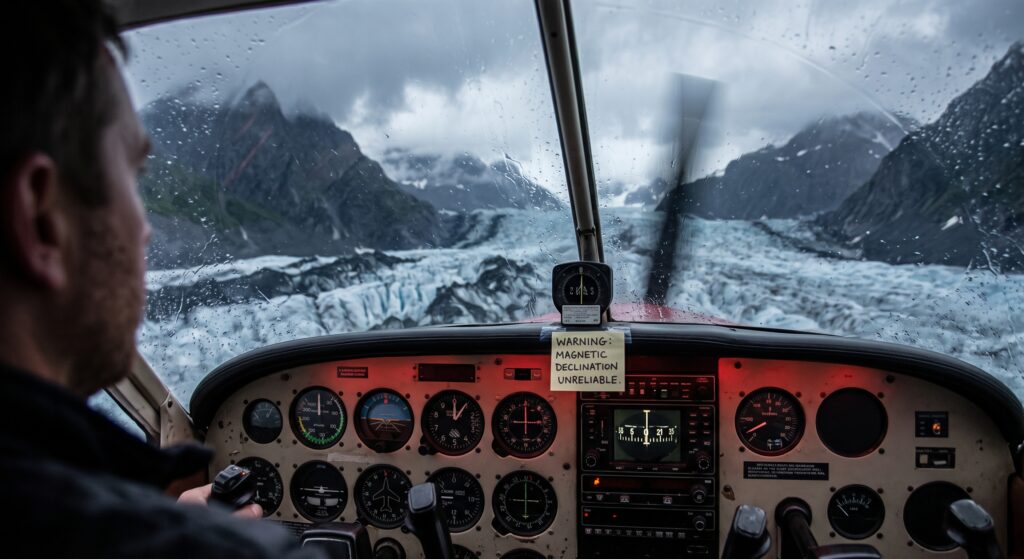
There is a real kernel worth stating honestly. Parts of Alaska do show magnetic declination, and compasses can read off by a notable margin in some areas. That can genuinely mislead a navigator. It is a mundane hazard, though, not a paranormal one, and it points straight toward the real answer.
UFO claims get folded in too. In 1986, Japan Air Lines Flight 1628 reported unidentified aerial phenomena over Alaska, and the case reached the Federal Aviation Administration. It remains genuinely unexplained. That single well-documented sighting, however, does not transform every lost hiker or downed plane into evidence of the otherworldly.
The number that gets misused
You will read that more than 16,000 people have vanished in the Alaska Triangle since 1988, at twice the national average. The figure is real, but the framing misleads. As author Robin Barefield notes, people disappear throughout Alaska, not only inside a hypothetical triangle.
Alaska’s overall missing-persons rate runs high for reasons that have nothing to do with a mysterious zone. Attaching a statewide statistic to one drawn triangle makes ordinary tragedy look like a supernatural pattern. Strip the geography trick away and the “anomaly” mostly dissolves.
It is worth being precise about what the rate actually reflects. Alaska is vast, sparsely policed, and full of transient workers and solo adventurers. Those conditions raise missing-persons numbers everywhere in the state. The triangle simply borrows a statewide reality and draws a spooky border around it.
The explanation that actually fits
Here is the answer hiding in plain sight. The Alaska Triangle covers more than 300,000 square miles of brutal terrain. It spans Denali’s peaks, vast glaciers, dense boreal forest, and freezing coastline. Weather turns deadly fast, and much of it is genuinely trackless.
Small aircraft crash often in Alaska, and wreckage sinks into crevasses, lakes, and forest that swallow it whole. A body in that country may never be found. Searchers report disorientation, as the environment is disorienting. Occam’s razor lands hard here. The wilderness itself is the culprit.
None of that erases the human weight of the losses. Boggs, Begich, and their companions are still gone, and so are many others. Honoring them means resisting the fleeting thrill of portals and honoring the harder truth. Alaska is beautiful, immense, and utterly unforgiving, and that is mystery enough.
The older layer of the story
The triangle did not begin with Boggs. Indigenous oral traditions describe disappearances in this region long before 1972. Some accounts fold in the Tlingit legend of the Kushtaka, a shapeshifting otter being said to lure travelers to their deaths. The land carried unease well before the modern label existed.
That older layer deserves care rather than exploitation. The Kushtaka belongs to a living Indigenous tradition, not to a checklist of triangle spookiness. Borrowing it as a convenient monster for a disappearance story flattens a sacred narrative. The respectful move is to keep the two frameworks distinct.
Why the legend endures
The Alaska Triangle persists because it satisfies a real human need. A vanishing without a body is unbearable, and “the wilderness took them” can feel colder than “a vortex took them.” A supernatural explanation offers a strange comfort. It turns senseless loss into a mystery with a hidden design.
The braver path is to accept the uncertainty without inventing a mechanism. Alaska genuinely swallows planes and people and sometimes leaves no answer whatsoever. Sitting with that emptiness is harder than believing in portals. It is also more honest, and it treats the missing as people rather than as plot points.
The triangle also keeps growing in the retelling. Early accounts cited a few thousand missing. Later ones reached 16,000, then 20,000. Each round number sounds more dramatic than the last. That inflation is a warning sign. When a mystery keeps expanding to fit the audience, the story has drifted well ahead of the evidence.
References & Further Reading
The Alaska Triangle: one big hoax? (The Northern Light)
The Alaska Triangle (Legends of America)
The Alaska Triangle by Robin Barefield (This Awful-Awesome Life)
Inside the mysteries of the Alaska Triangle (All That’s Interesting)