Neither man signed the Declaration, but their rivalry left ghost stories in two different cities that still argue with each other.
Two Founders Who Never Signed
Alexander Hamilton and Aaron Burr both shaped the young United States without ever signing the Declaration of Independence, since both men were still teenagers when it was written. Hamilton built the nation’s financial system as the first Secretary of the Treasury, establishing the national bank and the country’s credit system almost from scratch. Burr served as vice president under Thomas Jefferson after a bitterly contested election that nearly threw the presidency to the House of Representatives.
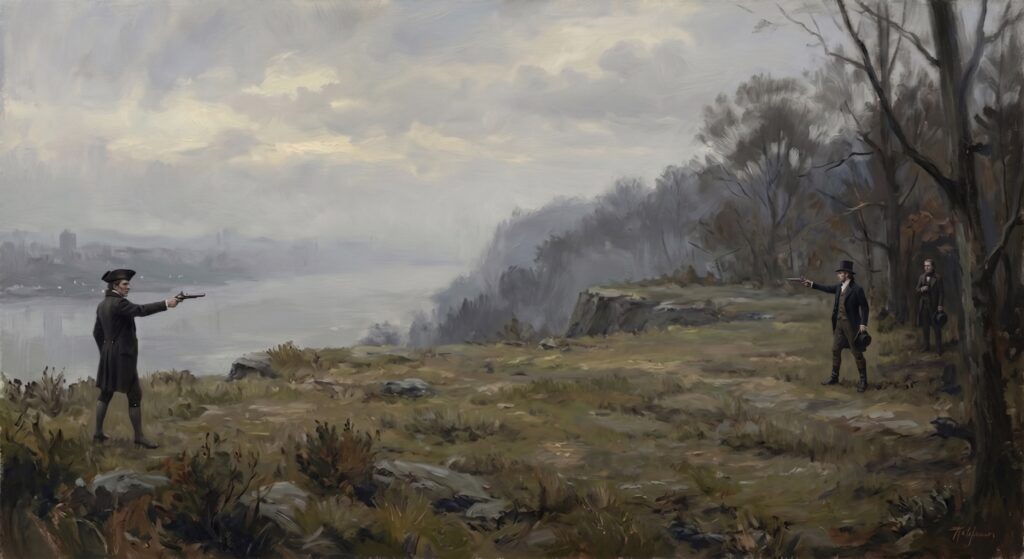
Their rivalry stretched back years before it turned fatal, through competing law practices and clashing political ambitions in New York. It finally ended in a duel at Weehawken, New Jersey, on July 11, 1804. The two men fought on the same dueling ground where Hamilton’s son had died in a duel three years earlier. Hamilton died from his wound the next day. Burr survived the encounter but never recovered his political career, later facing and beating treason charges tied to a scheme to carve out his own territory in the West.
Hamilton’s Voice in the Treasury
In Philadelphia, visitors to Hamilton’s former Treasury era residence describe hearing his voice replaying old financial arguments. The tone is sharp and rapid fire, as if a debate from more than two centuries ago never fully wrapped up. Witnesses describe the tone as intense and urgent, consistent with descriptions of Hamilton’s famously combative speaking style.
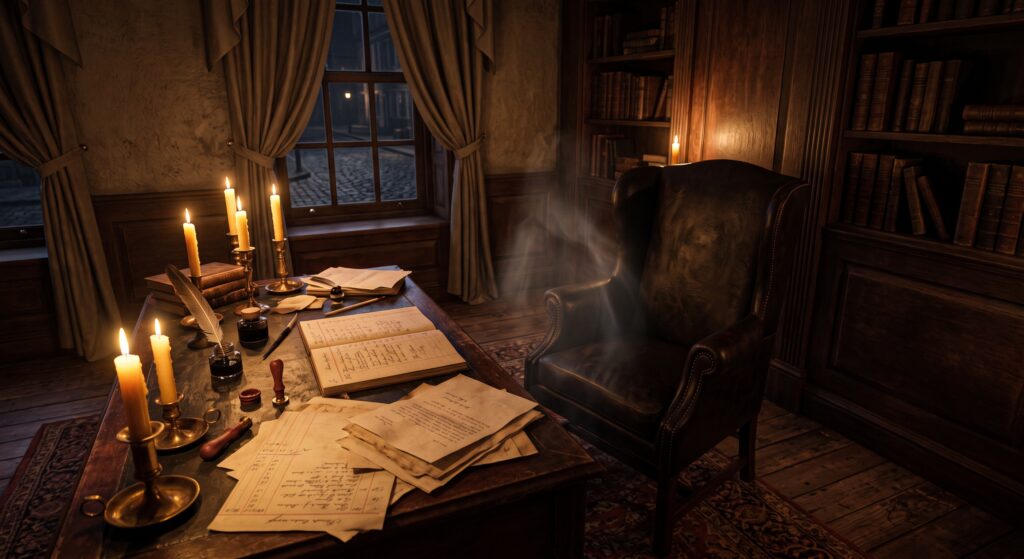
No consistent visual apparition accompanies these reports. The haunting, if that is the right word, seems to live entirely in sound. That feels fitting for a man remembered as much for his writing and rhetoric as for anything else.
Burr’s Temper at 17 Barrow Street
Burr’s reported haunting centers on a Greenwich Village restaurant called One if by Land, Two if by Sea, located at 17 Barrow Street. Burr kept horses and a carriage at this address during the 1790s. The building’s long history since then includes use as a firehouse, a brothel, and a silent movie theater before it became a restaurant in the 1970s.
Staff and guests describe an aggressive, agitated presence throughout the building, quite unlike the more mellow spirits reportedly seen elsewhere in the space. Guests report the smell of sulfur near the stairways, along with a deep male voice caught on recording equipment saying phrases like get out and my house.
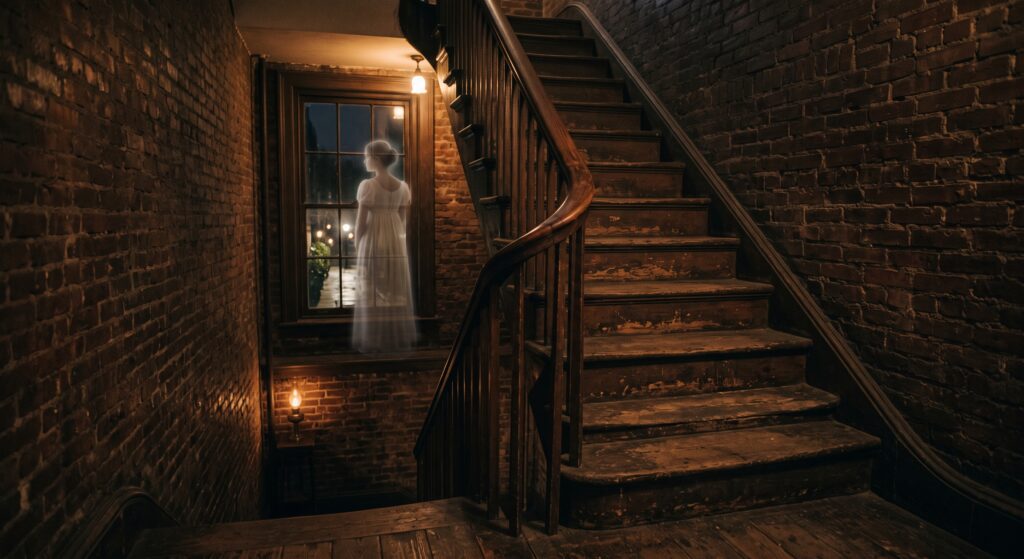
Reports also describe a quieter figure resembling Burr’s daughter Theodosia, who disappeared at sea while sailing to visit her father from South Carolina in late 1812. Her ship vanished without a trace. No wreckage or survivors were ever found, and Burr spent his remaining decades never learning what happened to his only surviving child. Some visitors claim to see her standing at a second floor window or moving silently along the staircase, never speaking, never interacting with the living.
Burr lived until 1836, dying at age eighty on Staten Island in relative obscurity compared to the fame he once held as vice president. That long, quiet decline after such a dramatic early career may explain his reported hauntings. They concentrate heavily around anger and unfinished business rather than any single final moment.
A Carriage House That May Not Be His Carriage House
Some historical researchers have challenged the building’s origin story. They argue that the current structure at 17 Barrow Street was built after Burr’s death, not during his lifetime as the restaurant’s own lore suggests.
If that timeline holds, Burr’s ghost would be haunting a building he never technically owned or occupied. That contradiction has not slowed the restaurant’s reputation one bit. Sometimes a legend outgrows the specific address that first attached to it, the same pattern seen at Boston’s relocated Green Dragon Tavern.
A Rivalry That Outlived Them Both
It is hard not to notice the symmetry here. Hamilton’s reported presence is purely verbal, still arguing a case nobody asked him to reopen. Burr’s reported presence is physical and volatile, still defending territory the way he defended his reputation in life. Two men who could not coexist peacefully while alive now haunt separate cities, several hundred miles apart, which might be the most fitting outcome either ghost story could offer.
Popular culture has only deepened public fascination with both men since a certain hip hop musical brought their rivalry back into the spotlight. That renewed attention has driven fresh visitors to both reported haunting sites. They come curious to see whether two centuries of animosity really left a mark on the buildings connected to their story.
Historians studying the duel itself continue to debate small details, including whether Hamilton deliberately fired into the air rather than at Burr. That lingering uncertainty about the men’s actual final intentions may be part of why their reported hauntings feel so unresolved. A duel with an ambiguous ending seems a fitting source for two afterlives that never quite settle down either.
Two hundred years later, both men remain more argued about than agreed upon, in the history books and, according to the stories, in whatever rooms they still occupy.
Whichever version of either man’s afterlife you find more convincing, their shared story stands out. Two founding figures left behind separate, competing hauntings tied directly to the same single night. Weehawken started it. Philadelphia and Greenwich Village, apparently, never let it finish.
Visiting One if by Land, Two if by Sea
One if by Land, Two if by Sea operates as a working restaurant at 17 Barrow Street in Manhattan’s West Village. It typically opens for dinner service starting in the late afternoon or early evening, closed early in the week, so check current hours and reservation policies before visiting.
References & Further Reading
The World Was Wide Enough: The Multiple Hauntings of Aaron Burr – Association of Paranormal Study