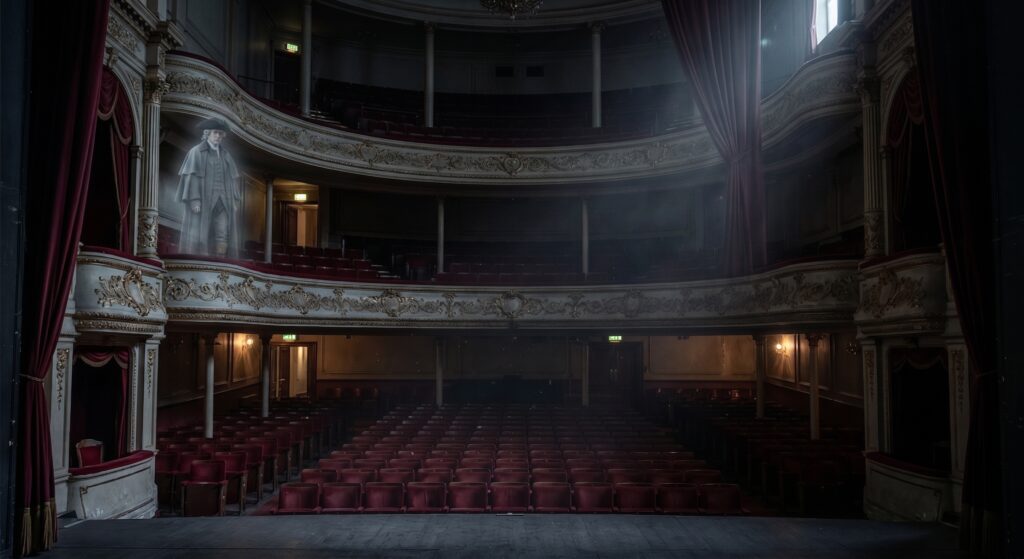
Cold water separates two islands in San Francisco Bay. One caged the men society labeled its worst. The other caged people whose only crime was hoping to enter America. Both islands ran on isolation, and both, by many accounts, kept the despair long after the last inmate left. Their ghosts speak to two very different kinds of confinement.
Alcatraz: a prison built to break the spirit
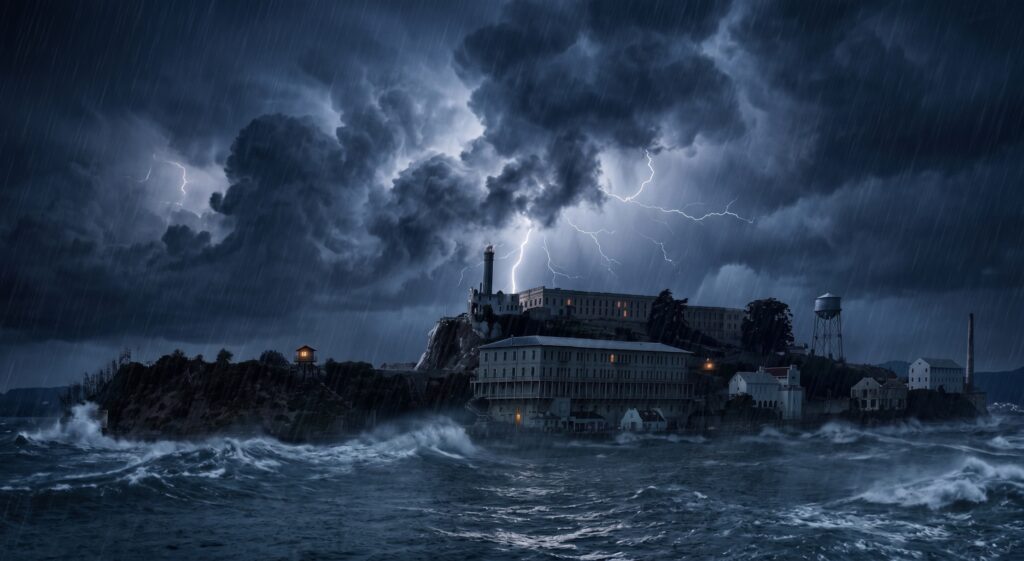
The federal penitentiary on Alcatraz opened in 1934 to hold the men other prisons could not. Cells measured about nine feet by five. The design aimed to crush resistance through isolation, and that pressure left a residue. Park Service staff have reported crashing sounds, phantom footsteps, cell doors closing on their own, and a constant sense of being watched. A 1992 episode of the television program Sightings gathered several of those staff accounts on camera.
Cell 14-D and the man the hole destroyed
One cell earns its reputation. 14-D, a solitary confinement unit inmates called the hole, stays cold when the rest of the block warms. Visitors describe dread, vertigo, and a chill a jacket cannot fix. The history behind it is real. Inmate Rufe McCain spent more than three years in that cell after an escape attempt. Soon after his release, he killed another inmate. A jury acquitted him on the argument that 14-D had inflicted lasting psychological damage.
Ghost lore layers a wilder tale on top. Some say a prisoner in the 1940s screamed through the night about a creature with glowing eyes, and guards found him dead the next morning. The verifiable core is grim enough. A cell so punishing that a court accepted it as a cause of madness needs little embellishment.
The Butcher and Capone’s banjo
Cellblock C holds its own resident. Ex-convict Leon Thompson once identified an unseen presence there as Abie “The Butcher” Maldowitz, a mob hitman killed in the laundry room. Prison records confirm an inmate died in that laundry area. Guards report him slamming heavy doors after dark. The 1946 escape attempt known as the Battle of Alcatraz left three inmates dead in a utility corridor, and staff still hear clanging there that stops the moment a watchman opens the door.
The shower area offers a softer echo. Al Capone spent part of his sentence on Alcatraz, and his health and mind declined during his time there. Guards have reported faint banjo music drifting through the tiles. Capone learned the instrument in prison, and it was among his only comforts. The music, if it plays, marks a small mercy in a place designed to offer none.
Angel Island: the Ellis Island that turned people away
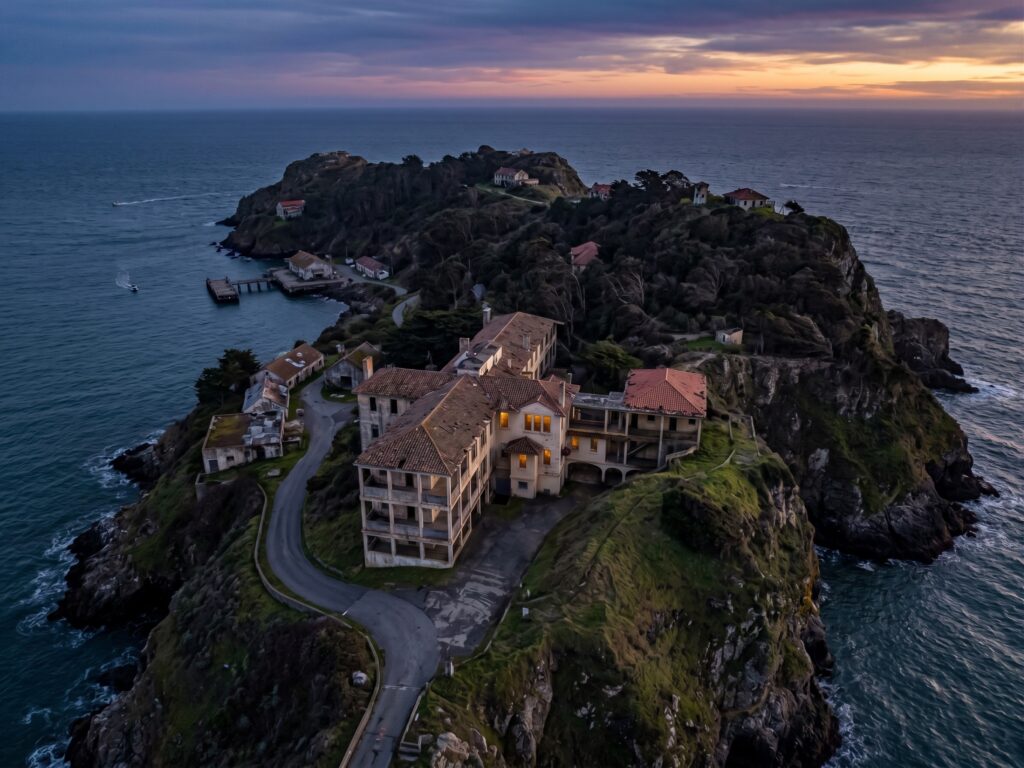
To the north sits a gentler-looking island with a harder purpose. Angel Island Immigration Station opened in 1910. Boosters called it the Ellis Island of the West, but the comparison misleads. Ellis Island processed hopeful arrivals. Angel Island, under the Chinese Exclusion Act, existed largely to keep people out. Chinese immigrants faced long detention and brutal interrogation. Officials separated families to catch inconsistencies in their answers.
The poems in the walls and the bride in the wedding dress
Detained immigrants carved poetry into the barracks walls. One surviving verse compares the so-called island of immortals to a wilderness prison and asks why anyone would throw themselves into the open net. Those carvings record months of confinement and heartbreak in the detainees’ own hands. Former detainees said the two worst things about the station were the ghosts and the starving.
The island’s most repeated haunting centers on a young Chinese bride. After a harsh interrogation, officials ordered her deported. Distraught, she put on her wedding dress and hanged herself in the women’s restroom. Detainees afterward described a sad presence in the bathroom and strange electrical problems, and many refused to shower alone. One young woman reported waking to an unseen weight pressing on her chest until she could not breathe.
An island of many prisons
Angel Island wore many uniforms over the years. Before it processed immigrants, it served as a quarantine station from 1891, where crews fumigated ships from foreign ports and isolated anyone suspected of disease. The first vessel to have its passengers quarantined there was a steamship from China, a foreshadowing of the exclusion to come. During World War II the island held German and Japanese prisoners of war. It later housed American soldiers and even served as a missile testing site. Layer upon layer of confinement stacked on one small landmass. Each use added its own residue of fear and forced separation to a place already heavy with it.
The Butcher, confirmed by the record
One Alcatraz legend earns extra weight because a witness and the records agree. When a CBS news team brought a psychic and ex-convict Leon Thompson into the Cellblock C laundry room, the psychic described a tall, bald man with small eyes. Thompson stepped forward and named him. He remembered Abie Maldowitz, the hitman known as the Butcher, and recalled that another inmate killed him in that laundry room. Prison records confirmed the killing. A firsthand memory and an official document lined up with a cold reading. Skeptics and believers can each take something from that convergence, which is exactly what makes the Butcher’s story stick.
Two forms of confinement, one lingering weight
Alcatraz and Angel Island punished different people for different reasons. One crushed convicted criminals through calculated isolation. The other crushed ordinary migrants through bureaucratic cruelty. Yet visitors to both describe the same oppressive heaviness, the same cold, the same sense that the suffering soaked into the walls. Treat these islands as more than ghost attractions. The documented history behind their hauntings carries a weight that outlasts any legend, and it deserves to be remembered with respect.
References & Further Reading
Legends of America: Ghosts of Alcatraz Island
FoundSF: Alcatraz: Island of Evil Spirits