Mark Keyes, Director of the Pennsylvania Paranormal Association, describes it plainly: temperature drops of up to ten degrees that manifest within seconds in rooms with no open windows, no HVAC vents nearby, and no changes in ambient conditions. Team members who place a hand in a reported cold spot describe the sensation as burning; the cold is that concentrated, that localized, that sudden.
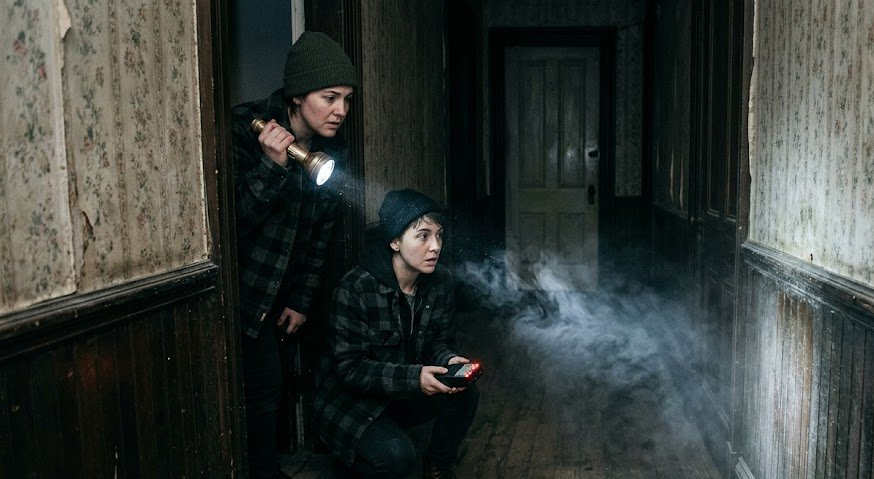
Cold spots are one of the most documented and most debated phenomena in paranormal investigation. They appear in more reported hauntings than almost any other sign, they are measurable with standard equipment, and they consistently resist the simple explanations that are usually adequate for other anomalous experiences. Understanding them, what they are, what they are not, and how to document them properly is one of the most useful skills a beginning investigator can develop.
The Paranormal Explanation
The dominant paranormal theory holds that spirits require energy to manifest and interact with the physical world and that they draw this thermal energy from the surrounding air, creating a localized temperature drop as a byproduct of their presence. This is sometimes called the energy conservation theory of cold spots. Investigators like Keyes have documented cases where team members independently measured the same cold spot simultaneously using separate instruments, ruling out the suggestion that one person’s experience influenced another’s. Simultaneous independent measurement is considered the strongest evidential standard for a genuine paranormal cold spot.
The Structural and Environmental Explanations
Skeptical investigators raise several important points. Old buildings generate extraordinary thermal complexity, convection currents, hidden vents, moisture accumulation, and the thermal behavior of irregular materials that even experienced building inspectors find difficult to fully map. A cold spot near an exterior corner, near plumbing, or beneath an attic space almost certainly has a structural explanation. The rational protocol is to eliminate every physical cause before treating a temperature anomaly as potentially significant.
The placebo effect of expectation is also real in thermal perception. People who expect to feel cold in a location report feeling cold more readily than people without that expectation. Any investigation that has briefed participants on where previous cold spots were located has introduced a confound that cannot be fully corrected for in retrospect.
The Measurement Problem
The thermal tools most commonly used in paranormal investigation, infrared thermometers and thermal cameras, measure surface temperature, not air temperature. A paranormal cold spot, if it exists, would presumably be in the air, not embedded in the wall. Using a standard glass or digital air thermometer provides more accurate data for the specific claim being investigated than any infrared device, however sophisticated.
This distinction matters practically. A thermal camera showing a cold patch on a wall is almost always showing a section of wall that is cooler than its surroundings due to insulation variation, moisture, or proximity to external conditions. That is useful building diagnostics. It is not paranormal evidence.
How to Investigate a Cold Spot Properly
- Take a baseline air temperature reading in every room before the investigation begins.
- Document the precise location with photographs and written coordinates.
- Have two investigators simultaneously take readings from the same location using separate instruments.
- Return to the same location after a thirty-minute interval to test whether the cold persists, moves, or disappears.
- Check for every possible structural explanation: request building plans, test for air movement, and note proximity to exterior walls, plumbing, and HVAC.
- Record whether animals present during the investigation respond to the cold spot location.
The Mobile Cold Spot
The most challenging documented variant is the cold spot that moves, a localized temperature anomaly that investigators describe as travelling through a room, maintaining its shape and intensity. This behavior is inconsistent with any known thermal or atmospheric mechanism. Cold spots that stay put can be explained by bad insulation. Cold spots that follow investigators across a room need something else. Whether that something else is paranormal or simply an unidentified physical mechanism is the question that makes this one of the more genuinely interesting areas of active paranormal investigation.
References & Further Reading
• AccuWeather: Ghostly Happenings Give People a Chill
• Higgypop: Why Are Cold Spots Associated With Ghosts?
• Higgypop: Explaining Cold Spots and Temperature Fluctuations
[…] from the darkened gallery late at night. Visitors report sudden cold drafts (see more on cold spots here), unexplained buzzing, and unpleasant odors near the […]