Kentucky’s Oldest Monster Still Walks the Hollows
A relict ape, a frontier ghost story, and a creature that may predate Bigfoot itself.
Daniel Boone kept a secret for sixty years. Near the end of his life, the old frontiersman finally told it at a dinner in his honor. He claimed he once shot a ten-foot hairy giant deep in the Appalachian wilderness. One guest laughed and called the story impossible. Boone went silent and refused to say another word that night. Later, alone with a tavern keeper’s son, he gave up the rest.
He called the thing a Yahoo. That single word opens a mystery older than every blurry photograph and every cable TV expedition. Because the creature Boone described still gets reported in eastern Kentucky today. Locals call it the Hillbilly Beast.
Most people file it under Bigfoot and move on. That move is a mistake. The Hillbilly Beast carries a folklore lineage that runs deeper, stranger, and far more intimate than the standard Sasquatch story. Stay with it, and the legend starts to feel less like a monster hunt and more like a haunting.
A Frontiersman’s Confession
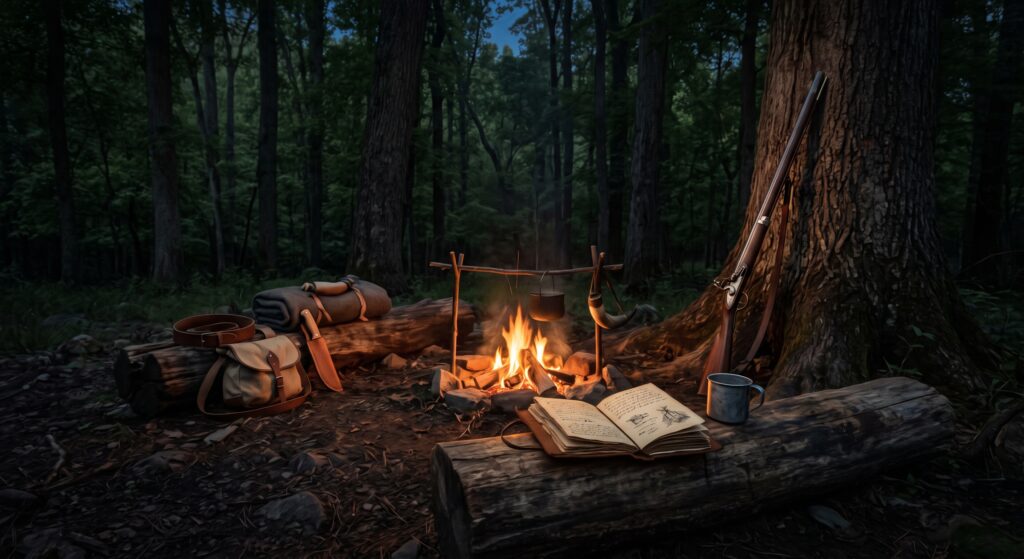
Boone biographer John Mack Faragher recorded the Yahoo tale in his 1992 account of the pioneer’s life. Boone borrowed the name from Jonathan Swift’s Gulliver’s Travels, a book his hunting party read aloud around Kentucky campfires in 1769. Swift’s Yahoos were brutish, hair-covered creatures shaped like men.
Skeptics seize on that detail. Boone loved the book, so he lifted a name to dress up a tall tale. Case closed.
Yet the story resists easy dismissal. Boone valued his reputation fiercely. He told the Yahoo tale repeatedly in his final year, after a lifetime of holding it back. Some researchers read that timing as a man unburdening himself, no longer caring who laughed. Others point out that Cherokee communities in the region already used a similar word, Yeahoh, for a hairy wild man. Swift may have borrowed from the same well everyone else drank from.
The White Ghost of the Appalachians
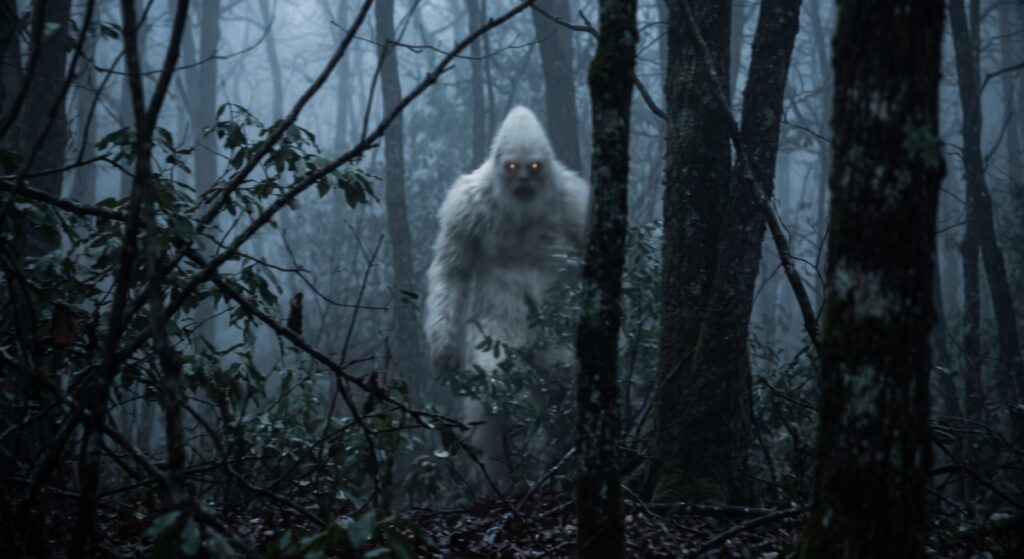
Modern witnesses describe a creature that breaks the familiar Bigfoot mold. Reports place it between eight and ten feet tall, weighing well over 800 pounds. It carries a peaked, cone-shaped head set on shoulders so wide that no neck shows. Dark eyes catch light and flash orange or yellow in the dark.
A rarer strain unsettles people even more. Some accounts describe a bone-white variant, a pale figure that should stand out against the green hills yet vanishes anyway. That detail recurs across the Appalachian chain, from Martin County, Kentucky, into West Virginia.
Temperament sets this creature apart from its western cousin. The reclusive Pacific Northwest Sasquatch keeps its distance. The Hillbilly Beast does not. Witnesses report hurled rocks, snapped tree limbs, and dead farm dogs. One persistent claim describes deer kills where something twisted the legs from the carcass, took only the liver, and left the rest to rot. Hunters know no native predator that behaves this way.
Listen for the Scream
The sound may be the worst part. Witnesses struggle to describe a vocalization that lands somewhere between a guttural roar and a woman screaming. Others report a rapid, clicking chatter that field researchers nicknamed samurai talk, a stuttering rhythm no familiar animal produces.
A 2015 audio clip captured near a Kentucky campsite circulated widely among believers. The Kentucky Bigfoot Research Organization later concluded the moans were probably feline. That honest walk-back matters. It shows the field’s serious investigators chasing the truth rather than the headline. You can read the case files at the Kentucky Bigfoot Research Organization.
The Forgotten Folktale Most Articles Skip
Here is where the Hillbilly Beast stops being a knockoff Bigfoot. Long before MonsterQuest crews arrived with thermal cameras, Appalachian families told the tale of the Yeahoh, sometimes called the Hairy Woman. Folklorists recorded four or five versions across two centuries.
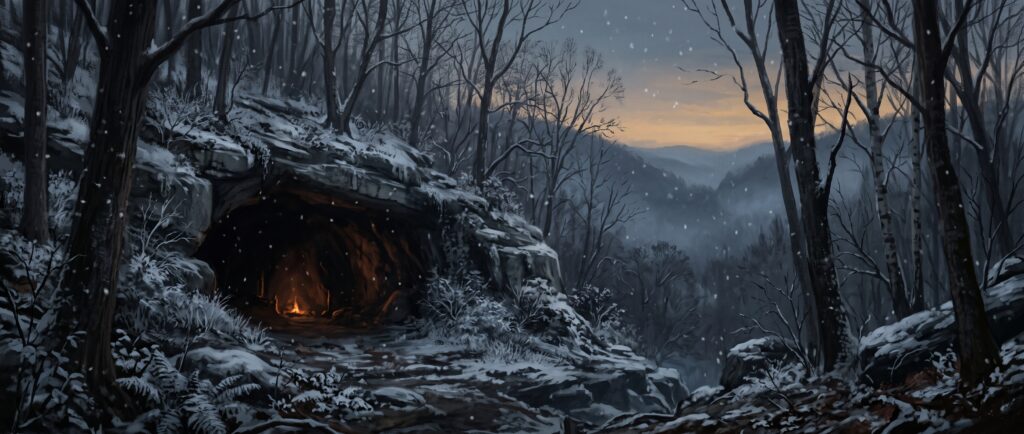
In the most haunting version, a lost hunter shelters in a cave during a brutal winter. A hairy creature crawls in beside him and shares chestnuts and raw deer meat. He teaches her to use fire. They survive the season together, and she bears him a child, one side hairy and one side smooth. When he finally leaves for home, the story turns tragic.
That narrative does something no rock-throwing monster can. It makes the creature a person. The Yeahoh is not just a beast in the brush. She is lonely, capable of kindness, and ultimately abandoned. Kentucky’s wild man legend began as a story about connection across the line that divides humans from animals. Strip that away and you lose what makes it Kentucky’s, not Oregon’s.
Goat-Man on the Trestle: A Different Beast Entirely
Outsiders often confuse the Hillbilly Beast with Kentucky’s other famous humanoid, the Pope Lick Monster. The two could not be more different.
The Pope Lick Monster is a goat-man, a horned figure said to haunt a railroad trestle outside Louisville. Legend claims it hypnotizes victims onto the tracks ahead of oncoming trains. That creature is pure supernatural dread, a product of human architecture and human fear.
The Hillbilly Beast is the opposite. It is a creature of the deep forest, framed by believers as a primitive cousin rather than a demon. One legend grew from the trestle. The other predates the rails entirely. Confusing them flattens both.
Why Kentucky Hides Its Giants
Bigfoot data favors the Pacific Northwest, where Washington logs hundreds of sightings. Kentucky records fewer. Believers argue the gap reflects terrain, not population. Charlie Raymond, founder of the state’s research organization, told FOX 56 he has investigated more than 500 credible reports across the commonwealth.
The logic runs like this. Oregon’s forests are heavily hiked, crowded with people who might spot something. Eastern Kentucky’s limestone canyons and tangled hollows stay genuinely remote. A creature built to avoid us would thrive in exactly that maze. Lower sighting counts may signal better hiding, not fewer hiders.
Sightings spiked hardest between 1975 and 1978, during a coal-mining boom that pushed industry deep into untouched terrain. Cryptozoologists read that surge as a collision. Machines tore into the hollows, flushing whatever lived there into view. Police officers, sheriffs, and forestry workers filed reports alongside ordinary hikers.
When Science Walked Into the Woods
The legend recently collided with a laboratory. A team featured on Expedition Bigfoot collected soil from beneath an unusual stick structure in Kentucky and sent it to the UCLA environmental DNA program. Environmental DNA captures the genetic traces that every living thing sheds into its surroundings.
The result raised eyebrows. According to reporting by the Daily Yonder, one sample returned chimpanzee DNA alongside the expected human, deer, and hawk traces. No wild chimps live in Kentucky. Researchers stopped well short of declaring proof, and contamination remains a live explanation. Still, the finding gave skeptics and believers a rare shared piece of hard data to argue over.
Mange, Memory, or Something Real
Hard skeptics offer a tidy answer. Black bears infected with sarcoptic mange lose their fur in patches. A bald, scab-covered bear rearing up on its hind legs can look monstrous, hairless, and disturbingly humanlike. Many sightings likely trace back to a sick animal at dusk.
Believers counter with the Wood Ape hypothesis, the idea that a relict primate species survives in North America’s deepest forests. They lean on the Indigenous names, the Tornit and the Sabe, traditions that cast these beings as another tribe rather than monsters. Those names carry cultural weight and deserve to be treated as living heritage, not props for a monster hunt.
The Mystery We Choose to Keep
So which is it? A mangy bear, a borrowed campfire yarn, or a giant that has dodged us since before Boone shouldered his rifle? The honest answer is that nobody can close the case.
That uncertainty is the point. The Hillbilly Beast endures because it offers something a fully mapped world rarely does. It promises one last wild corner where the trees still hide a secret. Whether you hunt it with a thermal camera or just a flashlight and a friend, the legend rewards the same thing: the nerve to walk into the dark and look. In the hollows of the Bluegrass State, something may be looking back.
References & Further Reading
- Hillbilly Beast of Kentucky, Wikipedia
- Kentucky’s Hillbilly Beast: The Appalachian Bigfoot Legend Lives On, Animals Around The Globe
- Yeahoh, Yahoo or Bigfoot?, Appalachian History
- Sasquatch Classics: Daniel Boone and the Yahoo, Texas Cryptid Hunter
- Could Kentucky Forests Hide a Piece of the Bigfoot Puzzle?, Daily Yonder
- Which Kentucky counties have the most reported Bigfoot sightings?, FOX 56 via Yahoo
- Bigfoot sighting in Kentucky? Couple recounts tale at Mammoth Cave, Courier Journal (WKU)
- Kentucky Bigfoot Research Organization
- 11 of the Creepiest Kentucky Urban Legends, Only In Your State
[…] pale variant of the classic wildman archetype. Kentucky has its own entry in this category: the Hillbilly Beast, a creature that blurs the line between Bigfoot legend and Appalachian […]