When the Rational Checklist Is Done and Something Still Remains
You have checked the wiring, ruled out pests, installed a carbon monoxide detector, and had the HVAC inspected. The activity has continued. You are not imagining it, you are not being irrational, and you have reached the point where you want to do something that feels active, intentional, and directed at whatever is happening in your home.
House blessing and spiritual cleansing are among the oldest responses humans have had to this feeling. Every major religious tradition and most folk cultures have developed practices for clearing, protecting, or consecrating a dwelling. This article surveys those traditions respectfully and practically, without endorsing any single one as definitively correct.
Christian Traditions
Catholic House Blessing
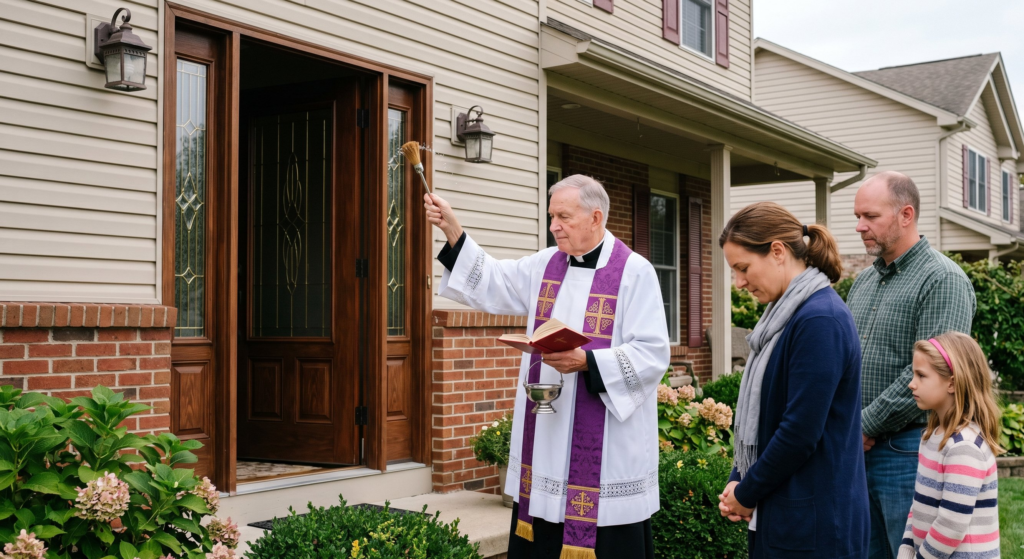
The Roman Catholic Church has an official Rite of Blessing for a Home, performed by a priest and involving the sprinkling of holy water, the recitation of specific prayers, and the marking of doorways. This is a pastoral service available to practicing Catholics by request through their parish. The rite is understood theologically as an invocation of divine protection rather than an exorcism, though priests can also request more intensive intervention through diocesan channels if circumstances warrant.
Protestant Approaches
Most Protestant traditions do not have a formal house blessing rite, but pastoral prayer over a home and property is widely practiced across denominations. Some charismatic and Pentecostal churches practice anointing of doorways and rooms with oil as part of prayer for protection and peace, drawn from biblical references to anointing. Clergy across Protestant denominations will generally respond to requests for prayer in a home from members of their congregation.
Eastern Orthodox
The Eastern Orthodox tradition has an elaborate house blessing practice typically performed at Theophany (Epiphany), involving the blessing of water, the movement of the priest through every room of the home with censing, and the marking of doorways. The Orthodox house blessing is one of the most comprehensive in the Christian tradition and is available to Orthodox Christians through their parish priest.
Jewish Tradition
The mezuzah, a small case containing a parchment inscribed with a Hebrew prayer, is affixed to the doorpost of a Jewish home and understood as both a physical reminder of faith and a form of spiritual protection for the dwelling and its inhabitants. Beyond the mezuzah, Jewish practice includes prayers for the home and its occupants, and some communities have traditions of blessing a new home upon moving in. A rabbi can advise on appropriate practices for a specific situation.
Smudging and Indigenous Traditions
The burning of white sage, cedar, sweetgrass, or other botanicals to clear a space of negative energy is associated primarily with various Indigenous North American traditions. It is important to note that smudging practices are specific to particular tribal traditions and are not a single unified practice: the materials, prayers, and protocols vary significantly. Using these practices appropriately means either belonging to a tradition in which they are embedded or working with someone who does, rather than adopting them as aesthetic rituals stripped of their cultural context.
Folk and Non-Religious Traditions
Salt
The use of salt as a protective and cleansing agent appears in European, Japanese, and numerous other folk traditions. Placing lines of salt across doorways and windowsills, or in corners of rooms, is one of the most widespread cross-cultural protective practices and requires no specific religious affiliation. The tradition appears in ancient Roman practice, in Japanese sumo ceremony, and in contemporary folk magic across multiple traditions.
Sound Clearing
The use of bells, singing bowls, clapping, or other percussive sounds to clear a space of stagnant or negative energy appears in Tibetan Buddhist practice, in various European folk traditions, and in contemporary spiritual practice. The theory across traditions is that sound disrupts and disperses energetic accumulations in a space. Practically, a thorough sound clearing involves moving through every room, including corners and closets, and paying particular attention to areas where activity has been reported.
Intention and Spoken Declaration
In numerous folk and contemporary spiritual traditions, the act of speaking aloud your intention for a space carries weight: declaring that the home is yours, that it is a place of safety and peace, and that whatever does not belong is no longer welcome. This practice does not require any tool or material. It does require genuine intention and, most practitioners would add, the willingness to follow up the declaration with actions that reinforce it.
Practical Considerations Across Traditions
Regardless of which tradition or combination of traditions you choose to work with, a few practical points apply across the board. Research the practice you intend to use: a blessing or cleansing conducted with understanding of what you are doing and why is more likely to feel meaningful and effective than one that is purely procedural. Involve everyone who lives in the home: a blessing that one resident takes seriously and others treat as theater is divided from the start. And consider that the act of intentionally engaging with your home, moving through it with attention, and formally declaring your relationship to it has value independent of any theological claims about its mechanism.
Your home is your space. Whatever has been happening in it, you have the right and the tradition-backed resources to respond.
References & Further Reading
• Orthodox Church in America: The Great Blessing of Water and House Blessing
• My Jewish Learning: Mezuzah Overview and Significance
• National Congress of American Indians: Cultural Appropriation Resources

[…] If you plan to visit these locations, respect the history and the locals. For those dealing with activity closer to home, consult our guide on what to do if your house is haunted, learn the signs of a haunted apartment, or read about how to bless a haunted house. […]
[…] How to Bless a Haunted House: Religious and Folk Traditions Explained […]
[…] How to Bless a Haunted House: Religious and Folk Traditions Explained […]
[…] How to Bless a Haunted House: Religious and Folk Traditions Explained […]