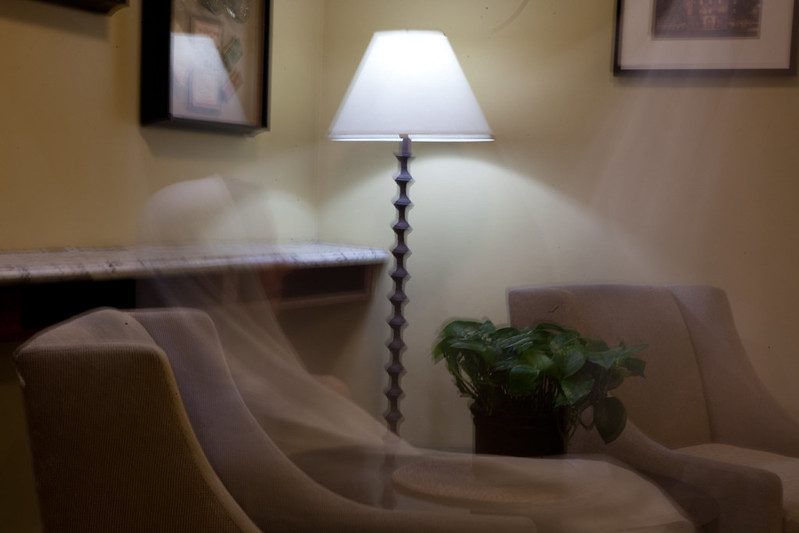
A Question Worth Taking Seriously
Surveys consistently show that between 40 and 50 percent of adults in the United States report believing in ghosts, and a meaningful percentage report having had a personal experience they attribute to paranormal contact. These numbers have remained stable for decades. Whatever ghosts are or are not, the experiences people describe are real, widespread, and genuinely in need of explanation.
This article does not attempt to prove or disprove the existence of ghosts. What it does is lay out the most credible scientific explanations for the specific experiences most commonly reported as paranormal, and examine where those explanations are strong, where they are incomplete, and what genuine scientific uncertainty remains.
What People Report When They Report a Haunting
Before examining explanations, it is worth being specific about what people actually describe. The most common reported paranormal experiences fall into several distinct categories: unexplained sounds (footsteps, voices, knocking), temperature anomalies (cold spots, sudden drops), visual phenomena (shadows, apparitions, moving objects), physical sensations (being touched, feeling a presence, chest pressure), and electromagnetic anomalies (electronics malfunctioning, lights flickering). Each of these has its own set of candidate explanations.
The Science of Each Experience Type
Unexplained Sounds
Buildings are not quiet. Old structures in particular produce sounds through thermal expansion and contraction, settling foundations, pipe vibration, and the transmission of external noise through structural elements. Vermin in walls generate sounds that are easily mistaken for footsteps or knocking. Infrasound, below the range of hearing but detectable by the nervous system, can produce the sensation that sounds are present even when no audible source exists. These explanations account for a significant majority of reported auditory paranormal phenomena.
Cold Spots
Localized temperature drops in buildings are almost always attributable to physical causes: air leaks, cold-air convection from uninsulated surfaces, HVAC imbalances, or the simple thermodynamics of standing in a large room. Paranormal investigators who use thermometers without also using anemometers (which measure air movement) frequently misattribute drafts as cold spots. Genuine unexplained thermal anomalies, those that persist after physical causes are eliminated, are rare in the documented literature.
Apparitions and Visual Phenomena
The human visual system is heavily constructive: the brain fills in gaps, creates patterns, and generates images based on expectation and context. Peripheral vision is particularly prone to generating false positives for movement and human forms. In low light, the rods in the outer retina that handle peripheral vision are most active, and they do not produce sharp images. The result is that ambiguous shapes at the edge of vision are regularly interpreted as figures. Hypnagogic and hypnopompic hallucinations, which occur at the boundaries of sleep, can produce fully realistic visual experiences indistinguishable from waking perception.
Electromagnetic Anomalies
The claim that paranormal activity correlates with electromagnetic field (EMF) anomalies is central to much ghost-hunting methodology. The scientific basis for this claim is contested. Neuroscientist Michael Persinger conducted experiments suggesting that weak magnetic fields applied to the temporal lobes can induce feelings of presence and sensory anomalies, though these results have been difficult to replicate independently. What is established is that high EMF environments can induce headaches, anxiety, and disorientation in some people, which might contribute to a haunted-feeling environment without involving anything paranormal.
The Sense of Presence
The feeling that another person or entity is in the room, even when the room appears empty, is one of the most commonly reported paranormal experiences and one of the most neurologically interesting. It is not exclusive to ghost encounters: it appears in conditions of extreme fatigue, hypoxia, grief, sensory deprivation, and certain neurological conditions. A 2014 study published in Current Biology reproduced the sensation of presence in healthy participants by creating a mismatch between their own self-generated movements and tactile feedback, suggesting that the brain generates the sense of presence through a specific mechanism that can be triggered by multiple conditions.
What Science Cannot Currently Explain
Being honest about the scientific record means acknowledging its limits. There are categories of reported paranormal experience that do not have satisfying materialist explanations. Veridical apparitions, cases in which a witness reports seeing a person who turns out to have died at that moment without the witness’ prior knowledge, have been documented by researchers including the Society for Psychical Research since the nineteenth century, and the most rigorous of those cases resist easy dismissal. Near-death experience research has produced accounts of verifiable perceptions during periods of clinical unconsciousness that are difficult to explain through current models of brain function.
These are not proof of ghosts in any traditional sense. But they are genuine anomalies in the scientific record, and treating them as settled is not scientifically honest.
Where That Leaves Us
The honest scientific position on ghosts is not “they don’t exist.” It is “we do not have sufficient evidence to confirm their existence, and most reported experiences have credible non-paranormal explanations, but the category of unexplained experiences has not been eliminated.” That is a less satisfying answer than either believers or skeptics usually want. It is also the accurate one.
[…] Are Ghosts Real? Scientific Explanations for Common Experiences […]
[…] frameworks when they encounter experiences that resist ordinary explanation. Understanding what science says about common paranormal experiences helps investigators apply the same critical lens the Salem community […]
[…] researchers describe a residual haunting as a kind of recording. A location absorbs a burst of intense emotion, the theory holds, and then […]
[…] Are Ghosts Real? Scientific Explanations for Common Experiences […]
[…] Are Ghosts Real? Scientific Explanations for Common Experiences […]
[…] Are Ghosts Real? Scientific Explanations for Common Experiences […]
[…] Are Ghosts Real? Scientific Explanations for Common Experiences […]
[…] structure is not limited to crime or consumer-safety legends. It is the delivery mechanism for most paranormal rumors and ghost stories that circulate in communities rather than through published […]
[…] Are Ghosts Real? Scientific Explanations for Common Experiences […]