Lake Erie does not feel like monster country. It is the shallowest, warmest, and most intensively used of the Great Lakes, bordered by Cleveland, Toledo, Buffalo, and Detroit, with some of the busiest commercial shipping lanes in North America threading its surface. If a large, undiscovered aquatic creature were going to choose a home, it would presumably choose Lake Superior’s deep cold or Lake Michigan’s expanse over the Erie basin’s relatively modest depths and heavy traffic. And yet Lake Erie has one of North America’s longest documented lake monster traditions, stretching back to the early 19th century and anchored by accounts from witnesses who were professionally familiar with the lake and unlikely to confuse a large known animal for something unusual.

Bessie, sometimes called South Bay Bessie after the Ohio shoreline where many sightings concentrate, was reportedly first documented in writing in July 1817, when the Fredonia Censor of New York State published an account from a ship’s crew who described a large, serpentine creature observed off the Ohio shore. The 1817 account predates the Loch Nessie phenomenon by over a century and establishes Lake Erie’s cryptid tradition as genuinely independent of the Scottish legend.
The Sighting Record
The late 20th century brought a cluster of Bessie accounts that attracted significant regional media attention. In September 1990, a couple boating near Huron, Ohio, reported a twenty-foot serpentine creature that surfaced alongside their vessel, remaining visible for over a minute before submerging. The same week, a Sandusky man reported seeing a large, dark, humped object moving through the water near Cedar Point. The Huron Lagoons Marina posted a $5,000 reward for verified physical evidence of the creature.
In July 2001, a fishing charter captain named Dave Mihalovic reported a large, dark creature crossing in front of his vessel near Vermilion, Ohio. Mihalovic, a professional with decades of experience on the lake, described the creature as neither a fish nor a manatee (which occasionally enters the lake from connected waterways) and moving in a way inconsistent with known large aquatic animals. Researchers noted his account precisely because of his professional familiarity with the lake’s normal inhabitants.
The Biological Candidates
Lake Erie’s monster candidates differ from those typically proposed for deeper lakes. The lake’s relatively shallow western basin, at less than thirty feet in some areas, makes plesiosaur-type animals implausible. The more serious proposals include: very large lake sturgeon, which were once abundant in Lake Erie but were nearly extirpated by overfishing in the 19th century and have been slowly recovering; Asian grass carp or other large introduced species that can achieve considerable size; and very large freshwater drum, which are Lake Erie’s largest native fish and can reach over four feet in length, generating an imposing profile at the surface.
The sturgeon proposal has particular support from researchers since mature lake sturgeon can reach six feet or longer, have a distinctly prehistoric appearance with their armored scutes, and create a significant surface disturbance when they roll or surface. The problem is that at any measured size, a lake sturgeon does not produce the long, neck-above-water profile that the most detailed Bessie witness accounts describe.
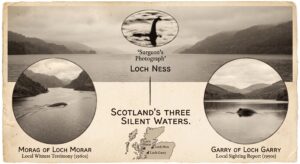
[…] York and Vermont, is home to Champ, a creature often compared to a plesiosaur. In the Great Lakes, Bessie supposedly patrols the waters of Lake […]