A small, hairy water sprite, a witch’s weapon, and a folk defense that may have saved lives
A note on respect first. The Tokoloshe belongs to living Zulu and Xhosa traditions and remains a serious belief for many people. This post treats it as such, distinct from secular monster entertainment.
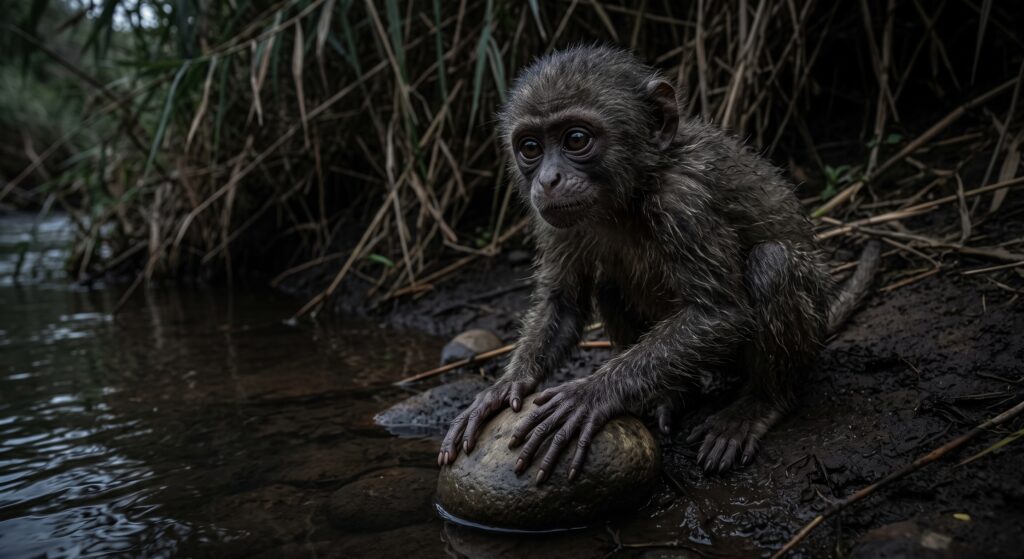
Across Southern Africa, the night attacker is not a towering demon. It is small. In Sotho and Tswana it is segatelelo, the pressing assault. In Zulu and Xhosa it is the Tokoloshe, a dwarfish water sprite. And the traditional defense against it is oddly specific: put your bed up on bricks. This post is a part of a series on cross-cultural sleep paralysis; for a deep dive, click here.
The small hairy sprite
The Tokoloshe is described as a short, hairy, primate-like creature with long bony fingers. It is a water spirit, associated with rivers and dark places.
It is also a weapon. Folklore holds that malevolent people summon the Tokoloshe through black magic and send it to torment enemies at night. It can turn invisible, said to be achieved by swallowing a stone or drinking water, and in that unseen form it slips into bedrooms to attack sleepers.
Crushed by something small
The attack is the familiar one, scaled down and made more intimate. The sleeper feels a small, heavy, simian body crouching on the chest, choking them, and sometimes described as biting at the toes.
The result is intense nocturnal suffocation and panic. The horror here is not vastness but nearness. Something little and strong is on you in the dark, and no one else can see it.
Scale changes the fear. A giant demon is awful but distant. A small, strong creature crouched on your chest is claustrophobic and personal. The Tokoloshe attacks from close range, unseen and low to the body.
The bed on bricks
Because the creature is short, families traditionally raise their beds off the floor. They place bricks or stones under each leg. That lifts the mattress beyond the little sprite’s reach.
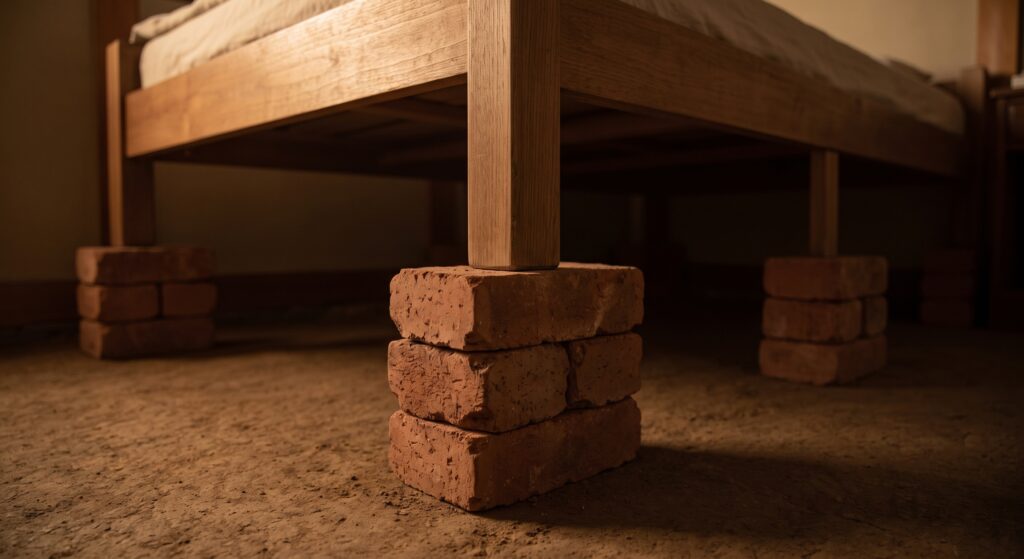
The custom is widespread and real. Families lift each bed leg on stones or bricks, placing the sleeper above the short creature’s reach. It is folklore expressed in furniture.
The body under the sprite
The mechanism is the shared one. Extreme threat vigilance collides with the physical restriction of the rib muscles during REM atonia. Breathing turns shallow. The brain, primed to expect the Tokoloshe, builds exactly that creature to explain the choking weight.
Cultural priming matters here, as it does in Egypt and Italy. A person raised on vivid Tokoloshe stories goes to bed with the figure already loaded in the imagination. Fear makes an episode more likely, and the expected shape steps forward when it comes.
The invisibility motif does real work. It explains why no one else sees the attacker and why it cannot be caught. A creature that vanishes by swallowing a stone is perfectly suited to a threat felt but never seen.
The demon as social mirror
The Tokoloshe does more cultural work than most night demons. Because a jealous or malicious person sends it, the creature gives voice to darker community currents. Envy. Suspicion. Unexplained misfortune.
When something goes wrong with no clear cause, the Tokoloshe offers an explanation that points at human ill will. It is a container for social anxiety as much as a nighttime terror. Sufferers often seek help from traditional healers or faith leaders, addressing both the spirit and the strained relationships behind it.
A ritual with a possible hidden benefit
The raised bed is the Tokoloshe’s most famous legacy. It also raises a genuinely thought-provoking question about accidental practicality.
In homes heated by open indoor fires, the coolest, smokiest air settles near the floor. Sleeping higher lifts a person above the worst of it. The benefit, if real, was never the stated goal.
This possibility deserves care, not overconfidence. It is a plausible hypothesis, not a proven fact. But it fits a wider pattern where protective rituals carry unspoken practical logic.
Whether or not the smoke theory holds, the custom endures. Beds still stand on bricks in many homes, a quiet physical trace of a belief woven deep into daily life.
Small, unseen, and enduring
The Tokoloshe persists because it is woven into real belief and real practice. Raised beds still stand on bricks in many homes, a physical trace of the folklore in everyday life.
It is a reminder that a night demon is never just a scare. It is a way a community explains suffocation in the dark, misfortune it cannot account for, and the fear that someone nearby might wish it harm.
References & Further Reading
South African sleep paralysis and segatelelo (Frontiers in Psychology, 2016)
Tokoloshe folklore overview (Wikipedia)
Sleep Paralysis Looks Different in Different Places (TIME, Baland Jalal)

[…] has baffled investigators for a century. Further south, South African folklore warns of the Tokoloshe, a malicious gremlin-like spirit that drives people to raise their beds on bricks for […]