Babe Ruth once gave away a year of his life. On opening day in 1923, so the story goes, he promised the fates a piece of his own lifespan in exchange for a home run to christen the new ballpark. He hit it. Whether the deal was real or pure theater, the exchange rate suggests something true about the place: at Yankee Stadium, players have always bargained with forces larger than the box score.
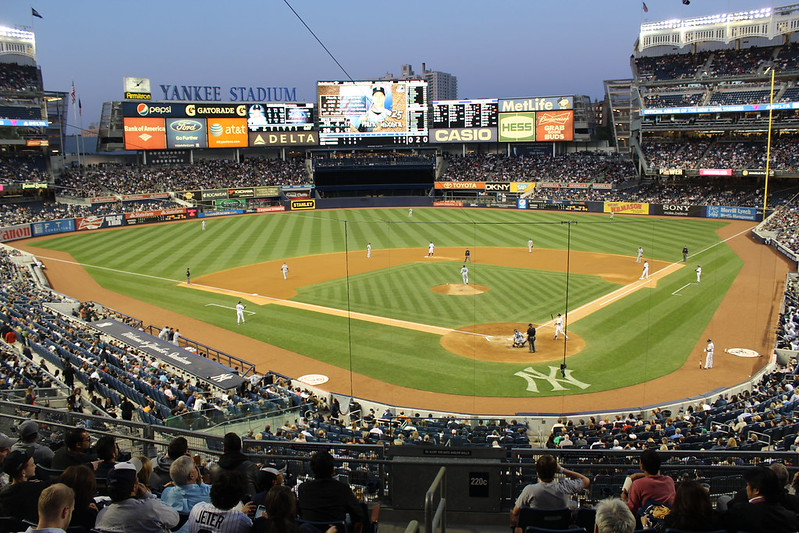
That bargain never really ended. Generations later, the men in pinstripes still talk about the dead as teammates. Not as ghosts to fear, but as a roster you cannot see. Most spirits terrify the living. These ones, the Yankees insist, are on their side.
To understand why players still glance toward center field before a big at-bat, you have to start with a patch of granite that a generation of children mistook for a graveyard.
A monument park that looked like a graveyard
The confusion started with the stone. Monument Park sat in deep center field, its heavy granite slabs honoring Ruth, Lou Gehrig, and other legends. To a child in the bleachers, those slabs read as headstones. A young broadcaster named Bob Costas grew up believing the players were actually buried out there, under the grass, watching the game from below the outfield.
He was wrong about the burial. He was not entirely wrong about the watching. The monuments turned the outfield into something between a shrine and a cemetery, and that ambiguity gave the stadium its particular weight. Fans did not just remember the greats here. They felt outnumbered by them.
Every ballpark honors its past. Few make that past a physical presence standing in the field of play. The monuments loomed where fielders roamed, close enough to touch during a game. The dead were not tucked into a museum. They were on the grass, in the action, part of the geometry of the sport itself.
The corridors where the greats still wander
Stadium workers tell a consistent story. Late at night, when the seats empty and the lights dim, the underground tunnels feel occupied. Some describe apparitions resembling Ruth and Gehrig moving through the concrete passages beneath the stands. Others report a sound with no source: the faint roar of a crowd cheering in a building with nobody in it.
That detail unsettles more than any figure in a hallway. An empty stadium should be silent. When the cheering starts anyway, drifting up from vacant seats, the mind reaches for an explanation and finds only the past. The building seems to replay its own greatest nights when no one is around to watch.
Visiting players have felt it on the field itself. Former Braves pitcher John Smoltz described strange physical interference during games here, including balls that seemed to roll or drop on their own and a creeping sensation drifting in from the outfield. For a professional trained to trust his own hands, that loss of control lingers long after the final out.
The ghosts as a weapon
Here is where Yankee Stadium breaks from every other haunted venue. The Yankees do not hide from their spirits. They recruit them.
Active and former stars have openly credited the ghosts as a real edge. Aaron Judge, Mookie Betts, and Alex Rodriguez have each spoken about the psychological weight of the pinstripes, the sense that history itself leans toward the home team and against whoever visits. The uniform carries a burden and a boost at once. Players describe a responsibility to the men who wore it before them.
Derek Jeter took it further. He once smiled and promised that after his own death, he would join the stadium ghosts to help the next generation of Yankees score runs. A living legend volunteering for the afterlife roster is not something you hear in other clubhouses.
Think about what that does to an opposing hitter. He steps into the box already told, by the sport’s own royalty, that the building wants him to fail. The apparitions in the tunnels barely matter. The idea of them does the work. Doubt is a heavier bat than any ghost.
Why this haunting refuses to die
The original House That Ruth Built came down. A new Yankee Stadium opened nearby in 2009. The ghosts, according to the people who work there, simply moved in. That portability is the tell. A haunting tied to a building dies with the building. A haunting tied to an identity travels wherever the identity goes.
Yankee Stadium’s spirits are not really about Ruth’s restless soul or Gehrig’s shadow in a hallway. They are about a franchise that decided its dead were assets, then convinced everyone, including its opponents, to believe it. The pinstripes became a kind of relic, and the men who wore them became guardians of it.
The most effective home-field advantage in baseball may be a ghost story the Yankees tell on purpose. It costs nothing. It intimidates rivals. It binds current players to a century of greatness. And the visitors keep buying tickets to hear it, then walk out onto a field where the dead are said to be watching.
So the next time an empty Yankee Stadium seems to murmur with phantom applause, consider what the sound really represents. It is a franchise so heavy with history that even its silence has a crowd in it. The pinstriped afterlife is baseball’s most crowded haunting, and the living Yankees would not have it any other way.
References & Further Reading
The Batters Den, Foul Poles and Phantoms: Baseball’s Spookiest Legends