Watch a seasoned actor freeze when a newcomer whistles backstage, and you glimpse a code older than most nations. Theatre runs on superstition, but these rules did not spring from silly fear. Nearly every one began as hard-won survival knowledge in a workplace full of gas leaks, heavy ropes, open flame, and financial ruin. The mysticism came later, wrapping practical safety in the language of spirits and curses.
That double life makes theatre superstition fascinating. A rule can protect your body and appease a ghost in the same breath. Below, the most famous customs shed their spooky costumes to reveal the danger underneath, and one of them carries a cleansing ritual so specific that actors still perform it on the sidewalk today.
The Ghost Light: A Lamp for the Living and the Dead
Walk into a dark, empty theatre and you will usually find a single bare bulb burning center stage. Practically, that ghost light saves lives. It stops crew and performers from tumbling into the orchestra pit or tripping over set pieces in a pitch-black room. In old gas-lit houses, a small flame also relieved dangerous pressure in the gas lines.
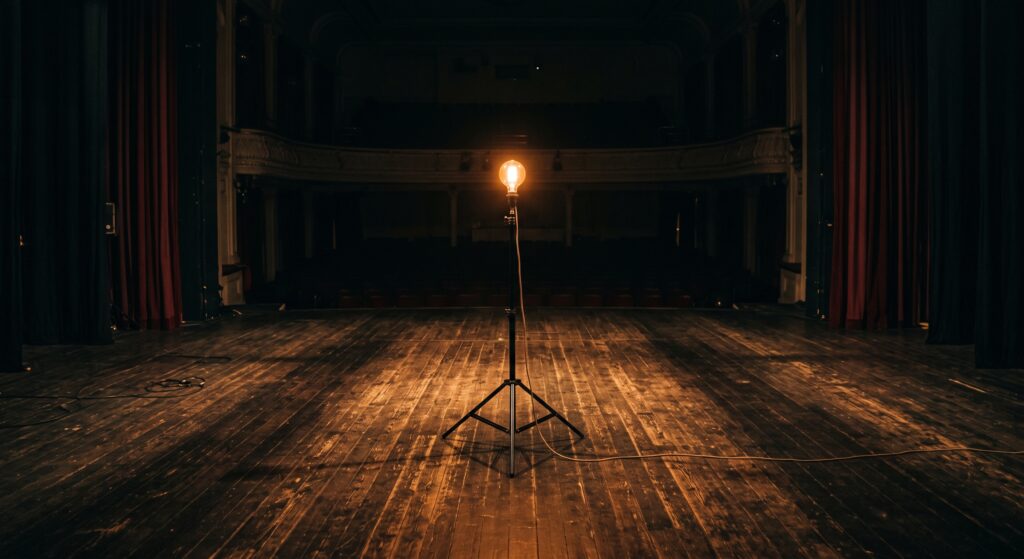
The lore layers a second purpose on top. The light wards off mischievous spirits, or it hands resident ghosts a spotlight so they can perform their own plays after hours. Give the dead their stage, the belief goes, and they will leave the living show alone. Safety and superstition end up pointing at the same glowing bulb.
Never Whistle Backstage
The whistling ban sounds like pure superstition until you learn who ran the rigging. In the 17th century, many stagehands were out-of-work sailors who knew ropes and pulleys from life at sea. They cued heavy scenery changes with coded whistles, exactly as they had signaled aloft on a ship.
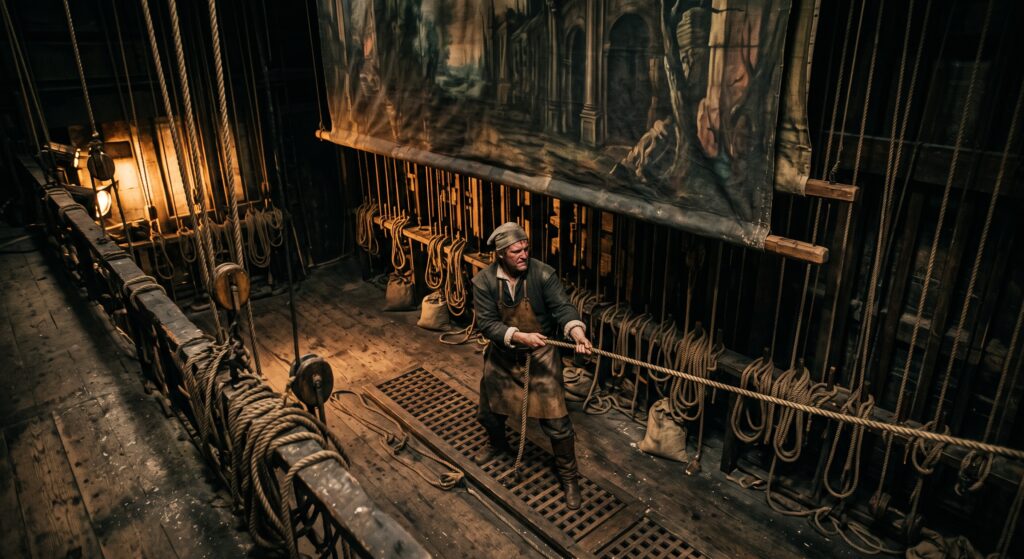
Now imagine an idle actor whistling a tune. A crewman could mistake it for a command and drop a heavy backdrop on someone’s head. The practical danger was real and potentially fatal. The superstition simply gave it teeth: whistle backstage, the saying warns, and someone will be fired or badly hurt. The ghost story protected people who might not fear a mere safety memo.
The Scottish Play: Saying Macbeth Invites Disaster
Actors refuse to speak the name Macbeth inside a theatre, calling it “the Scottish Play” instead. The mystical explanation claims Shakespeare used real witchcraft spells in the text, cursing the work forever. Say the word, and disaster, injury, and technical failure follow.
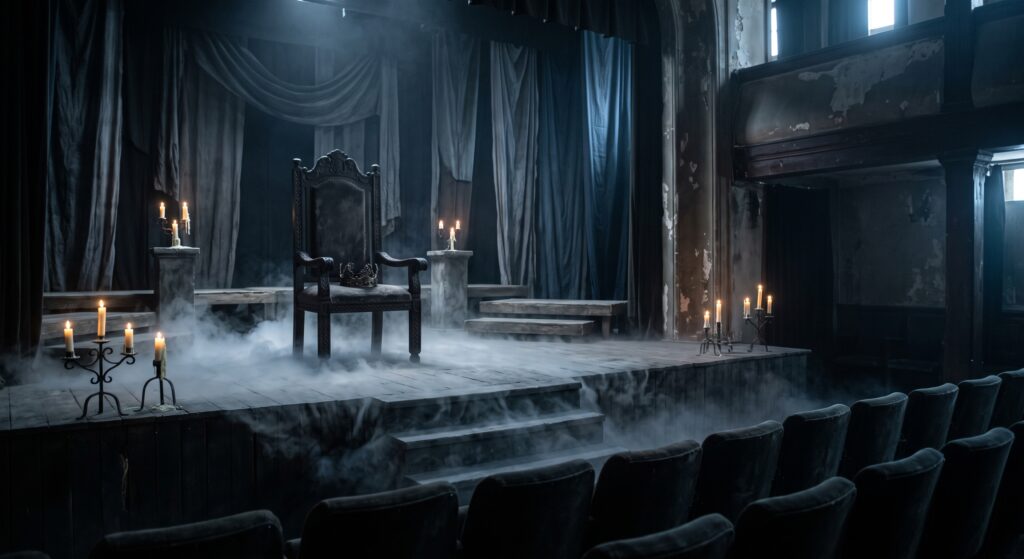
The grounded version tells a quieter story. Shakespeare’s shortest tragedy often served as a desperate last resort for struggling theatres, staged to claw back audiences before bankruptcy closed the doors. A run of the Scottish Play frequently signaled a company in trouble, so the title became linked with failure and collapse. Fear of the curse and fear of the ledger amount to nearly the same warning.
Break a Leg, and Other Backwards Blessings
Wishing a performer good luck tempts fate, so theatre folk speak curses instead. “Break a leg” leads the pack, alongside “chookas” and the French “merde.” The superstitious logic holds that direct good wishes invite bad luck, forcing performers to reverse the jinx with a negative phrase.
The practical roots run in several directions. To “break the leg” line meant crossing the stage’s edge curtain and actually getting paid. Ancient Greek audiences stamped their feet rather than clap. French carriages left manure, or merde, outside a full house, so the word came to mean a packed, profitable night. Each origin ties the odd phrase to a very real measure of success.
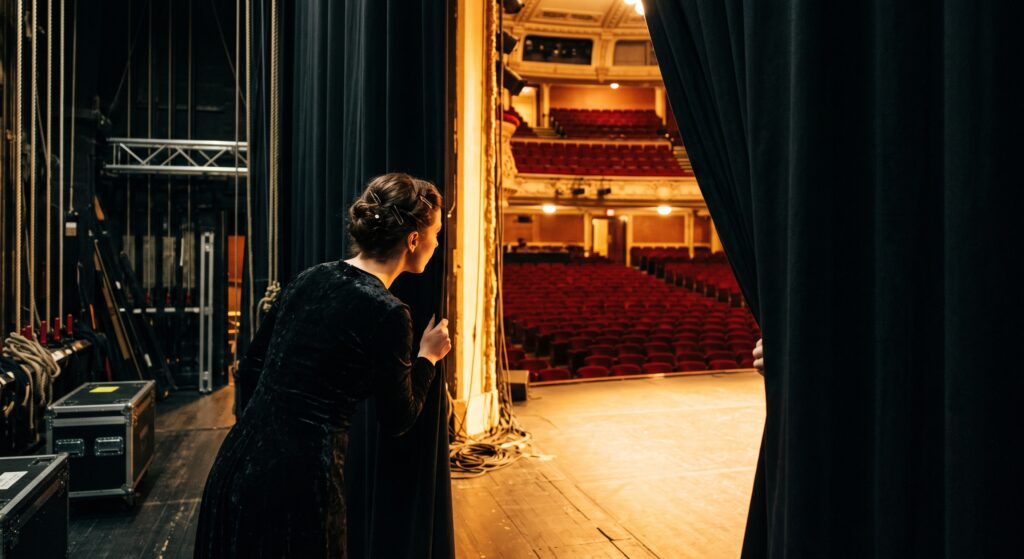
Regional variations reveal how deeply the custom traveled. Australian performers say “chookas,” a word rooted in the hope of earning enough to afford roast chicken after a strong house. Dancers and opera singers borrow the French “merde” without a second thought. The shared instinct beneath every version stays constant. Speak the fear aloud, name the ruin, and you rob it of power, a psychological trick that steadies nerves before the curtain rises.
Cursed Colors and Dangerous Props
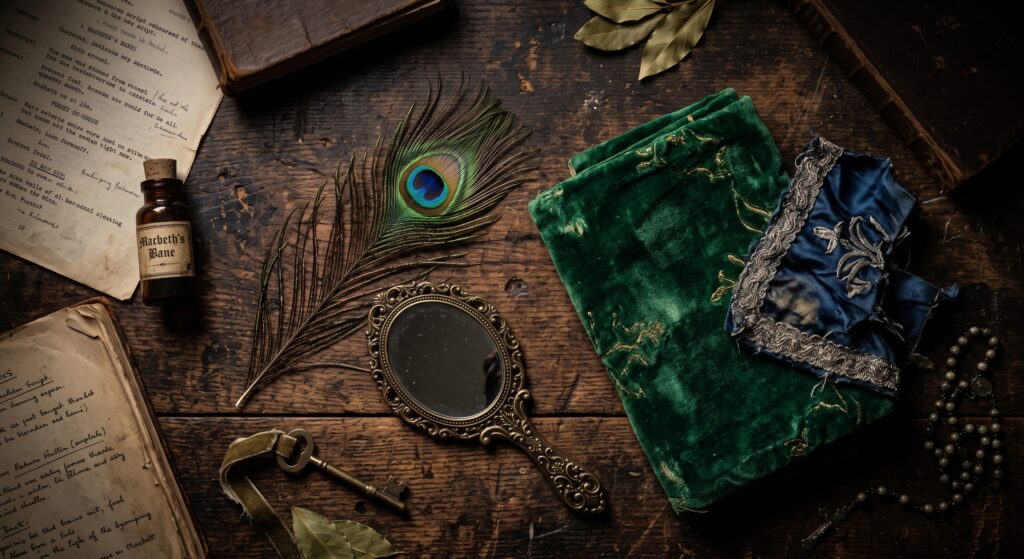
Superstition bans peacock feathers because their eye-like pattern suggests the evil eye. It bans mirrors onstage, and here practicality wins outright, since mirrors wreck carefully designed stage lighting and bounce it into the audience. Green once carried a curse too, and the reason lies in old technology. Early limelight and quicklime spotlights washed green costumes into near invisibility, so actors avoided the color to stay seen. Legend later added that the playwright Molière died in green, sealing its unlucky reputation. Blue faced suspicion as well, tied to the cost of blue dye and old signals of fake or failing wealth unless silver trimmed the costume.
Breaking the Macbeth Curse: The Cleansing Ritual
Speak the forbidden name by accident, and tradition demands immediate penance before you may return to the stage. Performers still follow this centuries-old cleansing ritual step by step:
- Leave the theatre building entirely and stand outside on the street.
- Spin around in a full circle three times on the spot.
- Spit over your left shoulder, long believed to banish demons and ward off hexes.
- Utter a profanity, or recite a protective line such as “Angels and ministers of grace, defend us” from Hamlet.
- Knock on the theatre door and formally ask permission to re-enter.
The Practical Ghost in Every Rule
Strip away the spirits and theatre superstition reveals itself as a survival manual written in mystical ink. The ghost light keeps you from breaking your neck. The whistling ban keeps scenery off your skull. The curse words and cursed colors track money, visibility, and the fragile nerves of a brutally uncertain craft. Performers cling to these rules because the rules once kept them alive and employed. The magic endures because, on some level, it always worked. Next time a curtain rises, remember that every quirky custom backstage carries the weight of somebody’s hard lesson, passed down so the next generation never has to learn it the painful way.
References & Further Reading
Shakespeare Theatre Company, Feeling Superstitious: Ghost Lights and Whistling Backstage. https://www.shakespearetheatre.org/watch-listen/ghost-lights-and-whistling/
Stage Whispers, Ghosts of Theatre Past. https://www.stagewhispers.com.au/history/ghosts-theatre-past
Playbill, The Real-Life Ghost Stories Behind Broadway’s Haunted Theatres. https://playbill.com/article/the-real-life-ghost-stories-behind-broadways-9-haunted-theatres
Wikipedia, Ghost light (theatre). https://en.wikipedia.org/wiki/Ghost_light_(theatre)
Wikipedia, The Scottish Play (Macbeth superstition). https://en.wikipedia.org/wiki/Macbeth