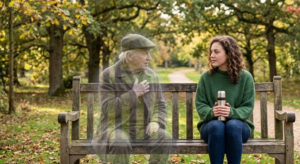
When healthy bystanders report glimpsing a passage, and why researchers find it harder to dismiss than a dying brain.
Most stories about the afterlife come from people who nearly died. Shared death experiences come from someone else in the room, who is alive and well. That single difference is what makes them so hard to explain away.
Before we go further, please take a moment for a gentle note. This topic touches loss directly. If you are grieving, take it at your own pace, and lean on people who care about you.
SDE Versus NDE
A near-death experience, or NDE, happens to a person whose own body is failing. Critics can attribute it to a dying, oxygen-starved brain. That explanation has real force.
A shared death experience is different. It happens to a healthy bystander accompanying a dying loved one. The witness is neither ill nor injured. That is precisely why some researchers argue the usual brain-based explanations do not fit as neatly.
What Is an SDE?
Psychiatrist Raymond Moody popularized the term around 2009 and 2010, drawing on hundreds of letters from people describing NDE-like events at a loved one’s deathbed. He wrote about them in his book Glimpses of Eternity.
Reports describe bystanders who seem to share the first moments of a passing. They may sense the room change, see a light or mist, or feel briefly lifted alongside the dying person. The experience arrives unbidden, in a moment of profound love and loss.
Common Characteristics
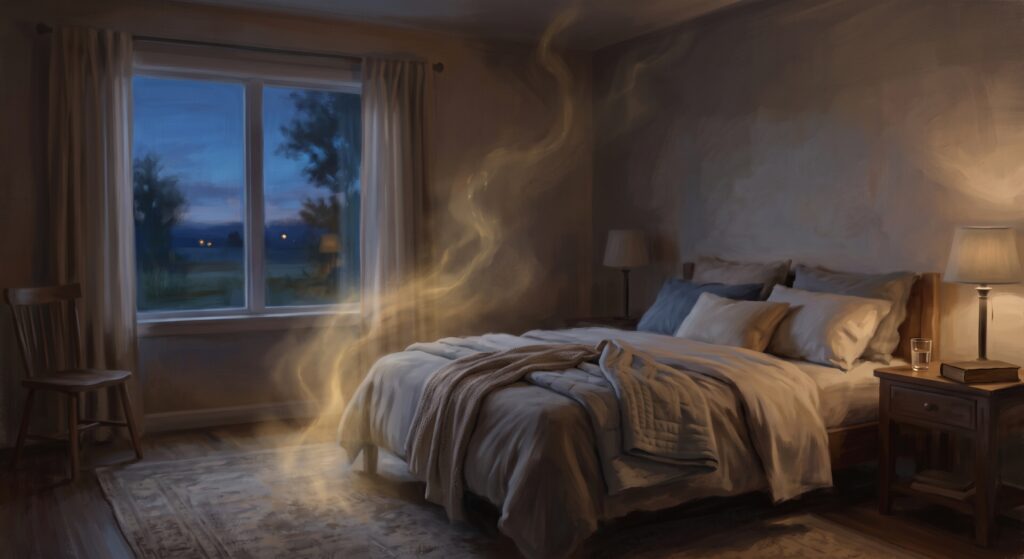
Certain elements recur across accounts. Witnesses describe a golden or grayish mist rising from the body. Some report a change in the geometry of the room, as if space itself shifts. Others mention music with no source or a strong upward pull.
Many describe an overwhelming sense of peace. A few report briefly sharing the dying person’s life review. Experiences differ, and not all include every element, yet the pattern is remarkably consistent.
Scientific and Spiritual Views
Medical explanations point to grief, exhaustion, suggestion, and the powerful psychology of a deathbed vigil. These are real factors and deserve honest weight. A person under intense emotional strain can perceive extraordinary things.
Researchers counter with one persistent fact. Formal study by the Shared Crossing Research Initiative examined where these experiences happen. A majority of SDEs, around sixty-four percent, occurred when the experiencer was physically apart from the dying person. A dying brain does not affect a remote experiencer. That finding keeps the debate open.
An Old Phenomenon, Newly Named
The experience predates its label by generations. Earlier researchers described related events as deathbed visions or deathbed coincidences. The physician William Barrett studied such accounts a century ago, and Peter Fenwick later documented deathbed coincidences in detail.
Moody gathered these threads under one term after receiving hundreds of letters from grieving families. His book Glimpses of Eternity collected the accounts. What people had quietly experienced for a very long time finally had a name, which made it easier to study and easier to talk about.
A Measure of Comfort
Whatever their ultimate cause, SDEs tend to comfort those who have them. Many describe lasting peace and a reduced fear of death after accompanying a loved one, even briefly, toward whatever comes next.
If you have experienced something like this phenomenon at a loved one’s passing, you are far from alone. Many people carry these quiet, hopeful moments and rarely speak of them. If it brought you peace, that meaning is yours to keep.
References & Further Reading
Fact Sheet: Shared Death Experience, IANDS
Shared Death Experiences, Death Is Not the End