A friendly black dog, for once
Most Black Dog legends warn of death. The Church Grim reverses the script. It is a guardian, not an omen.
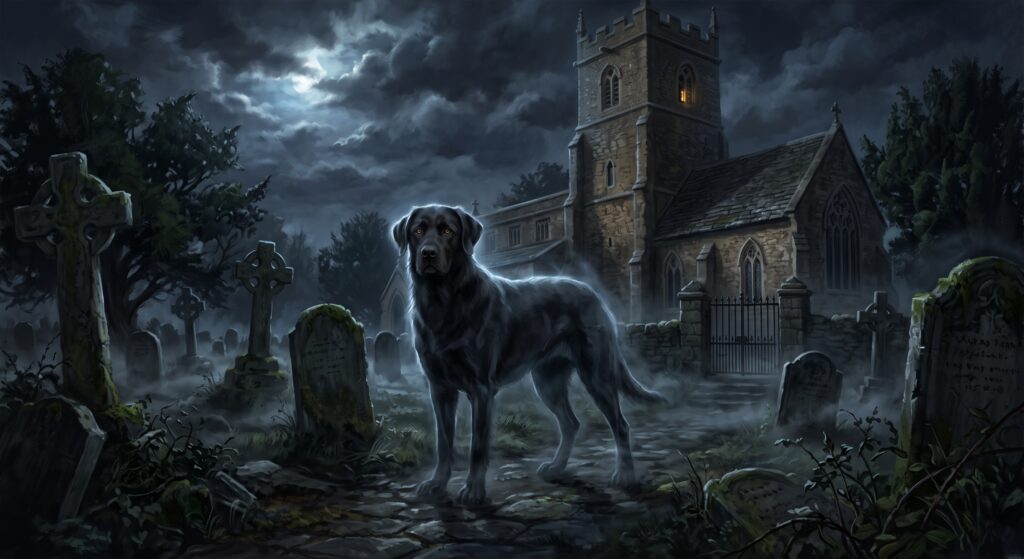
In English and Scandinavian folklore, the Grim watches over a churchyard. It protects sacred ground rather than terrorizing travelers.
That role makes it one of the more comforting figures in the Black Dog tradition, though its origin is anything but comforting.
The foundation sacrifice
The Grim’s backstory is genuinely dark, and it is worth telling plainly. Folklore describes a grim medieval practice.
When builders raised a new church, tradition held that the first living thing buried on the grounds would guard it forever. To spare a human that fate, people would bury a dog alive beneath the cornerstone.
The dog’s spirit then became known as the Church Grim. A brutal act, in the logic of the legend, produced a faithful protector.
The guardian’s duties
The Grim earned its keep. Its job was to defend the churchyard from the devil, from witches, and from grave robbers.
Some tales gave it a role at funerals. It was believed to comfort the spirits of the newly dead and guide them safely onward.
A sexton might even glimpse the Grim in the tower during a storm. Seeing it was said to foretell whether a dying parishioner’s soul was bound for peace.
Comfort or horror?
The Church Grim sits at a strange emotional crossroads. Its purpose is protective and even tender. Its origin is a living burial.
That tension is what makes it so compelling. The legend asks whether an act of cruelty can produce something good, and it answers with a ghost dog standing guard over the dead.